What is tank cycling? One article explains clearly whether a new tank needs cycling
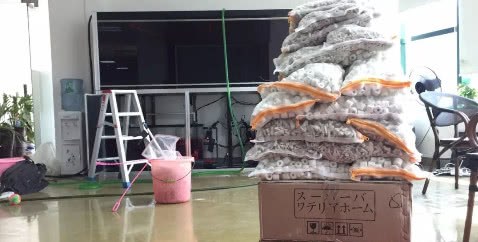
What is tank cycling, and what should you do when a new tank arrives before you can start keeping fish? Don't worry, today we will talk about how to cycle a new tank and cultivate the water.
1. Tank cycling
Tank cycling is an important stage of cultivating water; whether the foundation is laid well has a great impact on the future. After tap water is put into a new aquarium, once aeration has removed chlorine and increased oxygen, you can add starter fish.
1. Set up a powerful filtration system, including sufficient filter media
We generally divide filter media into three major categories: physical filter media, chemical filter media and biological filter media. In fact, most physical and chemical filter media also have a biological cultivation function. The purpose of configuring biological filter media is to provide sufficient attachment surfaces for various bacteria. In an aquarium, if the growth and reproduction of bacteria are limited by living space, it is difficult for them to adapt to the load of high-density keeping. Using filter media to expand the living space for bacteria can achieve a stronger self-purification capacity than under natural conditions.
Adequate oxygen supply
The decomposition of organic matter consumes a large amount of oxygen, which reduces the oxygen content of the water, not only threatening the survival of fish but also hindering the growth and work of aerobic bacteria. Timely replenishing the loss of oxygen in the water is especially important when the organic matter concentration is high. Nitrifying bacteria are typical aerobic bacteria; when oxygen is lacking, they can effectively oxidize ammonia and nitrite, while ammonia and nitrite reaching a certain concentration can also cause fish death
3. Introduce beneficial bacteria, choose nitrifying bacteria or composite bacteria (containing nitrifying bacteria)
Nitrifying bacteria are everywhere, and as long as suitable conditions exist, they will reproduce. However, nitrifying bacteria are autotrophic bacteria and must synthesize organic matter within their bodies, so they reproduce slowly. If a sufficient amount of nitrifying bacteria is added to the aquarium, the establishment of the nitrification system can be accelerated. Under normal circumstances, after about one month, the nitrification system can be initially established, and the organic matter concentration in the water also drops to a relatively low level. At this point, you can formally start keeping fish.
2. System stability
After tank cycling, it is generally best to gradually increase the stocking quantity, because the biological system is not yet stable at this time and its ability to resist shocks is relatively poor, so problems are likely if it is not handled well. A relatively common problem is insufficient filtration system capacity, or excessive stocking density and feeding amount, so that the organic matter discharge exceeds the system's self-purification capacity and the water begins to become eutrophic. The solutions are, first, to strengthen biological filtration (which can also be combined with auxiliary means such as physical adsorption), and second, to reduce stocking density and feeding amount. In addition, dilution through water changes is the simplest and most effective method, but relying excessively on water changes to maintain water quality will reduce the stability of the system.
After tank cycling, it is hard to say exactly how long it takes for the system to become stable. It may be one month, or several months, and some aquariums even remain in an unstable state for a long time. The factors affecting system stability are very complex. The more common ones are a weak biological filtration system and insufficient load capacity. In addition, arbitrarily increasing the number of fish or frequently changing species; feeding at irregular times and in irregular amounts; not changing water in time; over-cleaning filter media; turning the filter on and off intermittently; and arbitrarily using medication in the tank and other improper practices will all hinder the stability of the system and may even cause the system to collapse.
3. Daily maintenance
Even the best water needs maintenance. In this sense, cultivating water runs through the entire process of keeping fish.
The daily maintenance of an aquarium is a big topic, including fish feeding management, water quality monitoring, equipment maintenance and so on. Mixed keeping of different fish species; the selection of feed and feeding amount; the prevention, treatment and quarantine of fish diseases; the requirements of special fish species for water temperature, PH value and hardness, as well as fish breeding, all belong to the scope of fish feeding management, and some of this content is related to cultivating water. Equipment such as filters, filter media, water pumps and aeration pumps are also important factors affecting water quality.
For a good aquarium ecosystem, the daily maintenance of water quality is relatively simple. As long as you control the fish stocking density and feeding amount well, ensure the normal operation of the filtration system, and add timely water changes, it is enough. Of course, water temperature and PH value and so on should also be observed, and adjusted when necessary.
If you have anything unclear about ornamental fish keeping, you can leave us a message or suggestion at the end of the article~
My WeChat public account is guanshangyu-88. If you have anything unclear about ornamental fish keeping, you can contact me at any time!