Have you mastered the basic shaping techniques of bonsai making?
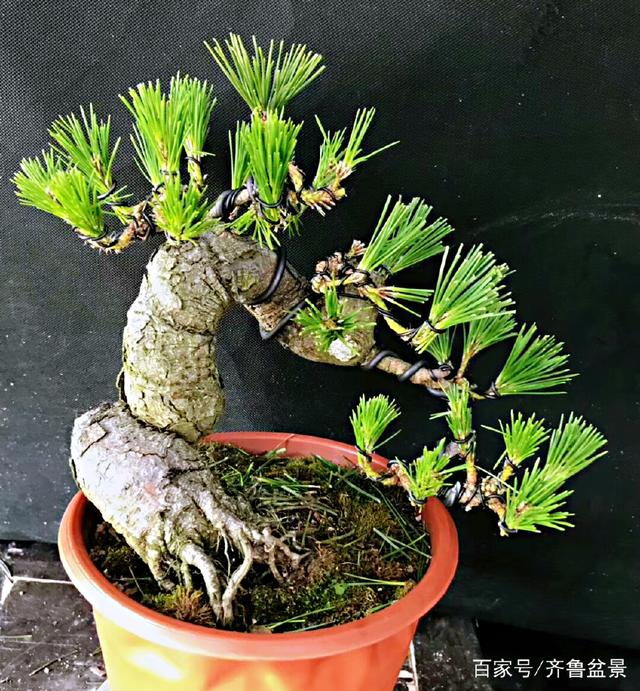
Bonsai making is a step-by-step, cumulative artistic process. When you turn an ordinary, unremarkable plant into a poetic, picturesque work of art, that inner joy and strong sense of accomplishment well up spontaneously. The seedlings and tree stumps found in nature do not fully meet the standards of bonsai, so we must use artistic techniques to process and shape them.
There are many kinds of shaping techniques in bonsai. Today I will tell fellow bonsai enthusiasts about the most basic techniques we commonly use in bonsai making, wiring and pruning. For the many enthusiasts who are just starting out, this is worth a look.
1. Wiring. If you want a plant to grow according to your ideas, you must use wiring to guide it. This shaping method is the most basic and also the most commonly used. Fellow enthusiasts should all know about it, but do you really know how to wire? I doubt it. The most commonly used material for wiring is metal wire, followed by palm fiber. In the making of Yangzhou-style bonsai, the older generation of bonsai masters all used palm fiber for wiring. Its advantages are that after wiring it does not conduct heat, does not damage the bark, and is easy to remove. However, the palm fiber wiring technique is delicate, and without one or two years it is hard to learn, and the working time is not as fast as with metal wire. In today's fast-paced life, time is money, so metal wire is basically chosen for making bonsai.
Metal wire includes iron wire, copper wire and aluminum wire. The most commonly used is aluminum wire. When wiring, you should choose metal wire of a suitable thickness according to the thickness of the branch. In principle, it should be thick enough not to spring back when bent. When wiring, first fix the starting point. The starting point is generally fixed on the branch or trunk that intersects with this branch, so that when wrapping the metal wire it will not rotate. After fixing the starting point, make the metal wire form a 45° angle with the branch and trunk, and wrap it slowly and tightly against the branch and trunk. Pay attention to the winding direction: if you want the branch and trunk to bend to the right, wrap the metal wire clockwise; if you want it to bend to the left, wrap it counterclockwise. The order of wiring is first the trunk and then the branches, from the lower part to the upper part.
For branches and trunks that have already hardened, when they need to be bent, use split-branch shears to split them open from the middle of the trunk, then wrap the wound with something like coarse cloth strips, and then carry out the bending treatment. There are also several points to note about wiring. First, wiring should be done when the potting soil is relatively dry. The reason is obvious and needs no explanation. Second, do not wire plants that have just been potted or are not growing vigorously. Many enthusiasts who have just entered the field, seeing a tree stump, get itchy hands, and no matter what, go up and give it a good wiring. After wiring, they take a photo and post it, and the appearance is really hard to look at. In the end, the tree stump is left barely alive, and the loss outweighs the gain. Always remember to grow it strong and sturdy first, and try to choose the dormant period for wiring.
2. Pruning. For bonsai pruning, most trees can be pruned all year round. When pruning trees, observe carefully and cut off excess branches according to the shaping needs. It is recommended to use spherical-joint shears for pruning. After healing, the cut marks cannot be seen, and a very natural scar will be left, making the trunk look older. The standard for pruning branches is that the following branches should be cut off:
1. Opposite branches: branches at the same height on the trunk, symmetric left and right, one of them should be cut off.
2. Parallel branches: two parallel branches extending in the same direction, one of them should be cut off.
3. Y-shaped branches: also called slingshot forks, two branches split from the main trunk, one of them must be cut off.
4. Bow-and-arrow branches: branches growing from the concave part of a branch or trunk, such branches must also be cut off. In addition, there are downward-hanging branches perpendicular to the pot surface, vertical branches, crossing branches, and so on. In bonsai making, try to avoid the appearance of these branches.
Another pruning method is the Lingnan school's method of accumulating branches and truncating the trunk. This means that when a tree grows to a certain thickness, cut off the main trunk, keep only a small part of the main trunk, and leave branches at the cut to cultivate. When the retained branches grow to the required thickness, continue heavy pruning, and at the same time leave branches at appropriate parts of the main trunk. In this way, year after year of accumulating branches and truncating the trunk, using branches in place of the trunk, it will slowly grow into a large tree-shaped bonsai that is thick at the bottom and thin at the top, vigorous and ancient-looking. From this it can be seen that if you want to make a fine bonsai, without years of skill it is absolutely impossible. Three feet of ice is not formed in a single day of cold. Bonsai making is repeating the same work year after year, enjoying the process of making. I am Qilu Bonsai, bringing you an easy-to-understand bonsai making technique.