How to grow a Chinese juniper 'Kaizuca' bonsai? Propagation, cultivation and daily care methods
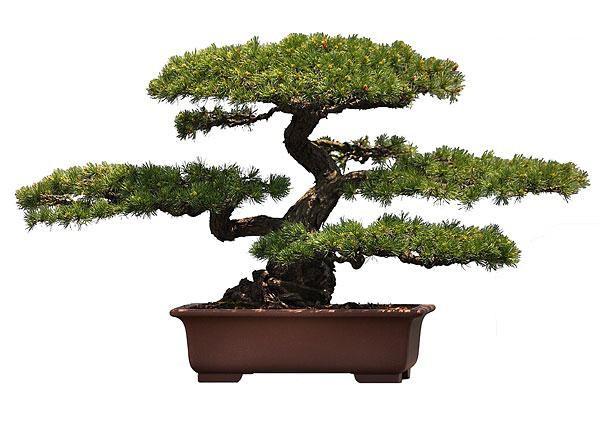
The Chinese juniper 'Kaizuca' is a variety of Chinese juniper, also known as spiny juniper, red-heart juniper, pearl juniper, etc. It is a cultivated variety of Chinese juniper (Sabina chinensis). When the Chinese juniper 'Kaizuca' reaches a certain height, its branches grow spirally and curl upward, resembling a coiled dragon posture, hence the name "dragon juniper." It is mainly produced in the Yangtze River basin and Huai River basin. After years of introduction, it is also cultivated in Shandong, Henan, Hebei and other places in China. It is often used for roadside planting, courtyard and park landscaping, and household container planting. How to grow the Chinese juniper 'Kaizuca'? Below, Huacaole shares with you the propagation, cultivation and daily care knowledge of the Chinese juniper 'Kaizuca' bonsai.
I. Morphological characteristics:
The crown of the Chinese juniper 'Kaizuca' is cylindrical or columnar-tower-shaped; the branches extend upward directly, often with a twisting upward tendency; the branchlets are dense, and the branch tips form dense clusters of nearly equal length; the scale leaves are closely arranged, pale yellow-green when young, later becoming emerald green; the cones are blue, slightly covered with white powder. The Chinese juniper 'Kaizuca' can reach 8 m in height, with a straight trunk and a narrow cylindrical tree shape, and the branchlets twist and extend upward, hence its name. The branchlets are dense, and the leaves are densely grown, all being scale leaves, pale yellow-green when young and emerald green when old. The cones are blue-green, with the surface slightly covered with white powder. Besides growing naturally into a conical shape, the Chinese juniper 'Kaizuca' is also sometimes bent, kneaded and tied into animal images such as dragons, horses, lions and elephants, and sometimes pruned into spherical, drum-shaped or hemispherical forms, planted singly or in rows or groups in courtyards; some are even planted as hedges and, after shaping and pruning, formed into flat and straight rounded ridge shapes, which can express their low, full, fine and delicate character. The side branches of the Chinese juniper 'Kaizuca' twist spirally and grow clinging to the trunk, with a unique style and high ornamental value, and it is widely cultivated throughout China.
II. Growing environment:
It likes sunlight and is slightly tolerant of shade. It likes warm and humid environments and is cold-resistant. It is drought-resistant and avoids waterlogging; when drainage is poor, leaf drop or poor growth easily occurs. It is suitable for growing in dry, fertile and deep soil, has strong adaptability to soil pH, and is relatively salt-alkali tolerant. It is strongly resistant to sulfur oxide and chlorine, but has relatively poor resistance to smoke and dust.
III. Propagation methods:
1. Grafting: Biennial (vigorous annual seedlings are also acceptable) Platycladus orientalis or Sabina chinensis are commonly used as rootstock, and the scion is selected from the terminal shoot of a side branch of a robust mother tree, 10-15 cm long.
Open-field grafting is carried out in early March;
Indoor grafting can be advanced to January-February, but after grafting it must be heeled in and kept warm, then transplanted to the nursery in mid-to-late March. Grafting method: use side grafting - cut off the lower half of the scale leaves from the scion and side-graft it at the root crown of the rootstock; all branches and leaves of the rootstock are retained, and after grafting, mound soil up to near the scion or cover the bed surface with plastic film to maintain relatively high air humidity. After survival, apply light fertilizer, and trim off the top shoot of the rootstock; in the second spring, cut off the upper part of the rootstock flush with the graft interface.
2. Cuttage: Cuttage propagation includes two types: dormant branch (that is, hardwood) cuttage and semi-ripened branch cuttage.
Dormant branch cuttage: It is further divided into spring cuttage and early winter cuttage - spring cuttage is carried out from late February to mid-March; early winter cuttage is carried out in early-to-mid November. After cutting, cover with film to keep warm and moist, which can promote healing and earlier rooting.
Semi-ripened branch cuttage:
1. Carry out from mid-August to early September.
2. Select the terminal shoot of a side branch as the cutting, about 15 cm long;
3. Cut off the lower small branches and scale leaves, insert into the soil 5-6 cm, with a plant and row spacing of 5 cm x 12 cm;
4. After insertion, press firm, water thoroughly, build a shade frame, and thereafter spray water frequently to keep the seedbed moist; in dry winter, water must also be sprayed at noon.
5. In the early stage of cuttage, avoid direct sunlight and provide full-day shade; after healing, gradually increase light in the morning and evening;
6. The Chinese juniper 'Kaizuca' roots slowly, generally requiring about 6-8 months, and the number of roots is small, so it is advisable to leave it in the bed for 1 year and transplant it in the third spring.
7. During the cultivation period, support stakes are needed, and attention should be paid to pruning, pinching and tying branches so that the seedlings grow straight and compact; if cultivating a Chinese juniper 'Kaizuca' ball, the top can be removed and the growing point pinched, 3-4 times a year, gradually forming it;
8. Transplanting of the Chinese juniper 'Kaizuca' is carried out from mid-February to late March, or from early November to early December, with a mud ball for transplanting.
IV. Cultivation and care techniques:
1. Cypress seedling management
The ideal temperature inside the greenhouse is 14-20°C, and the ideal humidity is 50-70%. In the large bed where the cypress seedlings are planted, a small arch shed should be built, also called a shed within a shed. With bamboo as the frame, cover it with drip-free film and press the film down around the edges; this can significantly increase the temperature and humidity of the seedling growth environment and is very beneficial for survival. After grafting, the rootstock should be pruned in stages. After the seedlings are planted, water first.
For the first pruning of the rootstock, cut off 1/3 of the total height of the rootstock (from the graft to the top shoot)
For the second pruning, cut off half of the height already retained; at this time the Chinese juniper 'Kaizuca' has survived, and the new shoots have grown to 3-5 cm;
For the third pruning, when the new shoots of the Chinese juniper 'Kaizuca' have grown to 12-16 cm, leave 0.8-1 cm above the graft and cut off the upper part, at about 45 days after grafting. After growing for a period longer, the small arch shed can be removed to increase light, and weeds should be removed in time. Precautions:
1. When scions are in short supply, long branches can be cut into two sections for use.
2. When grafting, if the rootstock is too thick and the scion is thin, the scion can be aligned against one side to the cambium and tied well.
3. After heeling in, water for the first time; absolutely do not use sprinkling or spraying, which is the main reason for the relatively low survival rate in the past.
4. The three-stage pruning of the rootstock, also called three-time pruning, is an effective measure to increase the survival rate and must not be changed at will.
5. Ensure the light, temperature and humidity of the greenhouse; on sunny mornings, pull up the straw mat when the sun comes in, and lower it before the sun sets in the afternoon; do not lower it on snowy days, to facilitate snow removal.
6. To increase temperature and humidity, double-layer shed doors can be used; one layer is the original one, and the second layer is made of straw mats or cotton quilts.
2. Shaping and pruning, bending and styling
a. Cylindrical shape: The Chinese juniper 'Kaizuca' has an obvious trunk and many main branches. If main branches emerge from the same part of the trunk, one must be cut off, leaving only one main branch per whorl. The main branches are generally spaced 20-30 cm apart and distributed in a staggered manner. Each main branch should be shortened and cut so that lower ones are long and upper ones are short, with the cut opening falling on an upward-growing small side branch to ensure a beautiful tree shape. Weak branches between main branches should be removed as early as possible to facilitate light penetration. For the shortening of each main branch, during the growing season, whenever new branches grow to 10-15 cm, shorten them again, pruning 2-8 times throughout the year to inhibit excessive growth of branch tips. When pruning each main branch, proceed from bottom to top and gradually shorten them to promote the formation of a cylindrical shape. Pay attention to controlling the competing branch at the top of the trunk to avoid forming a forked tree shape. Pruning of large branches is mainly carried out during the dormant period to avoid sap outflow.
b. Leaping shape: Generally, a small number of main and side branches are uniformly retained and allowed to grow prominently, while all the remaining main and side branches are shortened. During the growing season, the new shoots of the whole tree undergo 6-8 times of tip-removal pruning similar to shortening, and the length of the main and side branches protruding from the crown is maintained at 11.5 times the crown diameter, to form the posture of a giant dragon leaping out of the crown.
c. Artificial shaping: Besides growing naturally into a tower shape, the Chinese juniper 'Kaizuca' is often developed into various forms according to the design intention, but attention should be paid to ensuring that the tree form harmonizes with the surrounding garden scenery, and the lines should not be too complicated; a clear and concise outline is best. The specific shaping method depends on the skill of the pruner, and often brown rope or lead wire is used to make an outline pattern in advance for shaping and pruning. It is bent, kneaded and tied into animal images such as dragons, horses, lions, deer and elephants.
3. Fertilizer and water management:
The Chinese juniper 'Kaizuca' likes heavy fertilizer and abundant water. After planting and survival, combined with irrigation, apply topdressing 2-3 times in the first year, each time applying 15 kg of urea per mu, and stop fertilizing after autumn. In early spring of the second year, combined with watering for greening, apply a compound fertilizer with slightly higher nitrogen content once in a furrow style, 40 kg per mu. Because the Chinese juniper 'Kaizuca' has a shallow root system and many horizontal roots, fertilizer should be applied as the trench is opened and soil should be buried as fertilizer is applied, avoiding root damage as much as possible. In summer, apply urea 2-3 more times, each time 25 kg per mu.
V. Disease control:
The Chinese juniper 'Kaizuca' has relatively few diseases. Apart from the rare pear red star disease mentioned above, when the cuttage seedbed substrate is unclean or reused, purple root rot easily occurs, and it can be controlled according to the aforementioned methods. Among rare insect pests is the bag moth, which should be controlled by spraying 1000 times 98% crystalline trichlorfon in early June before the larvae have spread. The Chinese juniper 'Kaizuca' is prone to pests and diseases such as red spider mites, damping-off and twig blight, so frequent observation is needed to achieve early detection and early control. To control red spider mites, alternately spray 20% mitec EC 3000 times, 1.8% abamectin EC 5000 times, or 15% hexythiazox EC 3000 times; in the early stage of damping-off, irrigate with 70% thiophanate-methyl wettable powder 700-800 times; to control twig blight, spray 50% tuzet wettable powder or 70% chlorothalonil wettable powder 1000 times.
VI. Main value:
The Chinese juniper 'Kaizuca' has a beautiful tree shape and emerald green branches and leaves. It is the preferred seedling for park hedge landscaping and is mostly planted in courtyards for beautification purposes. The Chinese juniper 'Kaizuca' has a high transplant survival rate and fast recovery speed. It is the most widely used shrub in landscaping. It is crisp, glossy, healthy and vigorous in growth, and has high ornamental value.