What to do when succulents are overwatered and then hit by cloudy, rainy days? Try artificial respiration
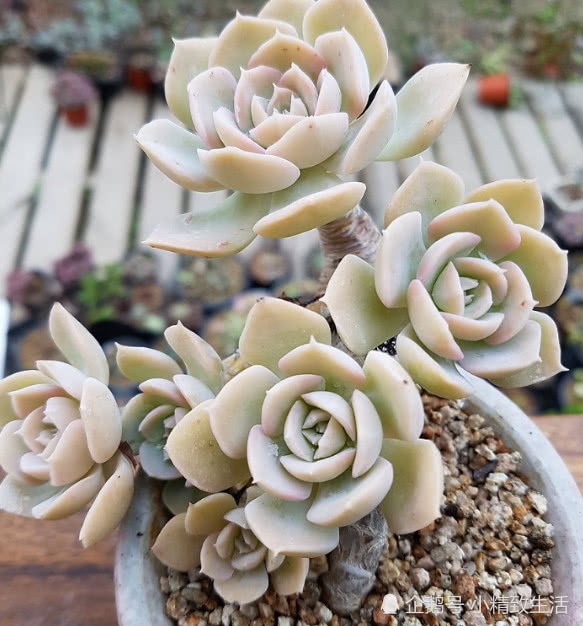
We all know that black rot in succulents is related to the air permeability of the potting soil, but in everyday life we rarely pay attention to the air permeability of the potting soil, and only regret it when a succulent gets black rot and we analyze the cause. Because whether it is high or low temperature, or the level of humidity, the ventilation conditions, including how wet or dry the potting soil is, we can all perceive it, but the air permeability of the potting soil, unless you live inside the potting soil, how can you know it clearly?
So, when it comes to the air permeability of potting soil, we actually have no clear concept of it at all. We only know that this pot of succulents is growing very well, hmm, the air permeability of the potting soil should be pretty good; that pot died, so it must be because the air permeability of the potting soil was poor. In other words, we can only judge after the fact, which is not much use at all.
So what kind of potting soil really deserves to be called breathable? Some people think that with large particles and lots of gaps between the particles, the potting soil is sure to be breathable. This claim is only half right.
It is just like our rooms: the gaps (space) in a house are big enough, right? There is plenty of air, right? But if the windows are not opened for a long time, we feel especially stifled. This is because the air inside the room cannot circulate, which lowers the oxygen content in the air. Similarly, using granular soil alone is not enough for potting soil; the air inside the potting soil must also be made to flow in order to ensure its air permeability. To put it another way, the potting soil must be able to "breathe."
The ventilation of the environment and the breathability of the flowerpot are the two important factors in the potting soil's "breathing." In addition to these, we also need to manually create air circulation within the potting soil.
So how should this "manual creation" be done?
In the hot, stuffy summer, many sellers may advise newbies, "Pot them in dry soil, and try not to water before autumn." So what is the difference between doing this and not potting them at all? In fact, whether you water or not, the roots of succulents will breathe, and as long as they breathe they will continuously produce waste gas. If this waste gas cannot escape from the potting soil, its concentration will keep rising, and when it rises so high that it in turn affects the roots' breathing, root rot, turning to water, and black rot will naturally happen.
Watering, besides providing water to the roots of succulents, also uses the natural downward flow of water to displace and expel the waste gas in the gaps of the potting soil, and after the water flows away, fresh air fills the gaps in the potting soil. This completes one breath of the potting soil.
Don't believe it? Then what is going on with the earthy fragrance smelled after rain on ground that has been dry for a long time? The reason is simple: this "earthy fragrance" is actually the waste gas between soil particles, and the rainwater penetrates deep into the gaps in the soil and squeezes this waste gas out.
Therefore, even for succulents after dormancy, which do not need much water, they should still be watered occasionally to exchange the air in the potting soil.
So what watering methods can make the potting soil "breathe"?
1. Water thoroughly
Only when water enters from one side of the flowerpot and comes out from the other can the waste gas be thoroughly squeezed out, and only after the water dries will enough fresh air enter the potting soil.
2. Water along the edge of the pot
Watering along the edge of the pot can achieve the goal of expelling the most waste gas with the least amount of water, and it can also shorten to the greatest extent the period after watering when there is no air permeability. In summer, this is the most commonly used watering method.
3. Quick soaking of the pot
When the succulents occupy most of the space in the flowerpot, you can quickly dip the flowerpot in water, letting water soak in from the bottom of the pot and expel the waste gas upward from the mouth of the pot.
In addition, if you accidentally water too much and then run into cloudy and rainy weather, so the potting soil never dries, what should we do?
Here is a little trick you can use to give your succulents a session of "artificial respiration":
Find a plastic bag large enough to cover the whole pot of succulents, cut a hole in one corner of the plastic bag, cover the overwatered succulents with the plastic bag, and tie it tightly around the flowerpot, then blow air into the hole at the corner of the plastic bag; the air pressure will force the water accumulated in the soil particles out through the drainage holes at the bottom of the flowerpot.
The above was compiled and published by Little Exquisite Life, and we hope it is helpful to you.