Detailed Explanation of Bletilla striata Medicinal Resources and Imitation Wild Cultivation Techniques
Bletilla striata Medicinal Resources and Imitation Wild Cultivation Techniques
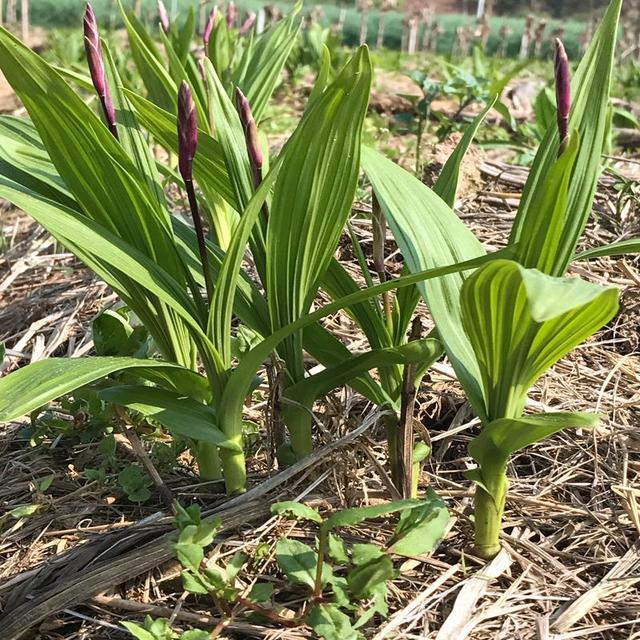
Malong County, Yunnan Province, China is located in the Wumeng Mountain system, with many valleys and river channels, belonging to a low-latitude plateau monsoon climate, altitude 1772-2493m, average annual temperature 13.6°C, average annual precipitation 1001.8mm, average annual sunshine hours above 1985 hours, annual frost-free period 241 days. Local growers use tissue-cultured seedlings to cultivate Bletilla striata in greenhouses under imitation wild conditions. At present, 2 bases have been built, each with an area of 13.33hm2. Main techniques: ① Site selection and preparation: choose dry land with loose and fertile sandy soil and humus soil for planting, plow more than 20cm deep, apply 1000kg of farmyard manure or 50kg of compound fertilizer per mu as base fertilizer and mix thoroughly with the soil, shallow plow before planting, break up soil clods and rake level, make high beds 130-150cm wide; ② Planting: take domesticated Bletilla striata tubers, each piece with 1-2 buds, dip in plant ash and then plant, furrow spacing 20-25cm, depth 5-6cm, plant spacing 10-12cm, place one tuber, buds facing upward, cover with soil, compact, water, cover with grass, keep moist, new buds emerge in March-April; ③ Field management: after planting Bletilla striata, spray acetochlor for closed treatment, cover with a layer of pine needles, and add shade netting, shallow hoe weeds in May-June, avoid damaging roots, spray potassium dihydrogen phosphate or dilute human and animal manure once a month, in July-September when temperatures are high, water once in the morning and once in the evening; ④ Pest and disease control: dig deep drainage ditches, drain waterlogging and prevent water accumulation, prevent root rot, insect pests can be controlled by manual capture, trapping or mixing toxic soil, or by applying 50% phoxim emulsifiable concentrate at 700 times dilution [Jishan Huayao].