Unmasking the Bloodsuckers: Who Exactly Is Drinking Your Blood?
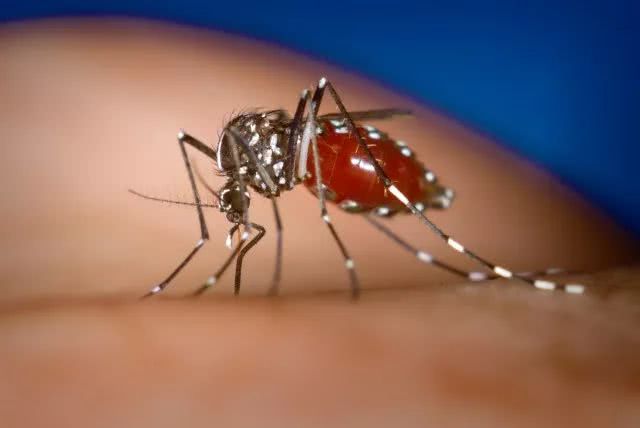
The weather is getting warmer, and it's mosquito season again. Brace yourself:there are over ten thousand species of mosquitoes.。
You've surely been bitten by this kind of mosquito before - which one is it? We'll get to that later. Image: James Gathany, CDC / wiki commons
The Life of a Mosquito
Mosquito larvae are calledwigglers[jie jue], and they live in small bodies of still water. Discarded bottles and jars, old tires, gutters, and sewers are all ideal breeding grounds for them, which is why mosquitoes thrive in cities where other animals struggle to survive.
Common mosquito breeding sites in cities. Image: medscape.com
Mosquito larvae are typical filter feeders, surviving by filtering microorganisms out of the water with specialized mouthparts. The larvae obtain oxygen from the air through a breathing tube at the tail end. Mosquito pupae also swim actively, which is fairly unusual among insects. Like the larvae, pupae cannot get oxygen from the water and must obtain it from the water's surface through a breathing tube; the tube breaks the water's surface tension with its opening fringed with hydrophobic hairs, so simply pouring a layer of oil on the water's surface will wipe them all out.
The pupa of the northern house mosquito (Culex pipiens); note that the image is upside down. Image: Arkive
After the adult emerges from the pupa, it rests briefly on the water's surface and is then ready to do what it needs to do.Only female mosquitoes bite,they need at least one blood meal to trigger the vitellogenesis pathway, and the nutrients their offspring need also come from blood. Males do not bite; their mouthparts and antennae are quite fancy and fuzzy, which allows themto easily distinguish males from females.。
A male Culex mosquito shortly after eclosion, its feathery antennae not yet dry. Image: Roger Eritja / Arkive
Not All Mosquitoes Bite
However,blood-feeding mosquitoes are limited to most members of the family Culicidae. Many other close relatives of mosquitoes, especially chironomid midges and crane flies, are often also called mosquitoes by people, but they do not bite.
Resting postures of common mosquitoes and their relatives. From left to right: Culex, Aedes, Anopheles, chironomid midge, crane fly. Illustration: Shenshen Chongyin
In fact, mosquitoes, chironomid midges, and crane flies are not hard to tell apart. Not only do they look different, but their resting postures are also distinctive:Mosquitoeshave pointed, long mouthparts and raise their hind legs when resting;chironomid midgeshave fuzzy antennae and often rest with their front legs raised; whilecrane flieshave very long legs and rest with all six feet on the ground. It is worth mentioning thatcrane flies are not necessarily large; there are many crane flies about the same size as mosquitoes, but their slender legs and stilt-like posture still make them conspicuous.
Who Are the Ones Biting You?
Now let's take a closer look at the blood-feeding Culex, Aedes, and Anopheles mosquitoes, to see who exactly is biting you!
Culex pipiens
Culex pipiens, commonly known as the northern house mosquito, is a common mosquito around us. As human transportation has become increasingly developed, Culex pipiens has followed in humanity's footsteps across the world.
A newly eclosed female adult Culex pipiens, emerging unstained from the mud. Image: Arkive
Culex pipiens lays its eggs in still water rich in microorganisms and organic matter;the eggs stick to each other and float on the water's surface like a raft, which is a characteristic of the genus Culex. The hatched larvae, bouncing and swimming through the water like rubber bands, are a sight familiar to many.
Eggs and larvae of Culex pipiens; click to enlarge. Image: Arkive
As the name suggests, Culex pipiens produces a high-pitched tone - though other mosquitoes do too.This annoying sound is not merely the buzzing of wings, but also a love duet sung between mosquito pairs; they adjust their sound frequency to sing duets and find suitable mates, much like humans singing antiphonal mountain songs.
A female Culex mosquito feeding on blood. Image: Roger Eritja / Arkive
Aedes albopictus
Aedes albopictus, commonly known as the Asian tiger mosquito, has the classic mosquito look:a jet-black body adorned with striking white markings, and long legs densely banded with white rings. Unlike most mosquitoes that love darkness and skulk about timidly, Aedes albopictus is active during the day, even at scorching noon; it has a very strong urge to attack and is not afraid to chase and bite passing humans in broad daylight. Its striking outfit and bold behavior have earned it folk names such as"flower mosquito" and "poison mosquito"in China, while in the West it is called the Asian tiger mosquito.
Aedes albopictus. Image: James Gathany, CDC / wiki commons
Mosquitoes generally prefer hot, humid tropical climates, but Aedes albopictus is somewhat unconventional even in its environmental preferences:it adapts well to temperate climates with four distinct seasons, and even shows greater competitiveness in cooler regions. Aedes albopictus was originally distributed in East Asia, and is a very common blood-feeding insect in eastern China, Japan, and Southeast Asia; today it has followed humans across the oceans and established new colonies in the Americas, Europe, and Africa. When students far away in the United States are tormented by the itchy bites of these striped-legged mosquitoes so familiar from childhood, do they not also feel a touch of affection from their homeland?
Anopheles sinensis
Anopheles sinensis is another little biting sprite around us. It is mainly distributed in China, Japan, South Korea, India, and Southeast Asia,and is a vector of malaria and other diseases. The genus Anopheles has over 400 species, many of which can transmit the deadly malaria parasite.
Identification within the genus Anopheles is not easy, but the differences between Anopheles and other mosquitoes are fairly obvious:Anopheles has very long maxillary palps, almost as long as the mouthparts; therefore its "needle" looks much thicker than that of other mosquitoes. Anopheles has spotted wings that look grayish; when resting, its body forms a straight line from mouthparts to abdomen.
Anopheles sinensis. Image: bo-protscience.fr
Their larvae are also very special: the wigglers of other mosquitoes generally hang below the water's surface at a vertical or slanted angle, with only the breathing tube connected to the surface; whereas Anopheles wigglers lie lazily flat along the water's surface.
The wiggler of Anopheles sinensis. Image: weblio.jp
Who Attracts Mosquitoes Most?
Why do mosquito bites itch so much? This starts with the mechanism of mosquito blood-feeding. The mosquito's mouthparts are highly modified from the basic chewing mouthparts of insects. The labrum, mandibles, maxillae, and other parts have all evolved into slender strips, working together like probes and scalpels to cut through the skin and drill downward; the labium is like a sheath protecting the other parts of the mouthparts and does not participate in piercing the skin.
After piercing into a blood vessel, the mosquito first injects saliva with anesthetic and anticoagulant effects; pathogens transmitted by mosquitoes also invade the human body through this step.And the saliva injected by the mosquito is precisely the culprit that makes us feel itchiness and redness: after the anesthetic effect of the saliva wears off, the immune reaction caused by allergens such as proteins in the saliva begins to make us miserable. Because each person's constitution varies greatly, sensitivity to mosquito saliva also differs.
A common saying is that certain blood types attract mosquitoes more, but in fact there is not enough research evidence to support this claim.Mosquitoes mainly rely on carbon dioxide, heat, and some volatile body surface compounds to find hosts. The carbon dioxide produced by animal respiration is a universal signal for blood-feeding insects searching for hosts; mosquitoes can also sense the heat of warm-blooded animals, but unlike animals such as rattlesnakes that can "see" infrared heat radiation, what mosquitoes perceive is mainly the thermal convection brought by breathing. Many volatile compounds from the human body surface (a considerable portion of which come from skin microbiota) are also among the chemical signals by which mosquitoes lock onto targets; becausethe body surface odor components differ enormously between individuals, some people are especially favored by mosquitoes, while others are less appealing to them.
How to Get Rid of Annoying Mosquitoes?
To get rid of these biting little sprites, one person's efforts alone are not enough; only by improving sanitation facilities and habits across society as a whole can mosquito numbers be effectively reduced. Monitoring population numbers, clearing habitats, large-scale pesticide application, male sterility techniques, and other means commonly used in mosquito control also cannot be achieved by one person alone; they require the joint efforts of professional institutions and the whole of society.
A mating pair of male and female Aedes mosquitoes. Image: James Gathany, CDC
So in the face of the mosquitoes that come with summer, what can we do within our power?
First,develop good hygiene habits, do not litter, and actively clean yards and community areas. If your home has fish ponds, lotus pots, or other containers that can breed mosquitoes, you can apply Bt-based insecticides or insect growth regulators that are safe for people and pets into the water.
Window screens, mosquito nets, mosquito coils, and mosquito repellent sprays containing effective ingredients such as DEET are alleconomical and effective mosquito prevention measures. To cater to consumer psychology, novel products such as mosquito repellent bracelets and mosquito repellent plants have also appeared on the market, but these are useless.
This article is from the 2015 Species Calendar, by Species Calendar author @Shenshen Chongyin.
Amazed by the author's illustrations in this article?
Click the link below for more
Calendar Girl's avatar for today
Culicidae Aedes albopictus