This tree in the mountains makes your hands rot if you touch it, yet its sap is a rare commodity worth 400 per jin
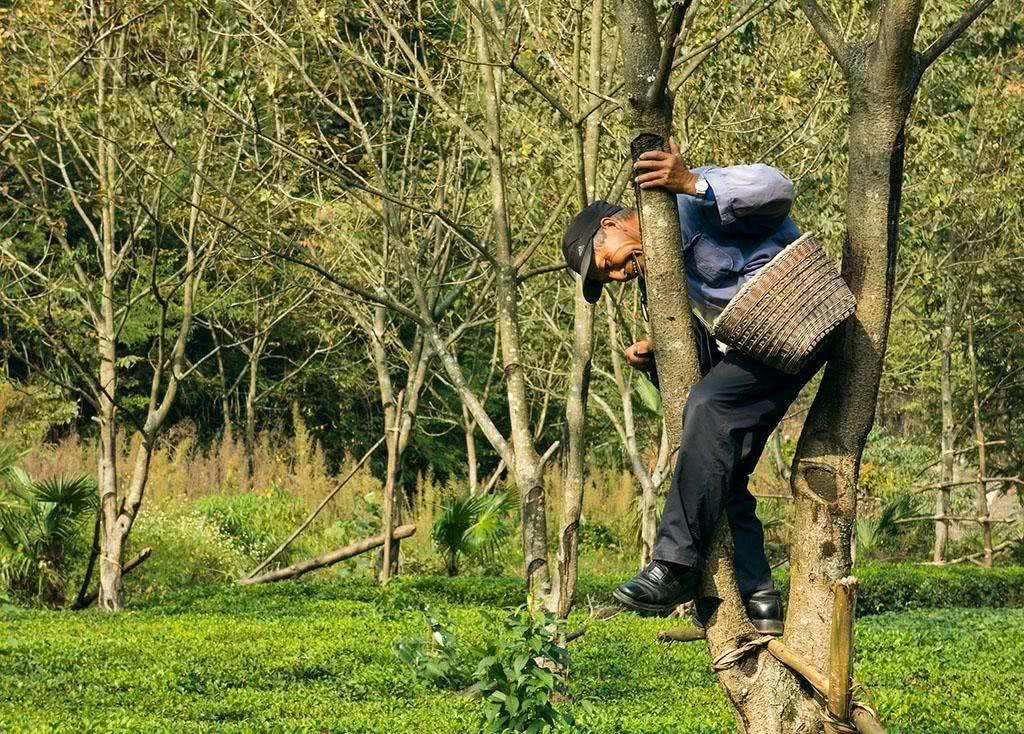
In China's mountainous areas, there are all kinds of trees, and among them is one that bleeds white sap when cut. This sap is somewhat toxic, and if you touch it directly with your bare hands without protective gear, it will cause your skin to turn red and swollen, unbearably painful and itchy. Many older farmers warn the children in their families that touching this tree will "rot your hands," to keep it from accidentally hurting them. But at the same time, its sap is a very precious rarity. In ancient times it was a tribute item, and today it sells for 400 yuan per jin.
This tree is very common in rural areas. It is called the lacquer tree (Toxicodendron vernicifluum), and its sap is the well-known "native lacquer," also called raw lacquer. Native lacquer is the sap that flows out after the bark is cut open directly; once it contacts the air, it becomes a coating that can be used right away, and it has long enjoyed the reputation of "king of coatings." The precious furniture of ancient China, such as rosewood furniture and red sandalwood furniture, was all finished by wiping, lacquering and polishing with native lacquer. Because it is moisture-proof and anti-corrosive, resistant to acids, alkalis and heat, full of luster and highly transparent, it is a top-grade coating for protecting precious furniture, more environmentally friendly and more durable than the chemical coatings common today.
But native lacquer is not easy to obtain. First, tapping lacquer is extremely hard work, dirty and exhausting, and fresh native lacquer is toxic. Once it touches a person's skin, it triggers a series of allergic reactions: rashes and blisters appear on the skin, with itching over large areas, and many people are allergic to it. After native lacquer touches the hands, the hands turn black and are hard to wash clean. The hands of many "lacquer tappers" are black all year round.
Second, although a single lacquer tree can be tapped many times, the yield each time is limited and must be collected little by little. It takes tapping over a thousand lacquer trees to collect one jin of native lacquer.
So the price of native lacquer is extremely high, around 400 yuan per jin. Farmers start tapping lacquer in April and finish in August, and can earn an income of about 20,000 yuan. That sounds like a decent income, but it is all hard-earned money. Every trade requires hard work to bring a satisfying return. Because tapping lacquer is so arduous, few people know this craft today. There are now many kinds of chemical coatings on the market, but the place of native lacquer cannot be replaced. Some precious furniture, lacquerware products, industrial equipment and handicrafts all depend on it, and its market prospects are still quite good.
Dear readers, do you know the lacquer tree? Has anyone ever tapped lacquer?