The development of agricultural mechanization in the United States is worth learning from, with more than 3 million farms
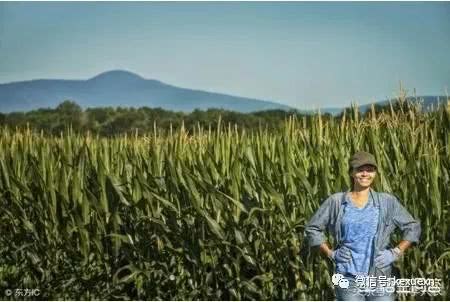
Regarding the situation of American agriculture, I think we can first get an overall sense of it from a set of numbers. The total U.S. population is 400 million, yet there are only 5 million agricultural workers. The United States has 3 million farms, so fewer than two people own one farm. In sharp contrast to this is our country, with a population of 1.3 billion and around 400 million agricultural workers, not to mention farms. To this day, the whole country is basically still a smallholder economy.
From the above, one can also see how backward our country's agricultural economy currently is. In the United States, fewer than two people can manage one farm. How is this done? It is nothing other than the fact that American agriculture has achieved a high degree of mechanization. It can be said that American agriculture is currently the most developed agriculture in the world.
Because of the farm-based operational characteristics of American agriculture, its features of intensification and large-scale operation are also very distinct, and this is also a major characteristic of American agriculture.
By the 1940s, American agricultural production had basically achieved mechanization, with operations from sowing and fertilizing to harvesting basically all mechanized, and efficiency was very high. And the standardized mechanized operations of American agriculture are not only highly efficient, but also very outstanding in terms of per-unit yield.
At present, the export volumes of American corn, soybeans, wheat, beef and pork all rank among the highest in the world, and these are unmatched by other countries.
The advanced state of American agriculture cannot be separated from high input in agriculture. The world seed company giant Monsanto is located in the United States, and from the perspective of high-level papers, the United States is very outstanding in biological research. The most typical point is that the United States can apply research results to practical production more quickly.
Take the recently approved golden rice as an example. On Children's Day this year, the U.S. FDA approved it, allowing golden rice to be sold on the market in the United States and approved for commercial cultivation. Although this research can, to a greater extent, help eliminate vitamin A deficiency among populations in poor African countries, the first to obtain its application are developed countries like Australia and the United States.
Being able to apply scientific research results to production more quickly has a very obvious role in promoting agricultural progress. Take our laboratory as an example. Some transgenic rapeseed varieties that facilitate mechanized rapeseed operations still remain in the laboratory and cannot benefit the common people. It must be said that this is also something worth reflecting on.
This is Science for Agriculture. You are welcome to follow, and let us grow our knowledge together.