Detailed Explanation of the High-Bed Sand-Mulch Seedling-Raising Technique for Oilseed Rockii Tree Peony
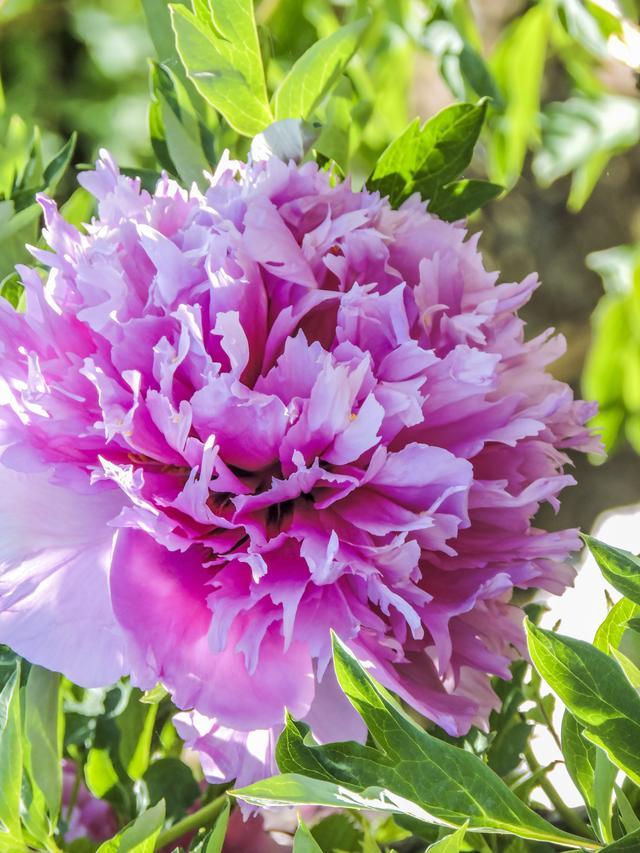
High-Bed Sand-Mulch Seedling-Raising Technique for Oilseed Rockii Tree Peony
Rockii tree peony (Paeonia suffruticosa Andr. var. Papaveracea), also known as Gansu peony or Northwest peony, belongs to the family Ranunculaceae, genus Paeonia, and is a deciduous shrub. Rockii tree peony gets its name from the distinct blotch at the base of the petals and has very high ornamental value. Although wild species are distributed in Gansu, Shaanxi, Henan and Hubei, cultivated varieties are mainly distributed in Sichuan, Gansu, Qinghai, Shaanxi, Ningxia and other provinces (autonomous regions). The branches of Rockii tree peony are short and thick. The leaves are usually bipinnately trifoliolate compound leaves, green and hairless on the upper surface, light green on the underside, sometimes with a white bloom. The flowers are solitary at the tips of the branches, with 5 petals or double petals, in rose, red-purple, pink to white. The flowering period is May, and the fruit ripens from August to September.
Rockii tree peony is an excellent variety within the Chinese peony cultivar group. It is drought-resistant, cold-resistant and salt-alkali-resistant, and ages slowly. It originated in the degraded secondary forests of the high-cold regions of Gansu and grows normally on high mountains at an altitude of 1100-3200 m. The winter minimum temperature in this region generally reaches minus 30 degrees C, and in some areas can reach minus 38 degrees C, so this variety is inherently cold-resistant. It can also grow in Zhongchuan, Gansu, where the annual rainfall is only 280 mm. It has a wide adaptability to soil and can grow well in sandy to clay soils ranging from acidic to alkaline (pH 6.5-8.2). It can be planted on hillsides, at the bottom of gullies, on terraces and in sandy land.
1 Selection of the seedling-raising site
Choose a sandy loam soil with flat terrain, convenient irrigation, good drainage, loose soil and fertile texture.
2 Land preparation and bed making
After the seedling-raising site is selected, apply 37500 kg/hm2 of decomposed organic fertilizer and 600 kg/hm2 of compound fertilizer before sowing, and at the same time apply soil insecticides and fungicides. After plowing and harrowing finely on a sunny day, level the ground and irrigate thoroughly with bottom water. Wait until the soil surface is slightly dry and the soil is crumbly, then make seedling beds 5-10 m long, 1.2 m wide and 0.15 m high, with 0.3 m walkways. The seedling beds are required to be level without water accumulation, and the soil particles fine and crumbly.
3 Seed treatment
3.1 Picking and seed selection
To cultivate high-quality, high-yield Rockii tree peony seedlings, it is essential to select new seeds that are plump and free of pests and diseases. Old seeds must absolutely not be used. Rockii tree peony exhibits epicotyl dormancy. Therefore, seeds should be collected from early August to September after the fruit skin turns yellow-brown.
3.2 Disinfection and soaking
Soak the seeds in a 0.5% potassium permanganate solution for 0.5 h, remove them, wash them clean with clear water, and then select the seeds with clear water. Place the selected plump, pest- and disease-free seeds in damp sand and store them for about 7 d, after which they can be sown. After undergoing low-temperature stratification through the winter, they will germinate and emerge.
4 Sowing
4.1 Sowing rate
The sowing rate of Rockii tree peony depends on the fertility status of the seedling-raising site and the seed weight, and is generally 750 kg/hm2.
4.2 Sowing time
Rockii tree peony seeds exhibit epicotyl dormancy and should be sown immediately after maturity. The later the sowing, the lower the germination rate. The sowing time for oilseed Rockii tree peony is generally from late August to early and mid-September, and late August is the most suitable for the Liupan Mountain area of Ningxia. If sowing is relatively late or is done in the following spring, germination is often delayed by one year.
4.3 Sowing method
Sowing uses horizontal wide-strip drilling, with a sowing width of 10 cm, a sowing depth of about 3 cm and a strip row spacing of 10 cm. During sowing, work in groups of three: one person opens the furrows, one person sows the seeds and one person covers with sand. The specific operation is as follows: the furrow opener uses a specially made wooden rake (rake head 1 m long, rake teeth 10 cm wide, tooth spacing 10 cm) to open sowing furrows about 3 cm deep horizontally on the seedling bed; the sower immediately follows and evenly broadcasts the seeds into the furrows; the sand coverer then spreads sand to cover them, with a covering thickness of about 3 cm. After a bed is fully sown, irrigate by flooding. The flooding speed should be such that the sand and seeds are not washed away, and the irrigation amount should be enough to submerge the bed surface, but water must not accumulate. About 1 month after the seeds are put into the ground, they begin to germinate and grow radicles. From late March to early April of the second year, the seedlings emerge.
5 Post-sowing management
From 20-30 d after sowing, the seeds germinate and take root. If the winter weather is dry, cover the nursery with 2 cm of straw to protect them through the winter. At the end of March and the beginning of April of the following year, after the seeds have had their epicotyl dormancy broken by the winter low temperatures, the young buds germinate and emerge successively. Provide appropriate shade for the seedlings according to weather conditions.
5.1 Cultivation and weeding
Weed as soon as weeds appear, and by no means wait until the weeds are overgrown before weeding. In the rainy seasons of spring and summer, hoe weeds once each time after rain when the ground is dry. Newly emerged young buds are tender and easily broken, so weeding must be done with special care, and the young buds must not be damaged.
5.2 Fertilization and watering
In spring, according to soil moisture conditions, irrigate about three times at the appropriate time, and apply urea at 75-150 kg/hm2 along with irrigation. After each irrigation, weed when the soil surface turns white and is slightly dry.
5.3 Drainage to prevent waterlogging
In rainy weather, clear the ditches and drain promptly to prevent water accumulation in the nursery, so as to avoid waterlogging of seedlings and root rot.
5.4 Thinning
To cultivate strong seedlings, thin and reduce the seedlings in good time. The suitable seedling output is 750,000 plants/hm2.
5.5 Frost protection
After winter begins, cover with straw in good time to prevent frost damage to the seedlings.
6 Pest and disease control
When the seedling leaves unfold and the spring temperature rises to 18-25 degrees C, the seedlings enter a period of rapid growth. At this time, attention should be paid to the occurrence and damage of fungal diseases. Fungicides, foliar fertilizer 0.3% potassium dihydrogen phosphate and growth promoters can be used in combination or separately, used continuously three times between March and April, with good results.
7 Leaving the nursery and transplanting
Oilseed Rockii tree peony seedlings can leave the nursery and be planted out in the Liupan Mountain area of Ningxia from late August to early September. If transplanted too early, the survival rate of transplanted seedlings is low because the temperature is relatively high; if transplanted too late, it is difficult for new roots to form in the same year, and the growth vigor the following year is weak. Seedlings should be lifted when the soil moisture is moderate, and transplanting is best done on windless days. When lifting seedlings, the young buds must not be knocked off and the root system must not be damaged. Rockii tree peony has fleshy roots that break easily, so graded seedlings should be placed in a shady place for 1-2 d, and can be planted out after the fleshy roots become slightly soft. Before planting out, treat the seedling root system with 1 per mille potassium permanganate and 0.1% APT rooting powder solution, which can reduce the occurrence of pests and diseases, promote root healing and increase the survival rate.