Tribe youth spark a red quinoa craze; this year's bumper harvest sends prices falling, experts urge: red quinoa stores well, don't dump it cheap
By Lin Pei-chun, upstream/downstream reporter
In recent years a health-and-wellness trend has taken hold, and Taiwan red quinoa, known as the "ruby of the grain world," has drawn attention for its extremely high nutritional value. "Walking a Road Not Far from Home" documented how young Paiwan farmers in Taitung called on young tribal members to return home and jointly build a tribal industry, allowing red quinoa, a traditional coarse grain once hidden away in the tribes, to leap onto the world stage.
But as more and more farmers pour into red quinoa production, this year's output hit a record high. A villager in Pingtung said bluntly that too many farmers rushed to plant it, causing red quinoa prices to plunge. "Mr. Red Quinoa" Wu Cheng-chung believes that as long as more market channels are opened up, the supply-demand imbalance can be solved. Pan Yung-hsiang, who helps indigenous people develop industries, also said red quinoa poses little storage concern and urged farmers not to panic after harvest and dump it cheap.
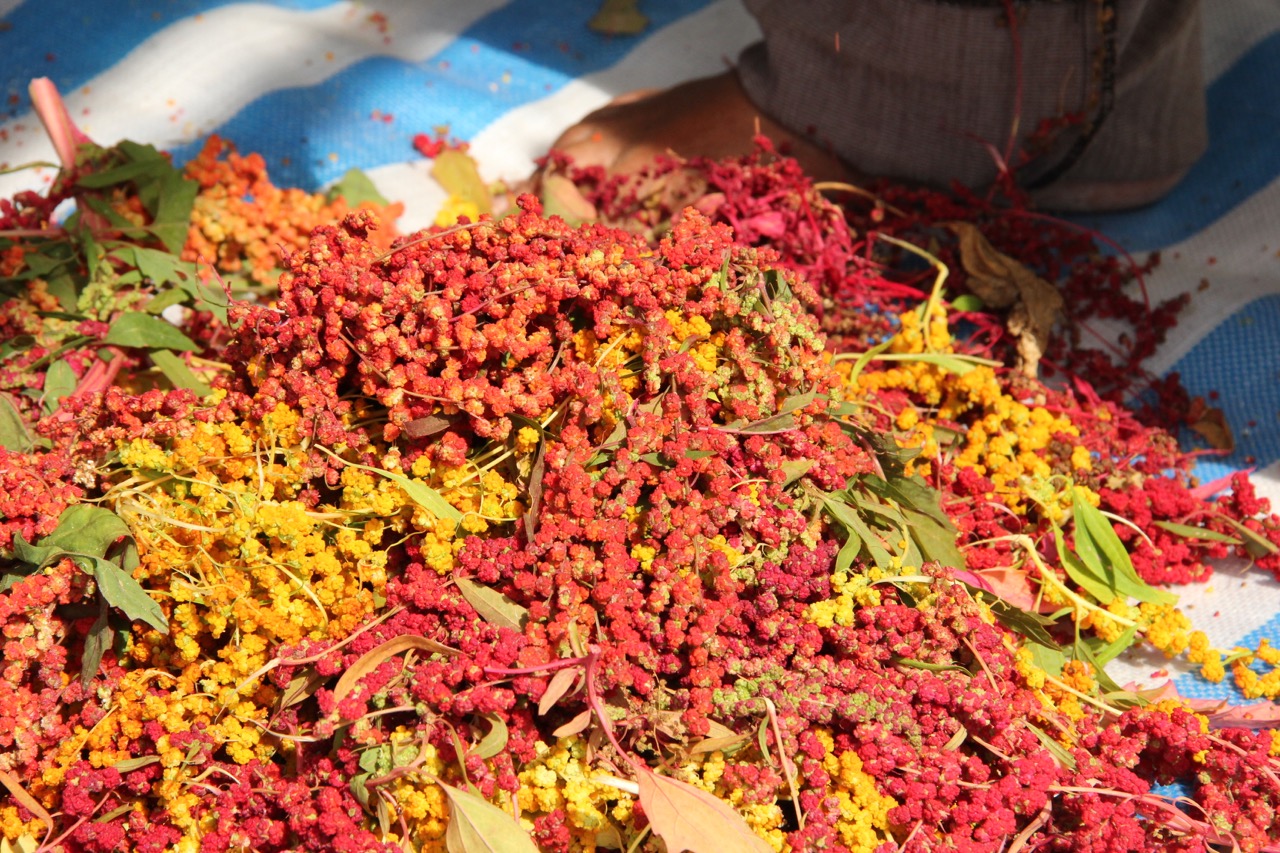
Red quinoa planting area grows, and a bumper harvest becomes pressure
As for whether red quinoa faces a sales slowdown, Wu Cheng-chung said that Taitung's red quinoa planting area has increased by at least 20 hectares compared with last year, and this year's bumper harvest has indeed raised output considerably; but as long as the market accepts red quinoa more readily, it can help balance the supply and demand sides. "This is a good thing, it's just that many consumers don't know it yet."
Wu Cheng-chung also pointed out that expanding red quinoa's market channels is important. "The channels haven't been opened yet, so of course there will be a sales slowdown." Wu plans to expand storage facilities for red quinoa and at the same time negotiate cooperation opportunities with various channels more actively, hoping to concretely raise market demand for red quinoa, so that in the future farmers can be encouraged to invest in red quinoa production with peace of mind.
Lai Li-cheng, village chief of Qingye Village in Pingtung, said that in recent years red quinoa planting has set off a craze, with both indigenous people and plains farmers rushing to plant it. This year Pingtung's red quinoa planting area is more than five times that of last year, and combined with a good harvest this year, output is several times that of previous years. "There's too much output, and we don't know what to do with it… the price is also very poor…."
Lai Li-cheng pointed out that in previous years one taiwanese catty of red quinoa could sell for 250 yuan, but this year the price is only 120~150 yuan. Facing a large unsold stock of red quinoa, Lai said helplessly that at present they can only actively seek out large processing companies, "trying to sell off the stock as much as possible."
Red quinoa can be stored, so farmers need not rush to dump it
Hsieh Chen-chang, farm manager of Kekegu Organic Red Quinoa Farm, also admitted that this year's red quinoa output is indeed higher than in previous years. He noted that this year in Yunlin, Changhua, Taitung and Pingtung there are many newly entered red quinoa farmers, some of them switching from rice. However, Hsieh stressed that farmers under contract with the farm have contractual guarantees and will not be affected by market price fluctuations; the purchase price for unhulled red quinoa is currently about 200-plus yuan per kilogram.
Hsieh Chen-chang pointed out that red quinoa is a storable crop, so even if supply increases greatly in a short time, it is unlikely to cause a price collapse.
Pan Yung-hsiang, chief executive of the startup project of the Pingtung County Indigenous Specialty Agriculture Promotion Association, said the increase in red quinoa planting area is mainly in non-indigenous tribal areas and the plains, such as Yunlin and Pingtung. Rice areas that were mostly left fallow in the second half of the year have, since last year, been planted with red quinoa one after another, making this year's output about two to three times that of last year.
But Pan Yung-hsiang said bluntly that farmers who have long worked under contract with businesses will not be affected by market price swings; "it is mainly small farmers' purchase prices that are fluctuating." Pan further pointed out that red quinoa belongs to the coarse grain category and, unlike other fruits and vegetables, poses little concern about a storage deadline. As long as it is kept at room temperature, kept away from moisture, and kept as isolated as possible from air and ultraviolet light, it can be stored long term.
Pan Yung-hsiang advises that after farmers harvest large amounts of red quinoa, they should not readily believe market price changes; as long as the red quinoa is stored properly and given some time, the price will stabilize, and he urged, "Do not dump it at a low price out of excessive panic!"