How to grow hydrangeas? These 3 secrets are the activators for blooming
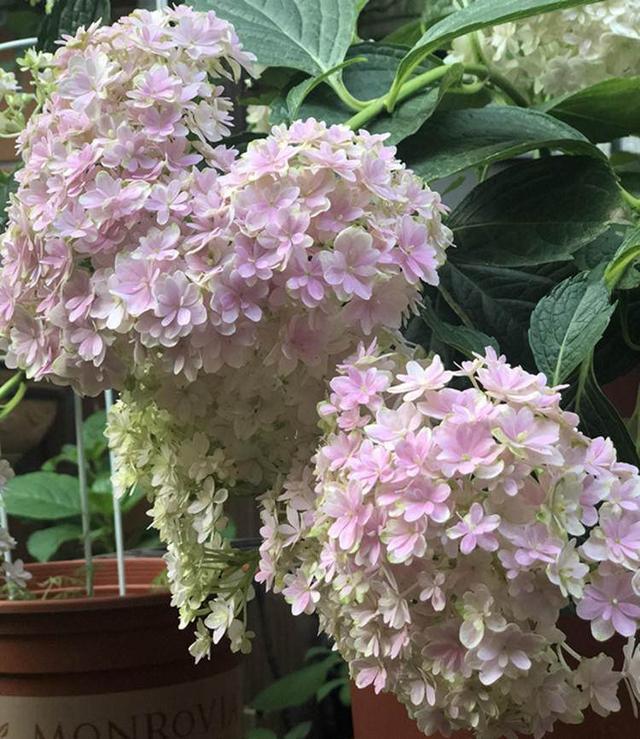
For hydrangeas, summer is their peak blooming season, blooming in masses, each one a big flower ball. However, to achieve this effect, when caring for hydrangeas, you need to pay attention to 3 little secrets, and these 3 secrets are the "activators" for hydrangea blooming.
1. The secret of soil mixing
Hydrangeas do not have very high soil requirements. They like moisture and cannot be short of water, but they do not like their roots sitting in heavy, sticky soil for a long time. Generally speaking, soil that is breathable, well-draining and nutrient-rich is suitable for growing hydrangeas.
Gardeners can use a basic three-in-one nutrient soil of peat, perlite and vermiculite as the base, adding leaf mold, garden soil or akadama, or they can use the soil they are used to using.
In addition, when growing hydrangeas, gardeners can also mix the soil according to the type:
(1) For growing bigleaf hydrangea, panicle hydrangea and smooth hydrangea: use 6 parts peat + 3 parts garden soil + 1 part perlite; or 4 parts small-grain akadama + 4 parts leaf mold + 2 parts coarse sand.
(2) When growing mountain hydrangea, good drainage is needed, but it must not dry out completely from lack of water; you can use 6 parts small-grain akadama or Sendan soil + 4 parts kanuma soil or coarse sand. After adding garden slow-release fertilizer, the mixed soil basically only needs repotting once every two years.
2. The secret of watering
Hydrangeas are plants that like moisture. Especially in summer, if the soil used drains too quickly, they may run short of water before noon in less than a day. So when preparing soil for hydrangeas, include more water-retaining materials such as garden soil, leaf mold or vermiculite. In addition, you can water thoroughly once the soil has dried out; in summer you can also use a spray bottle to mist the leaves to lower the temperature and increase humidity.
3. The secret of fertilizing
Because hydrangeas have a large number of flowers, a long blooming period, and large, thick leaves, they need a lot of nutrients. Gardeners can fertilize hydrangeas according to a few points:
(1) Winter base fertilizer
Gardeners can use a mixed fertilizer of 7 parts fermented cake fertilizer + 3 parts bone meal. The suitable fertilization period is from late December to early February of the following year. For courtyard planting, apply only once, in a larger amount; for potted plants, apply several times in small amounts.
(2) Topdressing in spring and summer
Hydrangeas need topdressing after blooming. Gardeners can apply a general-purpose organic nutrient solution for flowers. Depending on the blooming period of different varieties, generally early-blooming varieties from mid-May to June, and late-blooming varieties such as ball hydrangea from August to early September, apply organic liquid fertilizer 1 to 1.5 months after blooming ends. The fertilizer can be diluted 500 times, and applied once a week.