Has your rose sent out these pest and disease signals? Have you received them?
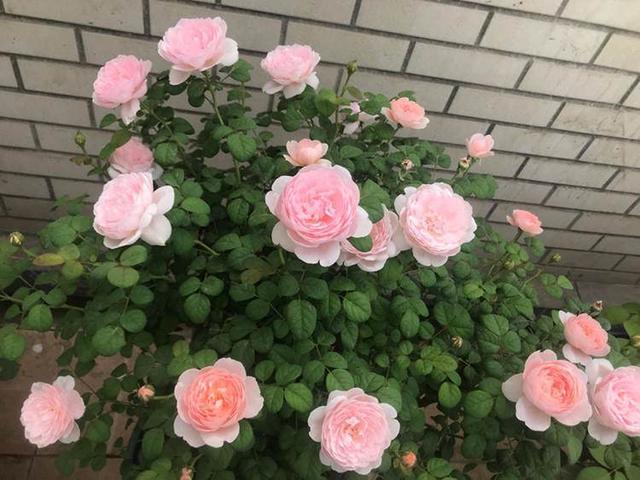
In summer, the weather changes dramatically, with torrential rain one moment and blazing sun the next. In such weather, roses easily fall prey to pests and diseases. However, because gardening friends do not understand the "signal" problem of rose pests and diseases during care, they often fail to prevent them in advance, and by the time they notice, it is often already the "beyond cure" stage.
So, when growing roses in summer, which pest and disease "signals" that roses send us should we pay attention to? Let's take a look together, gardening friends!
1. Black spots appear on the leaves, should they all be removed?
In this season, pay attention to diseases caused by rain and moisture. If gardening friends see black spots appear on rose leaves, at first it is a mild symptom: pick off the affected leaves and spray with a treatment. If the black spots spread, spray with treatment and keep the leaves that have not fallen off.
Spray with treatment once more occasionally over the course of 1 week. After that, if yellow lines appear on the affected leaves, it means the treatment is effective. Even if these leaves do not fall off when touched, just leave them as they are.
Normally, when gardening friends grow roses, they need to pay attention to replenishing nutrients in time, because even in summer, roses are still growing. Therefore, you can use an organic nutrient solution specially for roses, dilute it with water at 500 times and water the roots, once a week, to promote rose growth and enhance disease resistance.
2. The rose finally blooms, but the petals are covered with yellow-brown markings. What is the reason?
This is very likely caused by thrips. Collect all the petals and put them in a plastic bag and seal it. Thrips generally appear from May to October. Once they appear, they suck the sap of roses and cause damage. Ground-planted roses will also have petals stuck together after being injured by rain, and flower buds that cannot open.
This is actually caused by thrips laying eggs deep in the flowers or leaves. In affected roses, silver or yellow-brown markings appear on the petals, greatly affecting the beauty of the flowers. At this time, gardening friends need to cut the stems short as soon as possible to reduce the number of pests as much as possible. The cut spent flowers and stems must be sealed, and then just spray with a treatment.
3. The rose leaves look rusted. Why is that?
If you find that the rose leaves look rusted, it may be an invasion by leaf mites. Leaf mites, also known as red spiders, appear in large numbers from summer to autumn in places that cannot get rained on. Spraying water on the undersides of the rose leaves continuously for a period of time will reduce them. In addition, when using treatments to drive them out, alternate 2-3 kinds for the best effect.
Image from gardening friend: Big Ears Jun