High-Quality and High-Efficiency Cultivation Techniques for Log-Cultivated Ganoderma in Open Fields
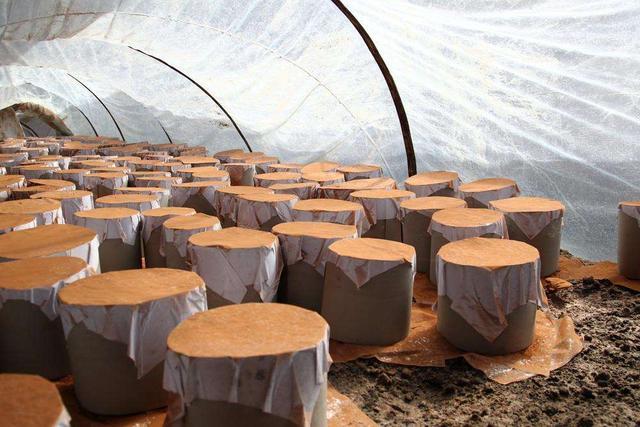
High-Quality and High-Efficiency Cultivation Techniques for Log-Cultivated Ganoderma in Open Fields
Ganoderma, also known as Shenzhi, Chizhi, Wood Ganoderma, etc., is a medicinal and edible fungus of the family Polyporaceae. It is neutral in nature and bitter in taste, and has medicinal functions such as enhancing human immunity, regulating blood sugar, controlling blood pressure, assisting tumor radiotherapy and chemotherapy, protecting the liver, and promoting sleep. Ganoderma has a medicinal history of more than two thousand years in China, and for thousands of years it has been regarded by the Chinese people as a panacea capable of curing all diseases, and has been listed as one of the nine great immortal herbs of China. With the development of science and technology and the continuous improvement of people's living standards, the artificial cultivation technology of Ganoderma has also been gradually promoted and applied. In order to explore high-quality and high-efficiency cultivation technical measures for Ganoderma under local climatic conditions, starting in 2011, we introduced new Ganoderma varieties and established a base of 20000 sq m in Xichuan Village, Wudabao Township, Qingyuan County, to carry out demonstration of high-quality and high-efficiency cultivation techniques for log-cultivated Ganoderma in open fields. Several years of demonstration cultivation have shown that, compared with bottle-cultivated and bag-cultivated Ganoderma, open-field log cultivation of Ganoderma eliminates the step of crushing wood sawdust, reduces the amount of raw materials used, and extends the product harvest period; moreover, the Ganoderma quality is better, with fairly obvious effects of saving labor, reducing costs, and increasing efficiency. According to survey statistics, each 667 sq m yields 600 kg of dried Ganoderma per year, with an output value of 62400 yuan. After deducting production costs, the net income per 667 sq m is 42300 yuan, showing remarkable economic benefits. The cultivation techniques are introduced as follows:
1 Process Flow
Tree selection → felling → cutting into sections → bagging → sterilization → inoculation → cultivation → bag removal → soil burial → management → fruiting → harvesting → drying → grading → packaging → finished product.
2 Operation Techniques
2.1 Selection of Trees and Cutting into Sections
Trees should mainly be selected from suitable hardwood species, choosing trees with relatively hard wood such as maple, photinia, and oak, with a diameter at breast height of 8-20 cm, and logs with a moisture content of 32%-42% are preferable. After the trees are selected, they should be cut into short sections of 20-30 cm. Generally, about 800 short log sections can be cut per cubic meter of log, and after cutting, they should be sealed with plastic bags.
2.2 Sterilization, Inoculation, and Mycelium Cultivation
A 100°C atmospheric pressure sterilization method is used, and the sterilization time should be maintained for 12-24 h. After sterilization and cooling, inoculation is carried out. Generally, about 80 bottles of spawn are needed per cubic meter of logs. After inoculation, the logs are cultivated indoors at a temperature of 25°C-28°C for about 60 d.
2.3 Bag Removal and Soil Burial
During the cultivation period, the bags can be removed once the mycelium has grown well. Before burying in soil, a field with good drainage, open ventilation, loose soil, and fertility should be selected as the cultivation site, and beds and ditches should be made with a bed width of 150-180 cm, a bed height of 25 cm, and a ditch width of 30-40 cm. When burying in soil, the logs can be placed perpendicular or parallel to the bed surface, then covered with an appropriate amount of soil so that the logs are just slightly visible, and a shading frame should be set up.
2.4 Cultivation and Management
During the mycelium growth stage, the temperature inside the shed should be controlled at 22°C-28°C, while air humidity, ventilation, and light have no strict requirements. At the stage of fruiting body formation and differentiation, the temperature should be around 26°C, the relative humidity should be maintained at 85%-95%, the light should mainly be scattered light, avoiding direct strong light, and good ventilation conditions are required.
2.5 Harvesting of Ganoderma
Generally, the first flush of fresh Ganoderma can begin to be harvested 4 months after the logs are buried in soil. The standards for Ganoderma maturity are: the single fruiting body changes from pale yellow to yellowish brown, the ring of tender yellow at the edge of the cap disappears, the white growth points around the cap disappear, the cap begins to become leathery, and it should be harvested promptly when spores are being released. When harvesting, a sharp blade can be used to cut the stipe, leaving about 0.5 cm, and the cut should be flat. Within 1-2 d after harvesting, watering should be continued, and cultivation should continue, so that a second flush of fruiting bodies can grow from the original stipe. After one month, the second batch of Ganoderma can be harvested. Cut off the base fungal remnants of the stipe from the harvested Ganoderma, and after baking or sun-drying, bag and seal it promptly for storage.
3 Key Points
(1) Select high-quality and high-yield varieties to obtain relatively high returns, such as the "Hunong No. 1" variety.
(2) When bagging logs, plastic bags are easily punctured; pay attention to observation and use transparent tape to patch leaks.
(3) The time for burying logs in soil should be chosen in March-April, on sunny days when the field is dry. The burial density of logs should be evenly arranged with a spacing of 5 cm and a row spacing of 20 cm.
(4) During the cultivation and management stage, water management during the primordium differentiation stage should be emphasized. When Ganoderma enters the primordium differentiation stage, the relative humidity of the cultivation site should reach 80%-90%, and the covering soil layer should remain both loose and moist. When many fruiting bodies appear, clean water should be sprayed frequently to increase air circulation in the greenhouse.
(5) The continuous cultivation period of log-cultivated Ganoderma lasts 2-3 years. In winter, the site should be covered with rice straw for warmth to prevent frost damage, and the covering should be removed promptly after Qingming.