Key Points of High-Yield Cultivation Techniques for Kudzu and Analysis of Planting Benefits
Exploration of Key Points and Benefits of High-Yield Cultivation Techniques for Kudzu
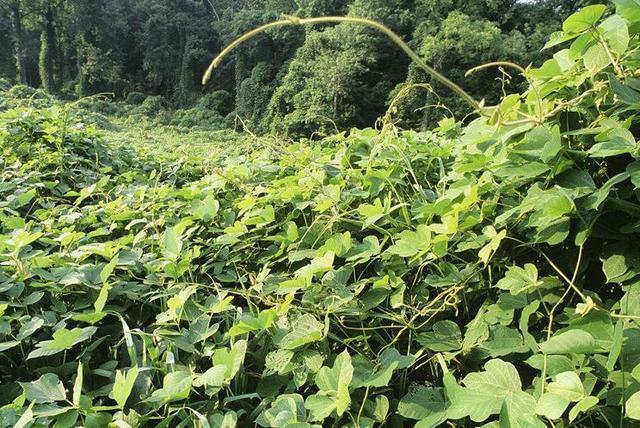
Kudzu, also known as Gematen, is a leguminous plant. Its starch content accounts for more than 40%, and it also contains a variety of trace elements and flavonoids. It is a green food with relatively high nutritional value. In addition, kudzu also has important medicinal value, playing a certain role in lowering blood pressure, lowering blood lipids, and resisting cancer. Each part of the kudzu plant has different economic value: the stem bark is an important component of papermaking materials; the leaves can be used as green fodder for animals such as cattle and sheep; kudzu flowers can be used to make wine and tea, and have the effect of clearing the heart and brightening the eyes and dilating blood vessels [1]. Therefore, on the basis of scientific cultivation of kudzu, achieving reasonable processing, packaging, and sales can bring good economic returns.
1 Key Points of High-Yield Cultivation Techniques for Kudzu
1.1 Measures for Land Preparation and Site Selection
Because kudzu has a relatively developed and thick root system and does not have strict requirements for soil conditions, when planting kudzu it is only necessary to ensure that the soil thickness and the nutrients within it meet the relevant requirements. At the same time, during site selection, attention should be paid to whether the drainage function near the field is good. This is mainly because kudzu has poor waterlogging tolerance, so during planting it is necessary to ensure that the groundwater level is below 1.6 m. In addition, it is recommended to choose sandy soil, and the best choices are land with relatively thick soil on barren hills or forest cutting sites. The land preparation process mainly requires deep plowing of the soil, and the plowing depth needs to be controlled at about 0.4-0.6 m. At the same time, the best time for deep plowing is winter, which can ensure the best soil fertility at that time. When selecting base fertilizer, miscellaneous fertilizer can be used as the main raw material, and a compound fertilizer composed of the three elements nitrogen, phosphorus, and potassium can be added to it, and the fertilizer amount per square meter needs to be controlled at about 90 kg [2].
1.2 Measures for Ridging and Bed Making
The work of ridging and bed making needs to be decided according to the actual planting area. Generally speaking, the length of the bottom of the bed needs to be controlled at about 0.3-0.4 m, and the width needs to be controlled at about 16 cm. The bed area is directly related to the later planting density. After completing the bed work, it is also necessary to choose the crop cultivation method. If the pure cropping method is chosen, the density needs to be controlled at 800 plants/667 m2, and the plant spacing needs to be controlled at about 0.6 m. If the intercropping method is chosen, then a large open bed of about 2 m needs to be designed for planting. The cultivation density of kudzu is about 500 plants/667 m2, and the plant spacing needs to be controlled at about 0.6 m [3].
1.3 Measures for Planting and Transplanting
When carrying out the custom transplanting of kudzu plants, it is necessary to use the vine-layering or division method to cultivate kudzu seedlings. During transplanting, it is necessary to ensure soil moisture and environmental temperature. Generally, transplanting can only be carried out within February to March, when the outdoor temperature reaches about 15°C. In order to ensure the smooth progress of transplanting, it is necessary to water or sprinkle water on the soil where the seedlings to be transplanted are located, so as to ensure the actual soil moisture. At the same time, during actual transplanting work, kudzu seedlings should be inserted obliquely, keeping the buds of the kudzu seedlings pointing upward, so as to facilitate later management. After transplanting is completed, it is also necessary to keep the roots of the seedlings moist to ensure the survival rate of the seedlings. When cultivating kudzu seedlings, it is necessary to ensure the rational use of seedling-raising techniques, such as choosing electric heating to promote germination, so as to achieve the early-stage breeding effect.
1.4 Measures for Trellising and Vine Guiding
Because kudzu has many vine nodes on the roots and tends to grow new roots after contacting the soil environment, affecting the growth of other crops, relevant trellises can be set up for vine guiding according to its climbing characteristics. Generally speaking, when the kudzu roots grow to about 40 cm, it is necessary to begin trellising and vine guiding. Trellising and vine guiding measures can not only strengthen the photosynthesis of kudzu and improve the light transmission and ventilation of the plants, but also reduce the excessive consumption of nutrients by the plants in the soil, which leads to the accumulation of a large amount of starch. The trellis for vine guiding can be reinforced in an "A"-shaped form, and it can also increase the actual yield of kudzu [4].
1.5 Measures for Vine Training and Pinching
Vine training and pinching work refers to regularly removing excess vines during kudzu cultivation, retaining only about two main vines, and trellising them. When the main vines grow to about 2.5 m, the growers need to top and pinch them to avoid excessive consumption of nutrients in the soil. Growers need to prune branches about 1 m away from the main vines, pruning once about every 14 d, until the branches no longer grow.
1.6 Measures for Vine Layering and Seedling Raising
When the kudzu vines grow to about 1.6 m, vine layering and seedling raising treatment is needed to ensure the healthy growth of kudzu. Vine layering and seedling raising requires growers to select relatively thick vines, loosen the soil, and bury the relatively thick vine nodes into the soil so that they can grow new roots. After the roots have grown successfully, cut off the leaf nodes at both ends of the roots and then insert them into the soil so that they grow independently. At the same time, the newly grown roots need to be regularly irrigated with 0.5% diluted urea fertilizer water to ensure that the needs of plant growth can be met.
1.7 Measures for Fertilizer and Water Management
Because kudzu is a leguminous plant, in order to ensure the healthy growth of kudzu, it is necessary to do a good job in fertilizer and water management. For the roots of kudzu, because their nitrogen fixation capacity is relatively strong, there is no need to add nitrogen fertilizer. Therefore, growers need to observe the actual growth of kudzu before deciding to add suitable fertilizer. If the growth of kudzu is poor, then nitrogen fertilizer and compound fertilizer should be added at about 15 kg/667 m2, and regular additional applications should be made according to time and frequency. For example, after kudzu is planted, when the kudzu seedlings grow to about 0.3 m, it is necessary to observe the kudzu seedlings and carry out topdressing work. In addition, once thunderstorms occur, the irrigation amount for kudzu needs to be reduced to avoid excessively high soil moisture in the kudzu field, which may cause root rot [5].
1.8 Measures for Pest and Disease Control
Because kudzu is generally planted in February to March, pest and disease conditions are still within controllable range. In spring and winter, however, the roots of kudzu have relatively high starch content and a relatively strong sweet taste, making them likely to attract rats and cause rat damage. Therefore, in spring and winter, extra attention should be paid to rat prevention in kudzu fields, and some biological methods should be chosen to reduce the rat damage problem.
2 Research on the Benefits of Kudzu
Generally speaking, under high-yield cultivation, each 667 m2 of kudzu can usually obtain a yield of 1500-2300 kg. At present, fresh kudzu is 5-7 yuan per 1 kg. Based on a yield of 1500-2300 kg per 667 m2, an income of about 10000 yuan can be obtained. At the same time, other parts of kudzu can also be processed, such as making kudzu tea, and the actual economic benefits of kudzu can be improved by optimizing the relevant industrial structure. In addition, the economic benefits of kudzu are also relatively high. The economic returns of kudzu-growing areas can, on the one hand, increase the actual economic income of farmers, and on the other hand, also promote the economic development of rural areas, forming an integrated production chain of kudzu production, processing, packaging, and sales, and driving the development of the overall kudzu industry [6].
3 Several Suggestions for Improving Efficient Cultivation Techniques and Benefits of Kudzu
First, pay attention to seed selection. At present, there are many types of kudzu on the market, but among them, fine-leaf kudzu has relatively smooth tuber skin, a relatively strong sweet taste, and relatively high starch content, and is relatively popular among people. Therefore, when selecting kudzu for planting, growers should buy kudzu seeds with a relatively high survival rate from regular manufacturers, and should choose seeds with a relatively high market purchase rate.
Second, continuously improve kudzu cultivation techniques. Because kudzu crops have poor waterlogging tolerance, when planting kudzu, an environment with a relatively low groundwater level and relatively thick soil must be selected. At the same time, according to relevant practice, rotating planting can better increase the actual yield of kudzu. Although the current techniques for planting kudzu are relatively simple and require relatively little from growers, if growers lack relevant experience, they cannot achieve high-yield kudzu planting. Therefore, before introducing and cultivating kudzu, training work must be done well.
Third, strengthen cooperation with enterprises. Because kudzu is a relatively high-yield crop, most of it needs deep processing. Therefore, before planting and cultivating, growers must contact relevant enterprises and find good sales channels; otherwise, they may face the danger of unsold products. At the same time, growers also need to investigate the sales channels of enterprises.
In summary, through effective analysis of high-yield cultivation techniques for kudzu, some effective suggestions can be given to farmers engaged in kudzu cultivation and planting. At the same time, because kudzu cultivation techniques are relatively simple and the risk of planting kudzu is relatively small, relatively large yield returns can be obtained. Therefore, the final economic benefits of kudzu mainly depend on whether cooperation can be carried out with good processing enterprises and on factors such as whether the processing and sales channels of processing enterprises are stable. Only by gradually improving the economic benefits of kudzu can the rapid development of the local economy be promoted.