Detailed Explanation of Cultivation Techniques for Cuihong Plum in Yinjiang, Guizhou
Cultivation Techniques for Cuihong Plum in Yinjiang, Guizhou
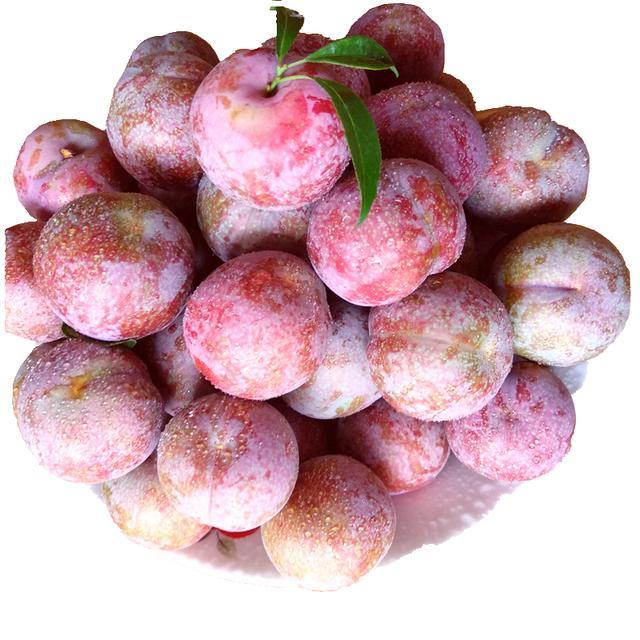
Cuihong plum is a crisp plum variety among Chinese plums, with crisp skin and sweet flesh. When the fruit matures, it turns purplish-red, hence the name Cuihong plum. Because its fruit is sweet and fragrant with superior quality, it is loved by consumers and hailed as a premium plum.
Yinjiang County in Guizhou Province is a main battlefield in the national fight against poverty. In recent years, in order to find a way out for the development of the agricultural poverty-alleviation industry in Yinjiang County, the Agricultural Technology Extension Station of Banxi Town, Yinjiang County introduced Cuihong plum for trial planting. The cultivation trial results showed that Cuihong plum grows well in hilly and mid-mountain landforms, with high yield and excellent quality. After planting, it enters full fruit-bearing stage in 4 to 5 years, with an average yield of more than 2000 kg per 667 sq m, and an economic benefit of more than 1.37 ten-thousand yuan per 667 sq m (55 trees/667 sq m). The highest single-tree yield is about 150 kg, with an economic benefit of 1050 yuan. Implementing the cultivation and management of Cuihong plum in mountainous areas avoids the problem of alternate bearing, enabling fruit farmers to increase their income year after year. Through developing Cuihong plum, this poverty-alleviation battle that cannot afford to be lost can be won. The cultivation techniques for Cuihong plum are introduced as follows.
1 Planting Techniques
1.1 Orchard Site Selection
Cuihong plum does not have particularly strict requirements for soil, but because its root system is distributed in the surface layer of the soil and it is not tolerant of waterlogging, sandy soil that does not easily accumulate water and has a deep soil layer should be selected. Choose sandy loam with high and dry terrain, facing the sun, sheltered from the wind, on a south-facing slope, with a deep soil layer, fertile soil, loose and well-aerated, a low groundwater table, where plum trees have not been planted before or with an interval of more than 5 years after previous planting, and with convenient transportation.
1.2 Planting Density and Land Preparation Time
Mountainous soil is relatively thin and the slope is relatively steep, so fruit farmers generally plant 1 to 2 rows along the field ridge, with a plant spacing of 3 m x 4 m as appropriate. Planting methods: rectangular, square, or triangular (pig-trotter fork) arrangements can be used on flat land, while contour cultivation is mainly used on mountainous land. Land preparation time is generally in November each year.
1.3 Land Preparation Specifications
80 cm x 80 cm x 60 cm is appropriate.
1.4 Seedling Requirements
In order to bear fruit earlier and improve economic benefits, the seedlings must be 1-year-old grafted certified seedlings of good varieties, free from pests and diseases.
1.5 Planting Time and Method
The best planting time is from December each year to January of the following year. Strictly adopt the seedling planting method of "three burials, two tramplings, and one lifting of the seedling." That is, first break up the topsoil, mix it with decomposed base fertilizer, and backfill it; then cover the base-fertilizer soil with a thin layer of soil; then place the seedling in the center of the hole and hold it upright; backfill soil to about 3/4 of the hole depth; gently lift the seedling upward, with the lifting height based on the criterion that the seedling roots naturally extend downward and are not cramped; then trample the backfilled soil firmly with the foot, cover with soil again, and trample firmly again; the third soil covering should be centered on the seedling, piled into a shape that is high inside and level with the ground outside. This helps the planting hole retain fertilizer and moisture, prevents water accumulation in the hole, and avoids affecting normal seedling growth.
2 Pruning Techniques
2.1 Trunk Heading and Sprout Removal
After the Cuihong plum sapling is planted, when the trunk height is 50 to 60 cm, timely carry out trunk heading. Remove buds below 30 cm on the trunk and keep plump buds from 30 to 60 cm on the trunk. When the new shoots have grown to about 2 cm, select 4 to 5 vigorous new shoots with relatively large angles as main branches, and cut off the other new shoots from the base, so as to facilitate the cultivation of vigorous main branches.
2.2 Training and Pruning of Young Trees
In the first winter after planting, the young trees should be pruned. When pruning, leave about 60 cm on the main branches; in order to facilitate the expansion of branch opening angle, keep an outer bud as the cut bud. Competitive branches should be thinned out or heavily cut back; the remaining branches can be left unpruned or lightly pruned according to actual conditions. By the second year's growing season, pruning needs to be carried out 3 to 4 more times. At the beginning of spring when buds sprout, carry out the first pruning, removing weak buds, diseased buds, and buds growing in the wrong direction. In early to mid-May, carry out the second pruning, thinning out overly dense branches, keeping and training branches with the right direction and a large angle below the cut as extension branches on the main branches, and pinching or lightly pruning the other branches to promote the sprouting of side branches. To ensure the dominance of the extension branches, competitive branches with small angles and vigorous growth should also be thinned out and heavily cut back. In mid-July, carry out the third pruning, shortening excessive water sprouts to ensure the development of secondary shoots. Winter pruning can be chosen in December, thinning out crossing and overlapping branches; other branches can be pruned or not pruned according to actual conditions. After 4 years of pruning, the shaping of young trees is basically complete.
2.3 Training and Pruning During the Full Fruit-Bearing Stage
Four years after planting, Cuihong plum has already entered the initial fruiting stage, and by the 6th year it enters the full fruit-bearing stage. Trees at this stage are prone to producing dead branches because of heavy fruiting and damage to branches during picking. Therefore, during winter pruning, all dead branches should be cut off, overly dense branches should be thinned out, crossing and interlocking branches should be short-cut, and other branches can be pruned or not pruned according to actual conditions. If pruning is carried out during the growing stage, attention should be paid to shortening excessive water sprouts; the remaining medium and long branches should be pinched or short-cut according to their growth conditions to promote the growth of fruiting branches.
3 Soil, Fertilizer, and Water Management
3.1 Soil Management
Overall requirements: loose, well-aerated, deep, without water accumulation, and relatively fertile.
Before planting, deep plowing must be carried out to improve the soil and sufficient base fertilizer must be applied. After planting, expand the hole year by year to facilitate root system expansion and new root growth. In the young tree stage, before the canopy closes, appropriate intercropping may be carried out, but tall-stalk crops should be avoided; leguminous green manure, tuber crops, or forage crops are best. In the middle stage, after the canopy closes, intercropping is not suitable. A method combining growing grass with clean cultivation can be adopted: during the off-season when Cuihong plum trees have low water and fertilizer needs, allow grass to grow naturally to prevent loss of water, soil, and fertilizer; during the critical period when Cuihong plum trees need water and fertilizer, remove weeds, compost them after decomposition, and return them to the soil. This can both resolve the conflict between weeds and Cuihong plum trees competing for fertilizer and water, and conserve water and fertilizer, appropriately providing fertilizer for Cuihong plum trees.
3.2 Fertilization
The required ratio of nitrogen, phosphorus, and potassium for Cuihong plum is 1.0:0.4:1.6, which can serve as a reference for fertilization.
3.2.1 Fertilization for Young Trees: Young trees should be fertilized frequently and lightly. Newly planted Cuihong plum saplings should not be fertilized in a hurry. After new shoots turn green, begin by drenching each tree with 0.2% urea plus 0.2% compound fertilizer 3 to 5 kg, or apply decomposed human and livestock manure or decomposed peanut bran water fertilizer (diluted 1:20), which benefits shoot growth. Once a month, topdress 5 to 6 times a year, mainly with nitrogen fertilizer. In September to October, heavily apply base fertilizer, with decomposed farmyard manure being the best.
3.2.2 Fertilization for Mature Trees: Generally, Cuihong plum trees that have entered the fruiting stage should be given base fertilizer once each year and topdressing 3 to 4 times. Base fertilizer: the amount used accounts for 50% to 80% of the annual fertilization amount, mainly slow-release farmyard manure, with a nitrogen, phosphorus, and potassium ratio of 1:0.5:1. The suitable application period for base fertilizer is from late September to early to mid-October, and application should emphasize the principles of "deep, heavy, and complete." Trench application is the main method. Topdressing: for every 50 kg of fruit produced, 150 to 200 kg of human and livestock manure, 2.5 to 3 kg of urea, 3 kg of phosphate fertilizer, and 2 to 3 kg of potassium fertilizer need to be topdressed.
3.3 Irrigation and Drainage
3.3.1 Irrigation: Although Cuihong plum is drought-tolerant, to achieve high yield it must have an adequate water supply. Irrigation should not be carried out during the flowering period, otherwise it will cause flower and fruit drop.
In a normal year, watering is needed only once, namely: watering after autumn base fertilizer application (especially trench application) to settle the soil. In dry years, pre-flowering water, post-flowering water, and fruit-swelling water can be applied.
3.3.2 Drainage: Cuihong plum trees are drought-tolerant but not waterlogging-tolerant. In case of heavy rain, drainage should be carried out promptly to keep the orchard free of water accumulation.
4 Pest and Disease Control
The main diseases that Cuihong plum is susceptible to include brown rot and gummosis, and the main pests it faces include red spider mite, peach fruit borer, and peach pyralid moth.
Disease control measures: choose 800-fold thiophanate-methyl solution and 500 to 800-fold mancozeb solution for spraying.
Pest control: focus on prevention. In winter, eliminate eggs; apply lime-sulfur mixture with a Baume degree to the base trunk of Cuihong plum. In spring, spray the trunk and surrounding ground of Cuihong plum with 500 to 800-fold trichlorfon powder or 500-fold phoxim to prevent pests from entering the trunk. The peak occurrence of peach fruit borer and peach pyralid moth is in May, and 500-fold Suposha or 2000-fold dimethoate can be used for 2 to 3 sprayings, with a spraying interval of 7 d.