These potted plants thrive and fill their pots easily when given plenty of water, so plant lovers should not miss them
Nowadays, more and more friends like to grow some potted plants at home, such as ivy, pothos, spider plants, etc., which can not only delight the mood and add greenery and color, but also absorb harmful substances in the air such as formaldehyde and xylene, playing a role in purifying the air. However, many friends who love plants suffer from having no time to care for them and so do not grow them. In this case, it is better to grow some very easy-to-grow potted plants; as long as they are given enough water, they can easily grow to fill their pots. So, below we will introduce some very easy-to-grow potted plants. Friends who love plants, come and take a look!
1. Purple heart (Tradescantia pallida)
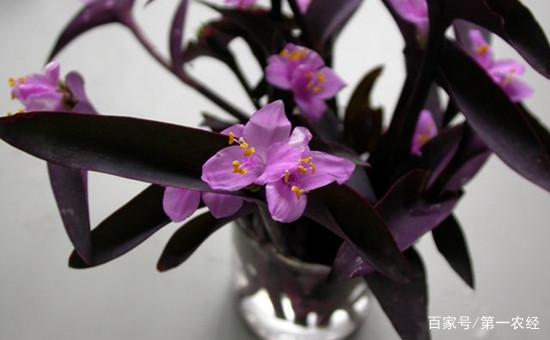
Purple heart has very strong vitality and does well with extensive management. It does not need much care. You only need to snap off two branches and put them in a hydroponic bottle, and they will quickly take root. After rooting, they can be transplanted into pots for care, and they very easily grow to fill the pot. The hydroponic method for purple heart is as follows: the container for hydroponically growing purple heart is usually just a glass bottle, preferably one with a larger bottom and opening and a narrow middle, which is beneficial to the growth of hydroponic plants. The size of the container depends on how many plants there are, and usually it does not need to be too large; add an appropriate amount of water to the container and then soak the purple heart to be grown hydroponically in the water, with the water just covering the plant's roots. Usually people with hydroponic experience know that if tap water is used as the water source, then it is recommended to leave the water in sunlight for a day before use, which is more beneficial for plant cultivation; after planting, observe the cleanliness of the water frequently, and if it becomes cloudy, change the water in time. If there are no disease changes in the roots, then the water can be changed after some time; once the branches have grown new roots and the number of roots is increasing, the hydroponic growing is considered successful.
2. Pennywort (Hydrocotyle vulgaris)
Pennywort has extremely strong reproductive ability. Just a small section of stem can propagate a large pot, and it grows very well as long as sufficient water is ensured. In ordinary care, be sure to ensure sufficient water and light, and it can grow to fill the pot in a very short time. During the care of pennywort, it likes a relatively moist growing environment. Because it has many leaves and high transpiration, in summer it should be sprayed with water frequently to maintain relatively high air humidity, and the leaves should be kept clean to facilitate photosynthesis. In winter, the potting soil should preferably be on the drier side, and watering should follow the principle of preferring wet over dry, avoiding waterlogging, otherwise it is prone to root rot. Water once every morning, and the amount should not be too much, with water flowing out of the bottom holes as the standard, ensuring the potting soil is thoroughly moistened.
3. Inch plant (Tradescantia zebrina)
Inch plant can produce small pink-purple flowers. Even if it does not bloom, it is a foliage plant with high ornamental value. Break off a section of branch and it can grow into a hanging effect like a spider plant. Inch plant also relatively likes light. As long as the light is sufficient, its leaves will grow more and more purple, and it very easily fills the pot. During the care of inch plant, it fears direct strong light and needs to be placed in a semi-shaded place for care, or given 70% shade. When kept indoors, place it in a bright spot as much as possible; the most suitable growing temperature for inch plant is 18-30°C, and it fears cold and frost. The overwintering temperature should be above 10°C. Below 4°C it enters a dormant state, and when the temperature approaches 0°C it will die from frost damage; inch plant requires relatively high air humidity. If the air is dry, the leaves are often prone to drying and the leaf tips scorch. Therefore, during the growing season, attention should be paid to frequently spraying water on the stems and leaves to maintain air humidity.
4. Ivy (Hedera helix)
Ivy has beautiful leaf shapes and stays evergreen all year round. It can naturally attach vertically or grow as a cover, and can play a role in decorating and beautifying the environment. When displayed indoors, it can be used to cover indoor walls, which not only has a decorative effect but also provides some shade. At the same time, ivy is also a potted plant that very easily fills the pot and can fill it in no time. During the care of ivy, it likes light and is also fairly shade-tolerant. Grown under semi-light conditions, the internodes are shorter, the leaf shape is consistent, and the leaf color is vivid, so it is suitable to grow it in a bright indoor spot. During the growing season, watering should follow the principle of watering when dry and stopping when wet, and the potting soil must not be overly moist, otherwise it easily causes root rot and leaf drop. In winter, when room temperature is low, watering should especially be controlled, and keeping the potting soil slightly moist is enough. In northern winters, the climate is dry, so it is best to spray-wash with clean water close to room temperature once a week to maintain air humidity, so that the plant appears lively and the leaves are tender green and glossy.