Potted azaleas die most easily when grown this way, and it is not too late to learn now
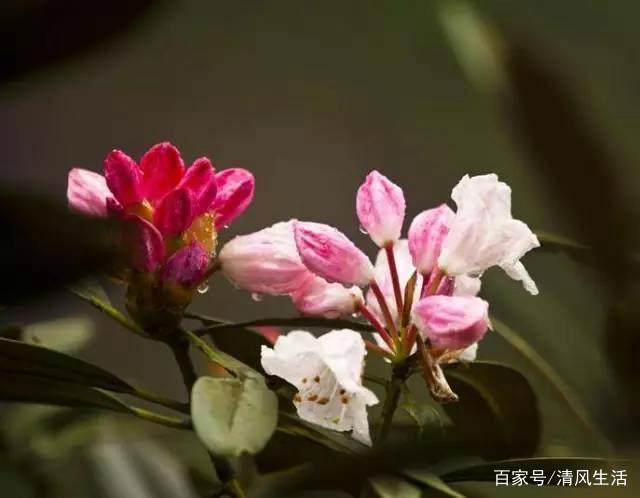
There are many kinds of azaleas, with leaves and beautiful flowers. Suitable for planting and potted plants. It is one of China's top ten traditional flowers. Legend says the Rhododendron was made from a bird coughing blood, also known as yingshanhong. The genus Rhododendron is a neutral flower that needs a warm, semi-shaded, cool, ventilated and humid environment. It likes ample sunlight but fears direct sun, fears cold, avoids heavy fertilizer, and cannot tolerate waterlogging. Many people find theirs dead before it blooms. The causes of death are usually as follows:
Poor ventilation
The indoor environment is relatively closed, air circulation is poor, and combined with human activity this leads to an increase in indoor harmful gases. Azaleas are cool and refreshing. If ventilation is poor, it is easy to form a high-temperature, hot, dry environment, and problems such as brown spot disease and red spider mites readily appear. Therefore, potted azaleas should be ventilated often by opening windows, improving ventilation conditions, and frequently spraying the branches and leaves with water to increase humidity and reduce watering.
Insufficient light
The genus Rhododendron likes a cool, humid, ventilated, semi-shaded environment. It fears both extreme cold and extreme heat. In summer it should be protected from sun and kept in shade. In winter it should be kept warm and protected from cold. Avoid direct sunlight; it is suited to growing under scattered light intensity. The flowering period of azaleas is relatively long, and the nutrients in the plant are heavily consumed. Compared with natural growth, indoor cultivation has severely insufficient light, photosynthesis is affected, and nutrients cannot be replenished in time, so the plant may wither and die. In spring, early summer and winter, light should be provided in the morning to avoid long exposure to weak light.
Insufficient soil acidity
The genus Rhododendron needs loose soil with strong permeability, good drainage and rich soil humic acid. The azalea is also a fibrous-root plant. It is suited to a soil pH of 5.5-6.5. If it grows in clay or alkaline soil, it will cause small azalea flowers, dry stems and branches, and even death. When watering azaleas, add a small amount of vinegar or ferrous sulfate to effectively raise the soil pH and make the soil more suitable for azalea growth.
Unreasonable water and fertilizer
Azalea roots are very thin, so they fear dryness and fear waterlogging. Watering too much can cause leaf drop and bud drop. If they are often in an excessively moist state, they can easily lead to root rot and death. Water should be given moderately. The soil should be kept dry and moist. Keep air humidity above 70%. In winter, strictly control water and keep the soil slightly moist. Azaleas are very fond of fertilizer and cannot do without rich fertilizer. In spring and autumn, apply mint fertilizer and liquid water once, growing for 1 day, growing for 10 days. It can be fermented with boiling water, fruit peels and vegetable leaves. In autumn, some phosphorus and potassium fertilizer can also be added, which can be made with fish, chicken offal and minced meat water along with rice husks and fruit peels. Thin fertilizer must be applied, and pay attention to rich fertilizer.
Insufficient growing space
The size of the azalea is unsuitable, or it has not been changed in the pot for a long time. There will be a small plant that is too long, too dense and short of growing space, which leads to the consumption and depletion of nutrients and death. Therefore, azaleas do not need to be repotted every year. Usually every 2 to 3 years, minimize damage to the roots, and the time should be after the flowers fade or after autumn. At the same time, eradicate overly long fibrous roots and roots, dry roots, replace with new soil, and promote root metabolism.