Which succulents struggle the most in summer? You might have some at home
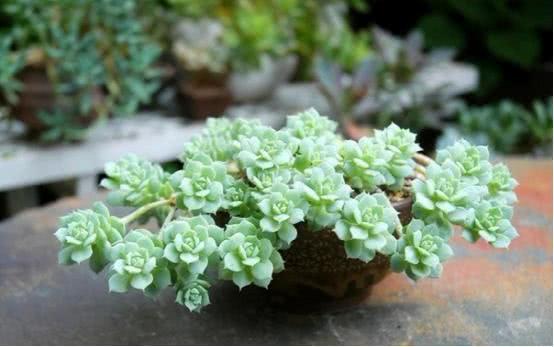
Why is summer always widely regarded as the death season for succulents? Of course, this saying may be too absolute, but for most succulent varieties, summer is undoubtedly a testing period, a process comparable to the eve of the college entrance exam, when students grit their teeth and hold on, because holding on means everything, and getting through this hurdle means victory.
Succulents tend to die easily in summer, mainly because of the harsh summer weather. Summer temperatures are high and water evaporates quickly. By normal logic, this would be the time to water plants more, but not necessarily for succulents. Succulent roots are fleshy roots, and as soon as water exceeds what the root system can absorb, they rot. The external sign is the roots and stem turning black, which is what we call black rot.
So which succulents are most likely to suffer in summer? Let's take a look at these most common ordinary succulent varieties. Hurry and check whether you have any at home!
1. Echeveria 'Hanaikada' (Yudie)
Echeveria 'Hanaikada' is a fairly common, run-of-the-mill succulent variety, and many succulent lovers have one at home. Looking at it, I initially thought it would be a tough survivor, but it turned out I was too naive and foolish. It is simply a plant that teeters on the edge of life and death every summer.
Care tips: Don't let its relatively thick stems fool you into thinking it is truly sturdy. As soon as the weather turns hot, start gradually reducing watering, and above 35 degrees, just don't water at all. Ventilation is a must, especially right after watering.
2. Sedum rubrotinctum (Jelly Beans)
Who would have thought that Sedum rubrotinctum, which pups and fills pots so easily, would be a frequent victim of black rot! Let's just say it is indeed very easy to grow (except in summer), but it also dies very easily.
Care tips: Absolutely do not water on rainy or overcast days, and in midsummer absolutely control water, watering once a month is enough! It also tends to grow leggy easily, but aside from life and death, being ugly is no big deal.
3. Echeveria derenbergii (Jingye)
Just hearing its name makes it sound incredibly delicate, and it is usually the first to feel summer's arrival, making it a key watch target in the succulent world for preventing black rot.
Care tips: It tends to produce many heads, and several plants often crowd together in one pot, which easily leads to poor ventilation. So maintaining ventilation is the top priority. Promptly remove old leaves and rotted small heads to keep the plant fresh and dry.
4. Haworthia cooperi (Yulu)
Bringing out the color in Haworthia cooperi takes real skill, especially in summer. It fears sun exposure, loves ventilation, and enters dormancy in summer.
Care tips: In summer, be sure to shade it, as strong light will wilt it. Under high temperatures, be sure to control water, watering about once every 25 days is enough. Its appearance in summer will be very poor, with the color starting to fade from the outer ring. At this time, don't give up on it, as it can revive in autumn.
5. Sedeveria 'Letizia' (Tia)
Sedeveria 'Letizia' is also a variety very prone to black rot, and I once killed one myself. I was afraid its color wouldn't be vivid enough, so I put it outside in full sun and watered it heavily. As you can imagine, it died.
Care tips: Just place it in a ventilated spot where it can receive scattered light, and water less, water less, water less! Water in a circle along the inner edge of the pot, no need to water directly in the middle, just give it enough water that it won't die of drought.