How to grow potted Eustoma (Lisianthus)? Care methods for plants bought home from the flower shop
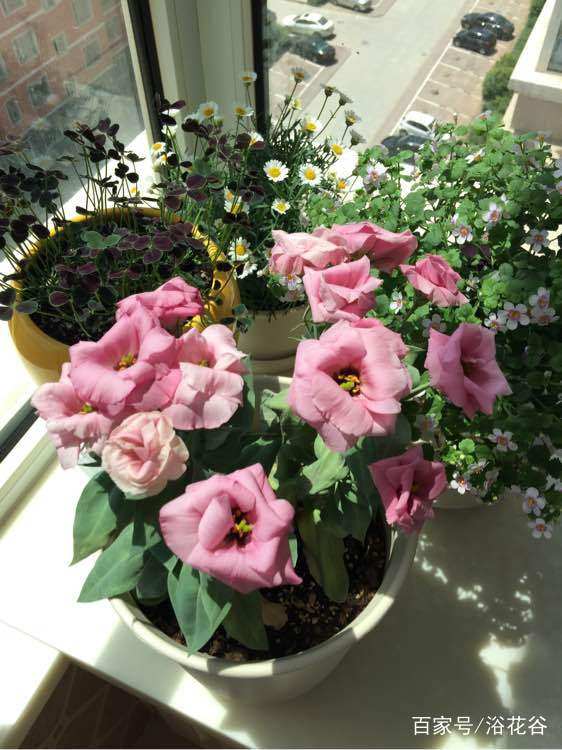
Eustoma comes not only in potted varieties but also in cut-flower varieties, but because the seedling stage is difficult to grow, many flower lovers are deterred. Still, some flower lovers choose to buy finished plants directly. This article explains how to grow Eustoma, including potted plants bought from the flower shop.
Most flower lovers who find this article probably already have a pot of Eustoma, so we will briefly cover sowing at the end of the article. First we mainly discuss daily care. Flower lovers who need information on sowing can refer to the related articles at the bottom of the page, which contain specific sowing methods for Eustoma seeds.
The care for Eustoma bought from a flower shop is the same as for Eustoma we grow ourselves from seed: both need good light and ventilation, and they grow faster under conditions of high temperature and long-day sunlight. This is a very important factor, and they must not be kept indoors (especially finished potted plants bought from the flower shop; many flower lovers think of placing them indoors right away for viewing, which is fine short-term but not long-term).
Because the Eustoma we buy from the flower shop is generally in full bloom, after flowering you can cut off the flower stalks, which promotes the growth of basal shoots. Sometimes it blooms while producing basal shoots at the same time. Once the basal shoots have grown out, the old stems can be cut off.
Many flower lovers probably also want to ask: can cut-flower Eustoma bought from the flower shop be propagated by cuttings? Actually it can, but the survival rate is not high, and rooting takes a relatively long time. The soil below is from a flower lover's cutting: the axillary buds emerged quickly, but rooting was very slow, taking about a month and a half. If it is a branch cut from your own potted plant, the survival rate is much higher.
In addition, although Eustoma is often grown as an annual or biennial plant, if the indoor temperature in winter is relatively high, it can be grown for many years.
Regarding ordinary watering, Eustoma has a very high demand for water, but excessively high humidity easily damages the root system, so the potting soil only needs to be slightly moist; do not let water accumulate. Eustoma already in full bloom does not need fertilizing. If it has not yet flowered, you can give some phosphorus and potassium fertilizer that promotes flowering, such as Bikaihua and similar products.
Actually, Eustoma that is already a large plant is not difficult to grow; extensive management is enough. Just remember not to move its position constantly.
Next we will talk about sowing Eustoma. There are generally two best time periods for sowing: spring and autumn. Sowing in spring means you see flowers the same year; sowing in autumn means you see flowers the following year. Eustoma grows relatively slowly during the small seedling stage, so it really tests a flower lover's care skills, because the longer the seedling stage, the greater the chance of making mistakes.
In addition, if we buy seeds intending to sow them, we must first understand clearly whether we are buying cut-flower or potted types, because cut-flower Eustoma plants are very tall and tend to flop over when grown on a balcony, so they do not look good enough. Therefore, for balconies it is generally recommended to grow potted dwarf Eustoma.