What are the characteristics of organic ecological soilless cultivation?
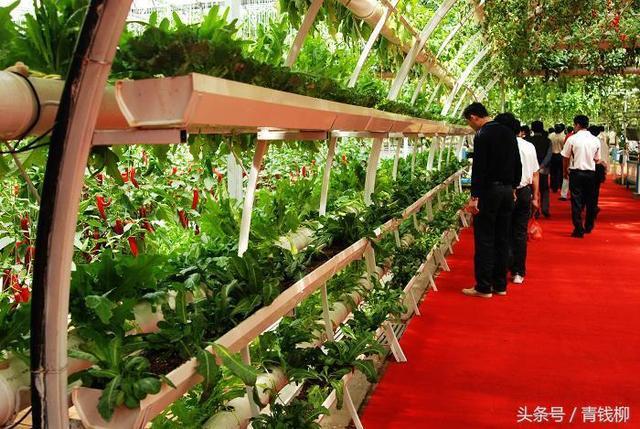
Characteristics of organic ecological soilless cultivation
The organic ecological soilless cultivation technique has the characteristics of general soilless cultivation, such as: increasing crop yield and quality, reducing pesticide use, clean and hygienic products, saving water, fertilizer and labor, and using non-arable land to produce vegetables, and so on. In addition, organic ecological soilless cultivation also has the following unique characteristics
① Replacing traditional nutrient solution with organic solid fertilizer: Traditional soilless cultivation uses various inorganic chemical fertilizers to prepare a nutrient solution of a certain concentration for crops to absorb and use. Organic ecological soilless cultivation, however, directly mixes various organic fertilizers or inorganic fertilizers in solid form into the substrate as the basis for supplying the nutrients needed by the cultivated crops. During the entire growth period of the crops, the solid fertilizer can be directly applied several times every few days to the surface of the substrate to maintain the intensity of nutrient supply.
② Simple operation and management: The nutrient solution of traditional soilless cultivation needs to maintain a certain concentration of various nutrient elements and the balance among various elements, especially the effectiveness of trace elements. Because organic ecological soilless cultivation uses substrate cultivation and applies organic fertilizer, not only are all kinds of nutrient elements complete, but trace elements are also supplied in excess. Therefore, in management, the main focus is on considering the total supply and balance of the three elements nitrogen, phosphorus and potassium, which greatly simplifies the operation and management process.
③ Greatly reducing the one-time investment in the soilless cultivation facility system: Because organic ecological soilless cultivation does not use nutrient solution, all the equipment needed for preparing nutrient solution, such as testing systems, timers and circulation pumps, can be completely eliminated.
④ Greatly saving production costs: Organic ecological soilless cultivation mainly uses sterilized organic fertilizer. Compared with using nutrient solution, its fertilizer cost is reduced by 60-80%. This greatly saves the production cost of soilless cultivation.
⑤ No pollution to the environment: Under soilless cultivation conditions, it is normal for about 20% of the water or nutrient solution to be discharged outside the system during irrigation, but if the salt concentration in the discharged solution is too high, it will pollute the environment. The nitrate content in the discharged solution of the organic ecological soilless cultivation system is only 1-4 mg/liter, causing no pollution to the environment, while the nitrate content in the discharged solution of the rockwool cultivation system is as high as 212 mg/liter, causing serious pollution to groundwater. It can thus be seen that using the organic ecological soilless cultivation method to produce vegetables not only makes the products clean and hygienic, but also causes no pollution to the environment.
⑥ Product quality can reach the "green food" standard: From the cultivation substrate to the fertilizers applied, organic substances are the main component. After the organic fertilizer used has undergone certain processing treatments (such as high-temperature and anaerobic fermentation, etc.), during its decomposition and release of nutrients, excessive harmful inorganic salts will not appear. The small amount of inorganic chemical fertilizer used does not include nitrate nitrogen fertilizer, and there is no pollution from other harmful chemical substances during the cultivation process, so that the products can reach the "Grade A or Grade AA green food" standard.
In summary, organic ecological soilless cultivation has the notable characteristics of low investment, low cost, less labor, easy operation, and high-yield and high-quality products. It introduces organic agriculture into soilless cultivation and is a simple soilless cultivation technique combining organic and inorganic agriculture with high benefits and low cost. Since the introduction of this technique, it has been favored by a large number of producers. At present, it has been applied over a relatively large area in Beijing, Shanxi, Shandong, Henan, Liaoning, Xinjiang, Gansu, Guangdong, Hainan and other places, playing a good exemplary role and achieving good economic and social benefits.