I heard that succulents die after blooming. My succulent has bloomed - should I cut it off?
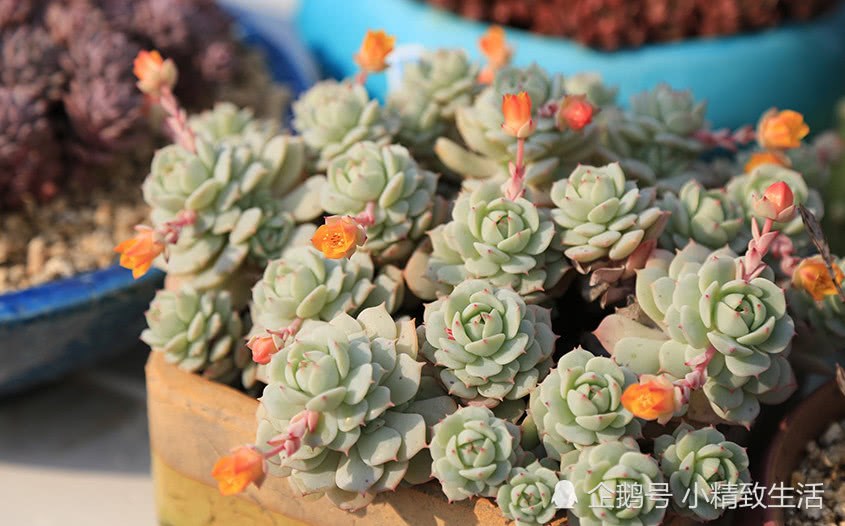
Blooming is a way for plants to reproduce after reaching maturity, and it is a natural phenomenon in the normal process of growth. However, when succulents bloom, it causes many friends a great deal of worry. Because they have heard that many succulents die after blooming, some friends fall into a panic as soon as they see a succulent bloom. Actually, there is no need for that at all. Below, Little Exquisite Life will walk you through the different situations when succulents bloom.
1. Succulents that die as soon as they bloom:
Orostachys (dunce's cap): blooming means certain death, but it leaves behind many little offsets;
Sempervivum (hens and chicks): blooming foretells death. "Long life" does not mean eternal life, but rather an endless ability to propagate;
Agave: also dies after blooming, but has already secured the next generation before it blooms;
Aeonium: after blooming, only the rosette that bloomed dies;
Some varieties of Echeveria and Crassula also die after blooming.
Once the succulents above finish blooming, their lives have basically reached the end, because they have given all their nutrients to the flowers. If you do not want to see this happen, you can cut off the buds when there are signs of blooming. Of course, just like birth, aging, illness and death in humans, succulents have their own growth patterns. Even if they die, there is no need to feel gloomy, because being able to bloom is itself proof that you have cared for them well.
2. For most succulents, such as Echeveria, blooming is actually nothing to worry about. For those that are very robust and do not produce many flower stalks, you can absolutely leave them to enjoy the flowers, since a blooming succulent is extremely beautiful. If you want to experiment, you can also try pollinating and crossbreeding. For Crassulaceae succulents, crossbreeding only requires brushing back and forth in the flower center with a fine brush. You can also cut off the flower stalk and try flower cuttings, because the flower stalk gathers a large amount of nutrients and the survival rate is very high;
In addition, there will be some individual plants with poor root systems. After blooming, these may consume a large amount of nutrients, causing the plant to become thin because it cannot keep up with nutrition. For succulents like this, cut off the flower stalk as soon as it emerges;
There are also succulents that attract large numbers of mealybugs to the flower stalk because of the nectar produced after blooming. In that case, do not hesitate - just cut off the flower stalk and throw it away.
In short, blooming is a process in a succulent's growth. It represents that the succulent has entered its mature stage, and to a certain extent it also indirectly proves that you have cared for it well. Whether to cut the blooming flower stalk or not is entirely up to you. If a succulent dies because of blooming, that is a natural law, and there is no need to feel distressed - just let nature take its course.
The above was compiled and published by Little Exquisite Life. I hope it is helpful to you.