DIY leaf mold for Clivia - free of charge, loose and airy, with leaves so dark green and plump they practically drip with oil
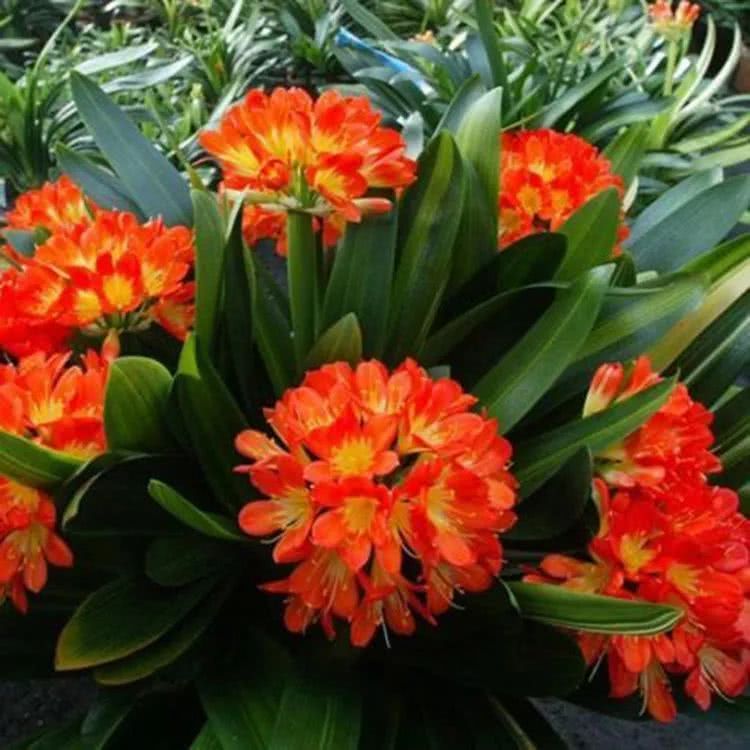
Normally when we grow Clivia, we all say the soil used is leaf mold, but which kind of leaf mold exactly is it? Let's talk about it in detail
The Clivia nutrient soil we buy from the market, the kind in small plastic bags, is mostly made from fallen leaves from the forest regions of Northeast China. These fallen leaves are also quite varied: there are oak leaves (also called Mongolian oak; in Northeast China it is called oak, a collective name for species of the Fagaceae family, with nearly 700 species worldwide and more than 60 species in China), poplar leaves, white birch leaves, willow leaves, and so on. Some manufacturers also mix in fallen leaves of coniferous species. In some places, oak leaves make up the majority.
Now whether it is online sales or live video streaming, they all say it is special nutrient soil for Clivia, but that is just a marketing method and tactic. In fact, this nutrient soil cannot possibly be made from a single kind of leaf. Of course, after processing and decomposition, these leaves are slightly acidic, both loose and airy, and with a certain water-draining and water-retaining function. It is a nutrient soil very suitable for Clivia and other flowering plants.
Actually, when we grow Clivia, we do not necessarily have to use leaf mold from Northeast China. When growing them at home, we can absolutely mix up some ourselves. It is both water-draining and airy and rich in nutrients.
We can crush the leftover peanut shells, sunflower seed shells and other nut shells, and we can also collect some leaves to mix in, or after autumn collect some poplar leaves, willow leaves, pagoda tree leaves and so on to store and ferment. Soak them thoroughly with water, put them in a plastic bag and ferment. After they are decomposed, add a small amount of garden soil, coal cinder, peat soil, coarse sand, or vermiculite and perlite, all of which work. It is a very good soil for Clivia.
When these materials are fermenting, if you want to shorten the fermentation period and increase the acidity of the soil, before putting them into the plastic bag you can spray on some dissolved yeast powder and ferrous sulfate solution, and place it in a warmer place (above 20°C), which will effectively speed up the decomposition of the materials. The growing medium processed this way is slightly acidic and rich in a large amount of nutrients, and can be combined with various other materials to grow Clivia. The growing results are no worse than bought
If you also like growing flowers, follow Balcony Garden Vegetable Plot, and please help forward and support it. Buyan thanks everyone here.