Feeling sleepy and sluggish in summer? The little "bears" are calling you to join the party
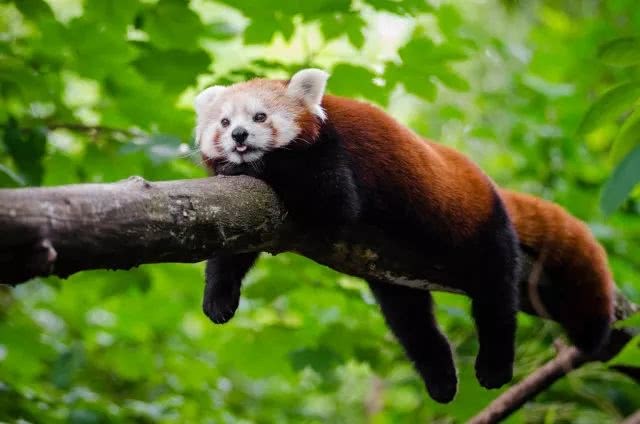
Drowsy in the summer heat - why not flop down together for a bit?Among mammals, flopping down is a common resting posture. When the little "bears" get tired from playing and relax, they'll likely choose to lie down or flop down.
How do you like to flop? Come and find your match!
1. The Cute Flop
Probably no one can resistred panda's charm. They walk slowly, and during the day mostlylie quietly on trees. Their black bellies help them blend into the tree shade, making it hard for ground predators to spot them, like this:
Image: Mathias Appel / flickr
The red panda teaches you the cute flop
Be sure to be well-behaved, quiet and adorable. Sticking out your tongue earns bonus points!
2. The Desk Flop
Raccoonsare about the same size as red pandas, but usually much heavier. These dusty grey little chubsters are night "bears",resting by day and active by night. If they can flop, of course they won't sit:
Image: Pixabay
The raccoon teaches you the desk flop
Sit down first, then flop onto the desk. Your gaze can drift, but your posture must be on point!
3. The "Comatose" Flop
Not allpolar bearshibernate. In fact,only pregnant polar bear mothers curl up in maternity dens, lowering their energy metabolism. Polar bears in zoos hibernate even more rarely, but even without hibernating, they still have to sleep:
Image: Jean-Luc 2005 / wiki commons
The polar bear teaches you the "comatose" flop
Completely relaxed! Achieve the enviable effect of looking as if you've passed out cold.
4. The "Surrender" Flop
Asian black bearshave a crescent-shaped white patch on their chests, which is why they're also called "moon bears". As an animal widely found in forests from the tropics to the cold temperate zone, they actuallydo hibernate. After all, no matter the season, sleeping with both arms stretched forward must be quite comfortable.
The Asian black bear teaches you the "surrender" flop
"Let me see your hands!" Relax your shoulders, stretch both arms forward naturally. Especially good for flopping on blankets and pillows.
5. The "Ice-Hugging" Flop
You've surely seengiant pandasin zoos hugging "ice blocks". Wild giant pandas live in high-mountain bamboo forests, wheretemperatures stay below 20°C year-round. Brought to human cities with outdoor temperatures of thirty or forty degrees, how could giant pandas stand it without finding a block of "ice" to flop on:
Image: hannah
The giant panda teaches you the "ice-hugging" flop
You don't necessarily need real ice - the key is that it's icy cold and can instantly free you from the heat! The hotter the weather, the more dramatic the effect.