This flower is shaped like a flying bird, with a very peculiar scent
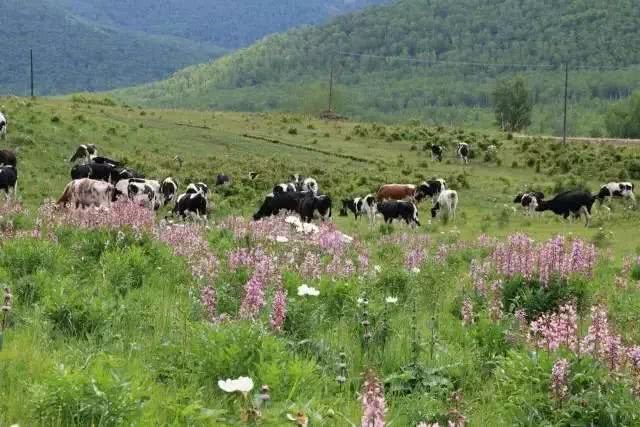
The first time I heard of the plant Dictamnus dasycarpus was in senior student Ye Dan's post from last year, "The Greater Khingan Mountains in Full Bloom with Wildflowers":
...along the road to Enhe, a Russian ethnic township, I encountered a batch of Dictamnus dasycarpus, with white peonies in the mountains paired with pink-purple Dictamnus dasycarpus, truly beautiful...
And last month, I also encountered this strikingly beautiful plant in Beijing.
[Dictamnus dasycarpus] Rutaceae >> Dictamnus
Dictamnus dasycarpus is distributed toward the north, and can be found from Anhui and Jiangxi to the northern border of our country. It is also a medicinal herb. In the "Compendium of Materia Medica" it is written: "Xian means the qi of a sheep; the root of this plant is white and gives off a muttony odor, and its seeds hang in clusters like pepper."
This means the root of this plant has a sheepy, gamy smell. In the "Flora of China," the alternate names for Dictamnus dasycarpus include white muttony, stinky, and white sheep fresh, all referring to its smell. The naming of traditional medicinal plants is often like this, describing only the characteristics of the medicinal part while paying no attention to the more obvious features of the plant itself.
Whether the root of Dictamnus dasycarpus really has this smell, I do not know either. After all, I saw it in a botanical garden, and I could hardly dig up the root to smell it. But the aboveground parts of Dictamnus dasycarpus actually smell quite nice. The flowers and leaves smell like its fruit relatives in the Rutaceae family - somewhat like lemon, just with a slight odd odor that is hard to describe in words.
One characteristic of Rutaceae plants is that they are fragrant (or stinky), because they often grow glands that secrete aromatic oils. Dictamnus dasycarpus has so much aromatic oil that it overflows, turning into brown oil blisters protruding from the plant's surface, scattered on the stamens, petals, calyx, and flower stems, though not many on the leaves.
When I first saw them, I thought these oil blisters were aphids. After careful observation and picking a few off, I realized they were all oil spots. Also, the "Compendium of Materia Medica" says "its seeds hang in clusters like pepper," which means the surface of its fruit is covered in oil spots.
The flowers of Dictamnus dasycarpus are quite unique, forming a long raceme, with individual flowers pink and marked with striking dark red veins.
Its flowers have five petals, are bilaterally symmetrical, with four petals on top and one below. There are ten stamens and one pistil, all very long, with upturned tips. The petals and stamens look just like a peacock displaying its tail.
The leaves of Dictamnus dasycarpus are also rather distinctive, resembling those of Chinese wingnut, odd-pinnately compound, with "little wings" on the leaf rachis. If you crush the leaves, you can also smell a wondrous odor.
Author: Jiang Mouren
Images: Jiang Mouren
This work is licensed under the (CC BY-NC-ND 4.0) license agreement
Please retain the above statement when reposting