Detailed Explanation of the Key Cultivation and Management Techniques for Trichosanthes kirilowii
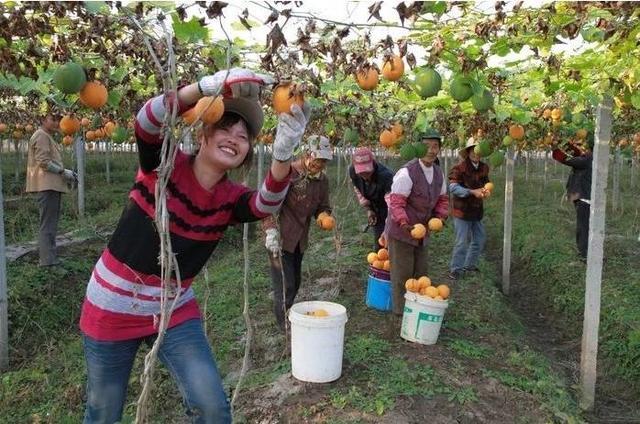
Cultivation and Management Techniques for Trichosanthes kirilowii
Trichosanthes kirilowii, also known as Gualou, is a perennial herbaceous vine belonging to the genus Trichosanthes in the Cucurbitaceae family. Its fruit, fruit rind, seeds and root are used as medicine. The Chinese medicinal name for the fruit rind is Trichosanthes Peel, for the seeds is Trichosanthes Seed, and for the root (root) is Tianhuafen. Trichosanthes Peel has the effects of moistening the lungs and resolving phlegm, and soothing the chest and promoting the flow of qi; Trichosanthes Seed has the effects of moistening dryness, resolving phlegm, lubricating the intestines and relieving constipation; Tianhuafen has the effects of clearing the lungs, nourishing the stomach, relieving cough, reducing fire and reducing swelling. The standardized cultivation techniques for Trichosanthes kirilowii are as follows.
1 Biological Characteristics
Trichosanthes kirilowii is not drought-tolerant, fears waterlogging, and is relatively cold-tolerant. It prefers a warm and humid climate. It grows well in loamy soil plots with deep soil layers, fertile and loose soil, good drainage, and partial shade. Saline-alkali land and low-lying, easily waterlogged plots are not suitable for planting.
2 Site Selection and Land Preparation
Trichosanthes kirilowii is a deep-rooted crop, so it is advisable to choose sandy loam plots with deep soil layers, fertile soil and good drainage for planting. Before the soil freezes, plow the soil deeply, harrow it fine and level it, dig trenches at a row spacing of 1.5m, with a width of 30cm and a depth of 50cm, and allow the soil to weather and mature. Before planting in the following spring, apply 2 500kg per mu (667 square meters/mu, the same below) of fertilizer made by mixing and composting decomposed barnyard manure, cake fertilizer and calcium-magnesium phosphate fertilizer into the trenches, mix it evenly with the soil in the trenches as base fertilizer, then fill the trench surface level with fine soil, and water thoroughly along the trench; plant when the soil moisture is suitable.
3 Sowing
Trichosanthes kirilowii is generally propagated by seed. Select mature fruits, take out the seeds, and raise seedlings in a hotbed in mid-March. Before sowing, soak the selected seeds in warm water at 40~50°C for 8~10 hours, take them out and air-dry them slightly, mix them evenly with wet sand, and place them in an environment of 25~30°C to promote germination. When most seeds have cracked, sow with sufficient soil moisture at a row spacing of 15~20cm, a plant spacing of 7cm and a depth of 4cm; after sowing, cover with 3cm of fine soil, and cover the hotbed with plastic film to help preserve heat and moisture. When the seedlings have grown 2~3 true leaves, dig them up for transplanting. When transplanting, on the prepared bed surface, dig holes at a row spacing of 1.5m, with plant spacing, hole diameter and hole depth each of 30cm, apply sufficient base fertilizer in the holes, mix it evenly with the subsoil, then fill with 10cm of fine soil, plant 2~3 seedlings per hole, cover with soil, press lightly and then water.
4 Field Management
During the growing period, carry out timely intertillage and weeding, and stop weeding after the plants close their rows. 10~15 days after transplanting, spray once with 0.1% urea and 10~20mg/kg gibberellin to accelerate plant growth. When the plants are 1.5m tall, apply 1 000kg per mu of decomposed human and livestock manure water as a top dressing. In July, apply 1 500kg per mu of decomposed human and livestock manure water as a top dressing. Starting from the second year, when the seedlings are 30cm tall, apply 500kg per mu of decomposed barnyard manure as a top dressing, applied in trenches opened between the rows, then cover with soil and water after application; before flowering, apply 1 000kg per mu of decomposed barnyard manure and 20kg of superphosphate as a top dressing, applied in trenches opened between the rows, then cover with soil and water after application. When the stems of Trichosanthes kirilowii are 30cm tall, set up a 1.5m-high trellis, keep 2~3 thick and strong stems per plant, let them climb and grow on the trellis, and prune off the remaining side vines. After Trichosanthes kirilowii climbs onto the trellis, promptly remove overly dense and weak branches, excessive vegetative branches and axillary buds so that the stems and vines grow evenly. Between the rows of Trichosanthes kirilowii or beside the trellis, arrange female and male plants in a ratio of 6:1. During the flowering period, choose 8~9 a.m., use a writing brush to dip up the pollen from male flowers that opened that day, and apply it one by one onto the stigmas of the pistils of female flowers; artificial pollination can greatly increase the fruit-setting rate. Before the soil freezes, in combination with intertillage, apply an appropriate amount of barnyard manure around the root zone of the plants, then cut off the stems and vines at 1m above the ground, coil the remaining stems and vines on the ground, and mound soil into a small earth mound 30cm high to prevent freezing damage.
5 Pest and Disease Control
Trichosanthes kirilowii has strong adaptability, diseases occur relatively rarely, and the main problem is insect pests.
5.1 Aphids
Aphids often gather on tender stems and leaves to suck sap and cause damage. Control method: spray with 800~1 000 times dilution of 40% dimethoate emulsifiable concentrate.
5.2 Yellow squash beetle
The yellow squash beetle damages the leaves, and the larvae can also bore into the main root. Control method: spray with 1 000 times dilution of 90% trichlorfon for control.
6 Harvesting and Processing
Fruiting begins 1~2 years after transplanting. In September, when the fruits are green, harvest the whole Trichosanthes kirilowii. When picking, cut the stems at 1m above the ground, hang the stems and vines with fruit stalks in a ventilated place to dry, and whole Gualou is obtained; cut mature fruits in half from the fruit stalk, take out the inner pulp and seeds and dry them in the sun, and this is Trichosanthes Peel; add plant ash to the inner pulp and seeds, rub repeatedly by hand, wash the inner pulp clean in water, and dry in the sun to obtain Trichosanthes Seed. In the third year after planting, in late October, dig up the roots, remove the rhizome neck, wash off the soil, scrape off the coarse skin while fresh, cut into short sections 10~20cm long, and cut thick ones lengthwise into 2~4 pieces, then dry in the sun to obtain Tianhuafen. Trichosanthes Peel is best when dry, thick and solid, free of pulp, yellowish-brown on the outside, yellowish-white on the inside, and with neat segments; Trichosanthes Seed is best when uniform in size, plump, sweet in taste and rich in oil; the root (Tianhuafen) is best when dry, free of yellow color or yellow fibers, white in color, solid in texture and rich in starch.