Planting Techniques and Maintenance Methods for Euonymus japonicus Hedges
Planting and Maintenance of Euonymus japonicus Hedges
Scientific Planting
When planting, first dig a planting trench as required. The width of the planting trench should be greater than the designed width of the hedge to facilitate planting operations. After the planting trench is dug, apply base fertilizer promptly, preferably decomposed and fermented cow or horse manure. When selecting seedlings, be careful not to introduce seedlings carrying pests or diseases. When planting, plant the outer seedlings first, then the middle ones, keeping the plant and row spacing basically consistent. When planting hedges of 3 rows or more, the plants should be arranged in a staggered triangular pattern, with 3 adjacent seedlings forming an equilateral triangle, to facilitate ventilation and light penetration and promote uniform growth. During planting, press the soil firmly around each plant, and keep the planting height basically uniform. In the planting process, some landscaping projects, in order to achieve quick results, often increase the planting density. Although this can produce quick results, it creates hidden problems for future maintenance and management, not only making the plants more susceptible to pests and diseases, but also prone to the phenomenon of bare lower stems, reducing ornamental value and accelerating plant aging. After the hedge is planted, it should be pruned immediately, which not only makes the hedge neat and uniform, but also effectively reduces plant transpiration and improves the survival rate. After pruning, water thoroughly and immediately, ensuring sufficient and deep watering. Where hollows appear, fill with soil promptly to prevent the plant roots from being exposed.
Proper Water and Fertilizer Management
Water and fertilizer management is an important part of maintaining Euonymus japonicus hedges. Euonymus japonicus has a relatively shallow root system with well-developed fibrous roots, and is not strongly resistant to either drought or waterlogging. In daily maintenance, determine whether to water and how much to water based on precipitation conditions, keeping the soil at a moisture level of about three-quarters field capacity. In late autumn and early spring, it is essential to water thoroughly with both freeze-prevention water and thawing water. After heavy rain in summer, drain accumulated water promptly to prevent root rot from excessive moisture.
In daily maintenance work, the author often finds that after base fertilizer is applied at planting, few people apply fertilizer to the hedge again. Comparatively speaking, because hedges are planted at high density, they need even more adequate fertilizer. In addition to base fertilizer, apply nitrogen fertilizer once after pruning in late spring and early summer each year, and apply a phosphorus-potassium compound fertilizer once after the beginning of autumn.
Reasonable Pruning
Generally speaking, formal hedges require fine pruning, and it can be said that pruning is the most important part of maintenance work. Hedge shapes generally fall into two types: regular and irregular. Common regular shapes include rectangular or crenellated (Great Wall battlement) forms, while irregular shapes include wavy forms. When pruning, make sure the top and both inner and outer sides are cut flat. After pruning, a trapezoidal cross-section is the most reasonable, as it can effectively prevent the lower branches and leaves of the hedge from becoming bare.
In the Lianyungang area, the shaping and pruning of Euonymus japonicus hedges is generally carried out in two periods: one in late spring and early summer, and the other around Mid-Autumn Festival. Pruning during these two periods is beneficial to plant growth. If pruning is done too early in spring, the new shoots have not yet lignified, and buds are unlikely to sprout below the cut, while summer is a season of frequent pests and diseases; large-scale pruning at that time can easily lead to pest and disease damage and affect growth. Pruning in late spring and early summer, during the peak growing season, allows wounds to heal relatively quickly and can reduce the occurrence of pests and diseases. Pruning too early in autumn, while it is still summer, makes pest and disease problems likely; pruning too late means the newly sprouted branches cannot lignify before winter and are prone to frost damage. Pruning around Mid-Autumn Festival allows wounds to heal in time and does not stimulate excessive new shoots, ensuring the plants survive the winter safely.
Pest and Disease Control
Euonymus japonicus hedges are planted relatively densely and are prone to pests and diseases, so pest and disease control is crucial. Pest and disease control should start before planting. First, pay attention to seedling quarantine; do not introduce seedlings carrying pests or diseases, and in particular resolutely reject seedlings carrying highly contagious and difficult-to-control diseases such as damping-off. In daily maintenance, in addition to strengthening pruning to improve ventilation and light penetration, strengthen water and fertilizer management, with special attention to the application of phosphorus and potassium fertilizers, to enhance the plants' disease resistance. If fungal diseases such as powdery mildew, sooty mold, and powdery mildew occur, spray broad-spectrum fungicides promptly for control. For plants with highly contagious diseases such as damping-off, remove and burn them promptly, and spray the planting soil for disinfection.
Sooty Mold
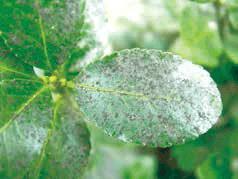
Powdery Mildew
Fusarium Wilt
Common pests of Euonymus japonicus include the flattened euproctid moth (Thosea sinensis), red spider mite, cotton aphid, Japanese wax scale (Ceroplastes japonicus), the golden-spotted geometer moth (Calospilos suspecta), the euonymus scale (Unaspis euonymi), the brown-edged green slug moth (Parasa lepida), and the double-spotted longhorn beetle (Chlorophorus sp.), among others. If they occur, carry out targeted control according to the severity of the damage.
Rejuvenation Methods
After many years of growth, Euonymus japonicus hedges develop the phenomenon of bare lower stems. To overcome this, heavy pruning back to the base must be carried out. After heavy pruning, the plants can be left at a height of 15-20 cm to stimulate the sprouting vigor of the lower branches. For hedges that have not developed bare lower stems but have aging branches and weak leaf growth, thinning should be adopted to increase the openness of the hedge. For hedges planted too densely, thinning out seedlings may also be necessary when appropriate, that is, removing excess and overly dense seedlings according to the growth conditions of the hedge. Thinning should follow the principle of removing the weak and keeping the strong, thinning more where dense and less or not at all where sparse. In addition, heavy pruning back to the base of hedges must be carried out in clear weather in late spring and early summer, because summer is the peak growing season for the plants, wounds heal relatively quickly, and the landscape effect can be restored in the shortest possible time.
Strengthening water and fertilizer management is an important measure for rejuvenating aging Euonymus japonicus hedges. After pruning, Euonymus japonicus hedges are in their peak growing season, and providing sufficient water and fertilizer is very necessary. Fertilization should follow the principle of combining organic fertilizer with inorganic fertilizer, and combining root fertilization with foliar spraying. Fertilization timing and fertilizer types should also be treated differently. According to the author's experience, in early summer, nitrogen fertilizer should be the main type; in early autumn, phosphorus and potassium fertilizers should be the main type; and in late autumn, decomposed barnyard manure should be the main type.
When watering rejuvenated Euonymus japonicus hedges, water frequently and thoroughly during summer droughts. For some hedge plants with shallow roots that are not drought-tolerant, mist spraying should also be carried out in particularly dry weather. After watering, loosen the soil promptly to conserve moisture. During the rainy season, especially during consecutive overcast and rainy days, drainage is also very important. If water is not drained promptly, the plants will inevitably suffer from waterlogging and die.
Doing a good job of pest and disease control is also an important part of hedge rejuvenation. After cutting back Euonymus japonicus hedges to the base, spray a fungicide immediately to prevent wounds from being infected by pathogens. In the subsequent growing period, pests and diseases should be controlled according to the principle of "treating early and treating thoroughly." Fungicides should use broad-spectrum antimicrobials such as chlorothalonil and carbendazim as much as possible. For pest control, apply the appropriate treatment for the specific pest. If the pest infestation is severe, a combination of spraying and root application should be used. Pesticides should be used alternately to prevent pests and diseases from developing resistance.