Prune your roses with two cuts now, and they will burst into bloom in autumn
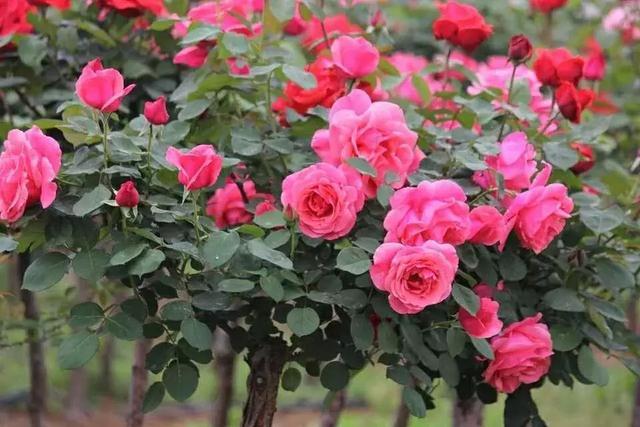
Among all flowers, roses (Rosa chinensis) are probably the most vigorous growers, blooming continuously through all four seasons, and most importantly, they are cheap and easy to get, as a casual pair of cuttings can grow into a large patch.
Although roses can bloom continuously through all four seasons, once the hot summer arrives, their blooming and growth gradually weaken, and they enter their own semi-dormant period, with flowering clearly less lush and beautiful than in spring.
If you want your roses to keep blooming until they burst with flowers, now is exactly the right time to prune. Learn to give your roses a few snips like this, and you can be sure the flowering momentum will be even stronger in autumn, making your flowers fill the entire pot.
With spring growth and flowering, plus fertilizer feeding, the branches of roses will grow unevenly and raggedly, and at this time we must prune the roses promptly.
Pruning is not random cutting, but cutting off the branches that hinder the next round of budding and flowering.
Cut off one third of the branches at the top of the stems, and trim the remaining branches to roughly the same height as the main stems, trimming them neatly, so that the messy plant shape looks more beautiful, and when it flowers next, it will be neater and denser.
After pruning the overall shape of the rose, we next need to prune the other thin, weak and diseased branches. These thin, weak and diseased branches basically will not bloom, and even if they can sprout flower buds, they are very weak and have lost their ornamental value.
Experienced flower growers know that these useless branches will also compete with other healthy plants for nutrients, so not only for roses, but when we pinch and prune other flowers and plants, we should also pay attention to this.
Only by cutting off these branches can nutrients be concentrated and supplied to the main trunk and main branches, promoting the branches to sprout side buds, so that when the peak flowering period comes in autumn, bursting the pot will naturally become very easy.
Finally, we also need to thin out the blind branches of the rose to increase the plant's ventilation and light exposure, and avoid pests and diseases breeding in hot weather and affecting the health of the rose, otherwise once it catches a pest infestation, dealing with it is no easy task.
After pruning the roses, promptly replenish them with some liquid nutrient fertilizer, diluted with water, and do not add too much, so that the roses can recover and grow as quickly as possible.
When the rose begins to show signs of sprouting new buds, this indicates that the rose is about to enter its next growth period, and we need to continue replenishing fertilizer and water for them, about once every two weeks, so that the roses can bloom more abundantly, with larger and more vivid flowers.
Friends who grow roses at home, hurry up and give them a few cuts, and when the peak flowering period comes in autumn, your roses are sure to be more lush than other people's.