What are the reasons for orchid leaves turning yellow?
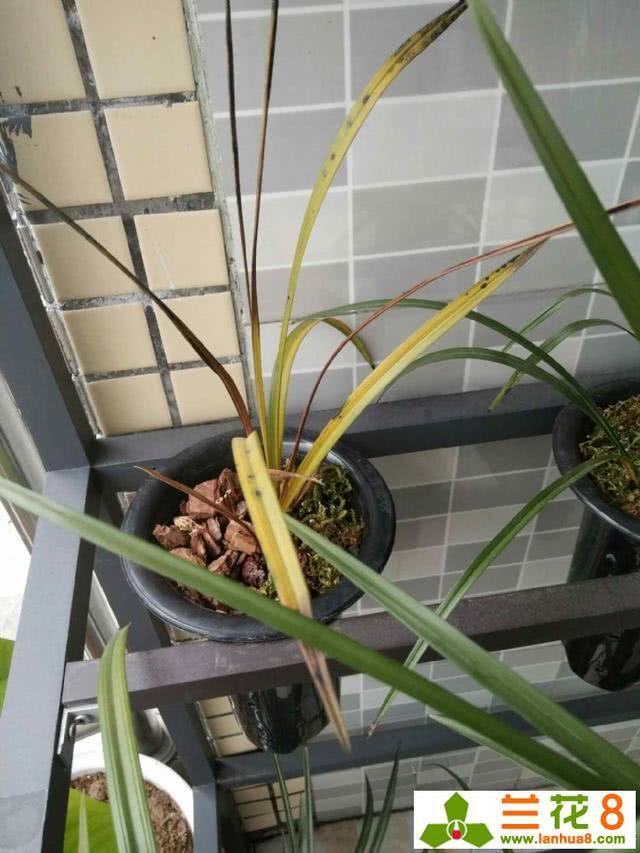
As one of the Four Gentlemen of flowers, orchids have been deeply loved by Chinese people from ancient times to the present. They are a symbol of beauty, detachment from fame and fortune, nobility, elegance and virtue. They were once grown only among the aristocracy and the literati, and in recent years they have gradually spread to ordinary households. But when people grow orchids, for some unknown reason the orchid leaves turn yellow, which is very distressing. So now I will analyze for you some of the reasons why orchid leaves turn yellow and how to solve the problem of yellowing orchid leaves, hoping it can be of help to the many orchid lovers!
First of all, orchids have fleshy roots, which differ from the roots of other flowers and trees. They like a moist but not wet, ventilated and shady environment, and have requirements for climate, temperature, humidity, light and other environmental conditions. The suitable temperature for normal cultivation is 15-25°C, and the light intensity is around 10000 lumens. The roots need air circulation and must not be waterlogged. They do not particularly like fertilizer. Only after we understand the characteristics of orchids can we master the methods to easily grow them well and avoid yellowing leaves. The methods are as follows:
1. Light. Orchids do not like strong light and prefer a somewhat shady growing environment, but they cannot lack sunlight. Insufficient light affects photosynthesis, and insufficient nutrients cause orchid leaves to become thin and yellow. Too strong light will scorch the leaves and cause yellow spots on orchid leaves; especially when the temperature exceeds 30°C and there is direct sunlight, the leaves very easily turn yellow and wither.
Yellow leaves from cold damage
2. Pests and diseases. Wounds caused by insects chewing on orchids, or infection by fungi and bacteria due to high heat and high humidity and other reasons, leading to anthracnose, stem rot, soft rot and so on, can also cause orchid leaves to turn yellow. Generally, yellowing starts from the roots and moves upward, or yellow water-soaked patches appear on the leaf surface. Everyone needs to pay attention to this, especially stem rot and soft rot. If discovered, timely measures such as sterilization and disinfection or removal of diseased plants should be taken. This article only discusses yellowing orchid leaves, so I will not describe the specific disease symptoms in too much detail. I have written articles specifically explaining them before, and everyone can refer to my previously published articles to compare with specific diseases!
3. Metabolism. As orchids grow, they need to carry out the replacement of old and new parts. Because of the need to produce new leaves, old leaves will not continue to grow; they will rapidly turn yellow from the leaf tip until the entire leaf withers and falls off. This yellowing of leaves caused by normal orchid metabolism is nothing to worry about.
New shoots causing the leaf sheaths of old plants to turn yellow
4. Water. Orchids like a moist but not wet growing environment, with air humidity around 50-90%. Insufficient watering causes empty roots, or when the air is too dry and the leaf surface lacks moisture, orchid leaves will turn yellow. Conversely, if watered too much, with water accumulating in the pot and poor drainage, the orchid roots will lack oxygen and rot, yellow leaves will appear, and the plant may even die. Watering should be done according to the dryness of the potting medium, watering appropriately and at the right time. Do not water when it is not dry; when you do water, water thoroughly. Avoid the potting medium being too dry or too wet.
5. Fertilization. Orchids do not like concentrated fertilizer. Excessive fertilization very easily causes fertilizer burn, blackens the roots, and causes orchid leaves to turn yellow and die. Generally, use light fertilizer frequently, use less compound fertilizer, and choose safe slow-release fertilizer. When placing slow-release fertilizer, it should be kept away from the orchid roots; too close and it easily scorches the roots and stems, causing orchid leaves to turn yellow. If you use only nutrient-free hard media as the growing medium, such as planting entirely in Zhijinshi (pumice stone), there will be severe water and nutrient deficiency, causing orchids to turn yellow from starvation. The characteristic is that young leaves and tender stems turn yellow first, then the whole plant turns yellow, until death.
Physiological yellowing and scorched tips of leaf tips
6. Growing medium. Orchids have very important requirements for the choice of growing medium. Whether the medium is chosen appropriately directly affects the survival of the orchid, and this is knowledge that beginner orchid lovers must understand clearly. Most orchid lovers fail to grow them well, and the problem of orchids easily dying lies here: they cannot break through the concept of soil. Soil cannot be used to grow orchids. Soil is too fine, easily compacts, and easily becomes waterlogged when watered. As long as there is water accumulation, orchid roots will rot, causing orchid leaves to turn yellow and the plant to die. You should choose granular growing media with stable granular properties. Generally, a mix of pine bark and Zhijinshi (pumice stone) is used. This way, drainage is good, water does not accumulate, moisture is still retained, the orchid roots get air circulation, and the orchid fungi and orchid roots have a good symbiotic environment, which is suitable for orchid growth. Naturally, orchid leaves are then less likely to turn yellow. Author: Huang Xinlin. I publish orchid knowledge and pictures every day, taking you to understand orchids in depth and teaching you to easily grow orchids well. If you have questions about orchids, you can ask me at any time or leave a message below. If you like it, you can click the top right corner to bookmark or forward it to help others!