Its reproductive capacity is astonishing - a single leaf can fill a whole pot in just one month
Among dear flower lovers, there are certainly quite a few skilled growers. Once those pitiful little seedlings end up in your hands, not only do they grow vigorously, but they also look especially lively. Today, let the editor share with everyone these care secrets that bring plants back from the dead!
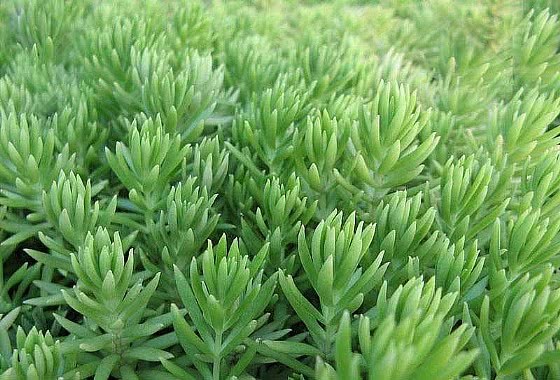
Sedum lineare
Sedum lineare is an extremely easy plant to grow. It does not need much water and can grow very well on its own. At the same time, it is also used as a traditional Chinese medicinal herb and can clear heat and detoxify.
Steps:
1. Sunlight
The care of Sedum lineare cannot be separated from sunlight. Normally, it should be placed on a balcony or windowsill with plenty of sunlight.
2. Nutrients
The growth of Sedum lineare needs an appropriate amount of nutrients. Applying some thin liquid fertilizer once a month will make it grow even better!
Rosa multiflora
Rosa multiflora is also a plant with tenacious vitality. Its emerald-green branches cover the top of walls, and its bright flowers bloom with resilience.
Steps:
1. Planting location
If you want Rosa multiflora to bloom brilliantly, it is best to plant it outdoors. This not only gives the Rosa multiflora sufficient light, but also means you do not have to worry about root rot caused by overwatering. It is the most suitable method.
2. Nutrients
For Rosa multiflora, nutrients are very important. During the growing season, apply fully decomposed fertilizer three times every month. Soybean cake fertilizer is a good choice. Then, once it enters the flower bud stage, apply a small amount of phosphorus and potassium fertilizer each month. A common option is to use decomposed banana peels as fertilizer.
Plumbago auriculata
Summer is the peak growing season for Plumbago auriculata. As long as it is cared for properly, you will soon see large patches of growing Plumbago auriculata!
Steps:
1. Sunlight
Sufficient light will make Plumbago auriculata bloom more, so in everyday care it should be placed on a balcony with plenty of light. With five hours of sunlight every day, your Plumbago auriculata will soon fill the whole pot!
2. Pruning branches
For the healthy growth of Plumbago auriculata, we need to prune it, cutting off old branches and weak branches to preserve nutrients, which will make Plumbago auriculata grow more vigorously. Collect the pruned branches and use them for cuttings, turning one pot into many pots!
Cotyledon tomentosa
The fluffy, plump Cotyledon tomentosa is truly very cute. As long as you care for it attentively, filling a whole pot is no joke.
Steps:
1. Summer care
During the high temperatures of summer, Cotyledon tomentosa enters dormancy. At this time, be careful to water only a little, do not let it receive direct sunlight, and keep it in a ventilated place for normal care.
2. Cuttings
Taking cuttings of Cotyledon tomentosa is very simple, and the survival rate is very high. Just cut off its top, about three leaves' worth, let the wound dry, and place it into slightly moist potting soil.
These flowers all have astonishingly strong reproductive capacity! From a single leaf to a full pot, it can be done in just a few months. Have you ever tried it?