How can you care for fish after they give birth so that mother and babies can coexist?
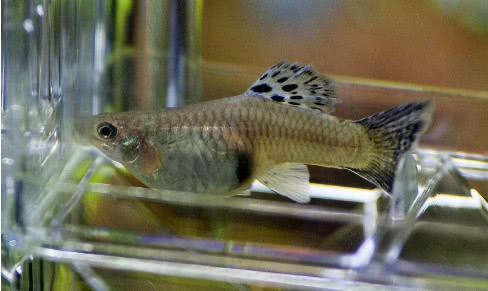
What should you do when tropical fish give birth? Tropical fish giving birth is a lively event, and in this way the aquarium gains a new life. But some tropical fish die after giving birth, which is very puzzling and also very sad for their owner. Perhaps the environment for the tropical fish giving birth was not good enough, or the tropical fish's usual nutrition could not keep up, and so on. Let me tell you what to do when tropical fish give birth.
Signs before giving birth:
1. Before giving birth, the female fish will be restless and swim around vigorously;
2. Some female fish about to give birth will chase away other fish and prevent them from coming near.
3. In the last half day before giving birth, you will see the female fish constantly swimming backward and making movements similar to defecating; in fact, this is a sign that she is about to give birth. In addition, the female fish's vent will become very large, making it easier for the fry to be born.
A female fish about to give birth is best kept isolated, which helps save her strength and can also prevent the fry from being eaten by other larger fish. The female fish about to give birth must be fed until full; otherwise she will eat the fry to replenish her strength.
The importance of the breeding environment:
It is difficult for a community aquarium to achieve good breeding results, all because the disturbances are too severe. If certain safe conditions can be provided, such as clumps of aquatic plants and stones for hiding, some species can still breed, but the ecological relationships under community conditions are extremely complex, and examples of completely successful breeding are rare. A pair of cichlids will guard their offspring firmly during the day, but at night the eggs and fry may become dinner for nocturnal fish. All the references recommend keeping parent fish separately during the breeding period, and there is good reason for this, even for cyprinid and characin species that have schooling instincts. This is because there is not enough water flow space in the aquarium to carry the eggs to a secluded place to hatch safely, and the food in the aquarium is really too scarce, while the fish density is really too high.
Seasonal breeding:
The breeding of many tropical fish is clearly seasonal. Tropical fish living in aquariums can hardly sense seasonal changes, because the constant-temperature equipment in the aquarium even ignores the most basic day-night water temperature difference, and artificially controlled lighting duration and intensity cannot objectively reflect seasonal changes either. Under such circumstances, only those tropical fish that are insensitive to seasonal changes will breed year-round. Such fish originally come from regions where seasonal changes are not distinct, or after long-term artificial keeping they have lost the instinct to adjust their breeding cycle according to the seasons. However, a considerable number of tropical fish still retain their original habits, and their breeding will be triggered only when the environmental conditions of the aquarium happen to match such patterns of change.
The above content comes from the internet
My WeChat public account is guanshangyu-88. If you have anything unclear about ornamental fish keeping, you can contact me at any time!
?