Relieve cough, reduce phlegm, lower blood pressure and dispel wind - these four unremarkable grasses are good medicines
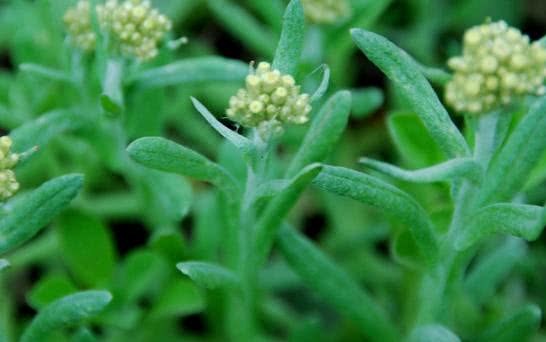
On the land of our countryside, there are millions of different kinds of wild grasses. There are only a few whose names we can call, yet we often see them in the fields. Do not underestimate these unremarkable wild grasses; some of them are actually good medicines for treating coughs. Qingming grass, whose scientific name is Gnaphalium affine, is also called shu ju cao or shu qu cao, all with the same pronunciation, only the Chinese character "ju" is written differently. Gnaphalium affine, commonly known as Qingming grass, is also known as fower's ear grass, Qingming vegetable, Hanshi vegetable, mian cai, mi cai, ji cai, di cai, and xiang qin niang. The whole plant has white woolly hairs, the leaves are like chrysanthemum leaves but smaller, and it bears small fluffy yellow flowers. It is an annual herbaceous plant. Around the Qingming season, it sprouts soft white-haired young leaves. Its nature is mild, and it has the effects of reducing phlegm, relieving cough, lowering blood pressure and dispelling wind.
The tender shoots of Qingming vegetable are picked, cooked, and kneaded into rice flour to make balls, which are fragrant, glutinous and tasty. Taken internally, it can lower blood pressure, treat peptic ulcers, and has effects such as reducing phlegm, suppressing cough and relieving pain. Qingming guo is made in two kinds, sweet and savory. Using Qingming grass with an appropriate amount of glutinous rice flour and rice flour, adding white sugar water, kneading well and shaping into cakes, or processing into wrappers, then filling with sesame, osmanthus sugar, or red bean paste, pressing into a round mold and steaming until cooked makes sweet Qingming guo; filling with diced cured meat, diced winter bamboo shoots, diced shiitake mushrooms, diced red chili, dried tofu, pickled vegetables, bean sprouts and other fillings, and shaping into dumpling form makes savory Qingming guo. People in Sanming make Qingming guo by grinding Qingming grass, rice and glutinous rice into flour and then making wrappers. The white rice flour plus the green juice of Qingming grass immediately turns emerald green, then red bean paste filling is wrapped inside. At this point a wooden mold with a round carved pattern is also needed. The wrapped Qingming guo is pressed into the mold, and when it is taken out, one side has a beautiful pattern printed on it. Generally, one wooden board has three molds with different patterns, and the finished Qingming guo also each have their own characteristics. After being steamed in the pot, Qingming guo is an emerald green thing like a stuffed pancake. The side without the printed pattern is lined with a round bamboo leaf. This small pastry carries a faint delicate fragrance, and looks more like a fine piece of jade. In the mouth it is even more fragrant, smooth and glutinous
Mo pan cao, also known as jin hua cao and tang dang cao. It is an annual to perennial, upright, branching, subshrub-like herb, 0.5-2.5 m tall, entirely covered with gray short soft hairs. It grows in sandy land, open wilderness or by roadsides. The fruit is obovate like a millstone, about 1.5 cm in diameter, black, with 15-20 mericarps, the apex truncate, with short awns, covered with stellate long stiff hairs; the seeds are kidney-shaped, covered with stellate sparse soft hairs. The flowering period is July-October. Mo pan cao is especially common in rural areas, bearing small yellow flowers. This unremarkable little fruit is also a Chinese medicinal material. It can reduce phlegm and relieve cough, reduce swelling and detoxify, and also has a certain curative effect on traumatic injuries.
If a patient presents with symptoms such as cough and chest pain, aversion to cold and fever, coughing up fishy-smelling purulent phlegm, dry stool, red tongue and dry mouth, then Zhejiang fritillary should be chosen, because the fire-purging effect of Zhejiang fritillary is stronger than that of Sichuan fritillary. It is also good at clearing fire and dissipating nodules, and is a good medicine for treating pulmonary abscess. The most commonly used method for Zhejiang fritillary is 3-10 grams, once a day, decocted in water. Therefore, for patients with wind-heat cough mainly manifesting as cough, difficult expectoration, yellow sticky phlegm, dry mouth and thirst, and red tongue coating, either Sichuan fritillary or Zhejiang fritillary may be chosen. Because Sichuan fritillary has a mild medicinal nature and a not strong odor, it is more suitable for the elderly and the weak. For children and young people who are constitutionally heat-excessive, it is best to choose Zhejiang fritillary.
Xue jian cao is a plant in the genus Pilea of the family Urticaceae. It is widely distributed, and xue jian cao is also a common Chinese medicinal material. Xue jian cao is entirely covered with a layer of fine down. The heroine Xue Jian in the TV drama Chinese Paladin 3 is the incarnation of xue jian cao. In it, she is good at using poison, thus matching people's character impression of "strong on the outside, delicate on the inside." The viscous fibers and other substances it is rich in are effective for improving chronic constipation, regulating the intestinal environment, stopping diarrhea, suppressing cough, reducing inflammation and promoting urination, and it has a particularly relieving effect on constipation. It is widely used in countries around the world as a swelling laxative. The root is bitter, pungent and cool in nature and flavor, and non-toxic. It can invigorate blood, reduce carbuncles and swelling, and stop vomiting and epistaxis; the whole plant treats sores and toxins. Dosage: root 3-7 qian, whole plant 5 qian to 1 liang. External use is in unlimited amount.