Can roses be grown well with watering alone? It is far from that simple
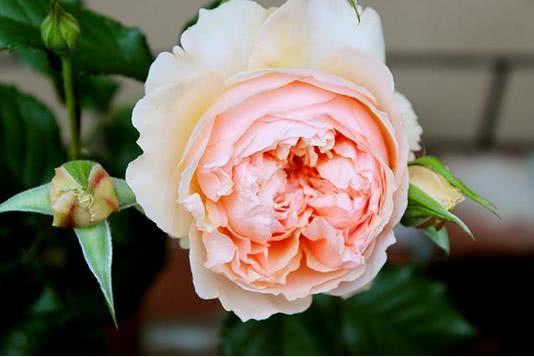
Roses are simply the aristocracy of the floral world, loved by everyone for their many varieties and brilliant colors. With so many varieties, everyone can always pick the one they like. But you always hear gardening friends complaining that their rose only bloomed once after being bought, the plant has no pests or diseases, and the leaves are very healthy, so why does it not bloom anymore?
For a rose to bloom, it needs a large amount of nutrients, and to bloom abundantly and brilliantly it needs even more nutrients. Do you think watering it and giving it some sunlight will make it bloom? It is just like a person, it cannot survive on water alone; if you do not give it some nutrients once in a while, how could it possibly repay us?
The focus of fertilizing roses differs at each stage, so you should fertilize according to the plant's needs. In the first year of growing a rose (many need two or three years before they bloom, so patience is required), the plant is still young and its root system is not yet stable. Only with more roots can it better absorb nutrients, so at this time you can use rooting powder to make the roots grow faster.
Young roses have little need for fertilizer, and urea is also a very good choice. In addition, you can apply nitrogen, phosphorus and potassium fertilizer as appropriate. Nitrogen fertilizer is good for the growth of branches and leaves, while phosphorus and potassium fertilizer is good for root growth and also helps strengthen resistance to pests and diseases. At this time, because the root system is not yet well developed, it is best to apply thin fertilizer frequently, and fertilizing once a month is enough.
Wait until the rose's root system is stable and its growth is also good. At this point rooting powder no longer needs to be used, urea can still be used, and what you need to ensure is the amount of nitrogen, phosphorus and potassium fertilizer. Phosphorus and potassium fertilizer helps promote blooming, while too much nitrogen fertilizer leads to lush branches and leaves but few flower buds. You can choose a ready-mixed nitrogen, phosphorus and potassium compound fertilizer available on the market. If you find there are too many leaves, you can stop applying nitrogen fertilizer. Fertilizing frequency is once every half a month.
During the flowering period, what needs to be supplemented is phosphorus and potassium fertilizer. At this time nitrogen fertilizer can be stopped completely, since too many leaves will only compete with the flowers for nutrients. From the bud stage onward, you can apply pure phosphorus and potassium fertilizer, which not only makes the flowers bloom larger and more brilliantly, but also extends the blooming time. Because the flowering period requires relatively more nutrients, the fertilizing frequency can be once a week.
After the flowers fade, the plant's demand for nutrients decreases, so you can skip fertilizing and just water normally to let it rest and recover. You can also appropriately apply some nitrogen fertilizer, which helps promote the sprouting of new leaves and prepares for the next bloom.