Bonsai Making: Only a bonsai artist who can carve is truly skilled, and every piece they create is a masterpiece
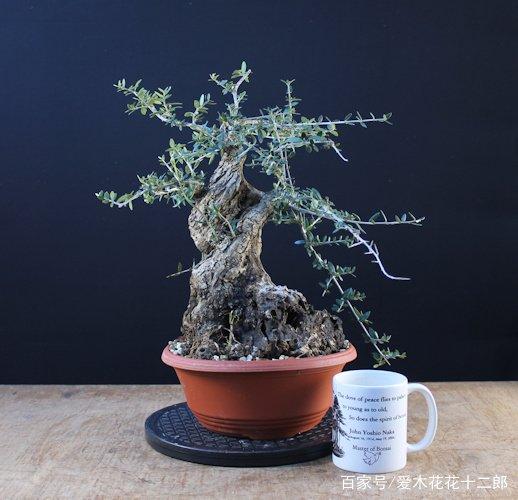
This wild-collected olive tree was imported from Spain by the bonsai artist in September 2016. As can be seen in the image below, this is a piece of material with great potential. A beautiful conical trunk, a twisted main trunk, small leaves, and some naturally formed deadwood on the trunk - these are all characteristics of good bonsai material. Compare the thickness of the trunk to the cup - it is estimated to be about ten cm.
The back of this tree stump was once worked on by someone, but it was abandoned halfway through.
For good material, what you often need to do is just some detail work. After a year of growing out and pruning the branches and foliage, the styling of the branches and leaves has already taken initial shape.
A great deal of effort was also put into carving the deadwood. When making old-stump bonsai, you often have no choice but to do some deadwood treatment. Only by creating that weather-beaten feeling will it become a masterpiece in people's eyes. Although carving deadwood for bonsai is not like making handicrafts and does not need to be so refined, it still requires some imagination - it must look out of the ordinary, yet also look very natural, without a trace.
Using plant ash and lime sulfur to age the deadwood - this method is indeed quite good, and it looks fairly natural.
The techniques for carving deadwood are actually very simple. This purely technical school of European bonsai artists probably all trace back to the same lineage, and the methods are just the ones Graham uses. We just need to look at the results - from the final finished piece, think about what can be done with the material in our hands.
This part is the left side. After this kind of hollowed-out carving treatment, it looks much better.
The area on the back that was once worked on has also been hollowed out, making it look very weathered.
Right rear
Details of the carving on the front
Right side