What kind of leaves are used to make leaf mold for potted clivia, and which type is better?
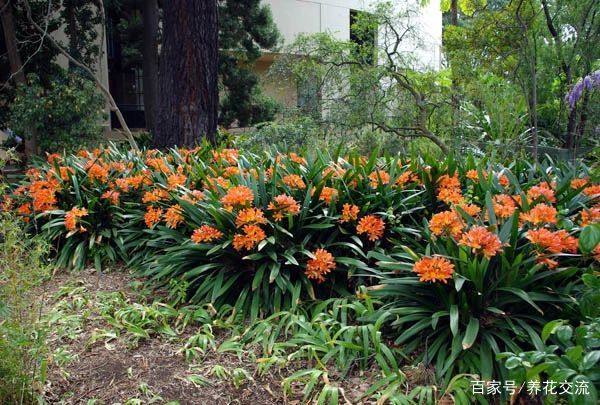
Clivia is very well suited to growing in the shade of trees; appropriate scattered light suits it fine, and excessive direct sun should be avoided. Besides maintaining a warm, slightly moist environment year-round and providing appropriate light, the soil for growing clivia is especially critical. The best soil is leaf mold, which must be loose, fertile and rich in humus.
The leaf mold used for clivia is best made from tree species whose leaves are relatively resistant to rot. The most common are oak, Mongolian oak and plane tree, among others. Their leaves are a bit thicker and do not break apart easily after decomposing, so this kind of soil is very suitable for growing clivia.
There are also some leaf molds that are not suitable for growing clivia, such as that from poplar. Its leaves break apart especially easily, and the soil after decomposition is very unsuitable for growing clivia, as it cannot wrap around the roots and has very poor water retention.
If you are growing them in some leaf mold that breaks apart easily, you should mix in some decomposed wood shavings, along with an appropriate amount of oak leaf mold and the like.
Pine needle soil and oak leaf mold are both fairly common and very easy to collect. These trees are especially suitable for growing clivia, and the soil is especially suitable for growing clivia. Their nutrients are also fairly complete; paired with an appropriate amount of wood shavings and some slow-release organic fertilizer, it is especially suitable for growing clivia.
Friends can usually collect some pine needle soil. Its price is fairly ordinary, and it is a relatively cost-effective leaf mold. In fact, most clivia soil on the market today is made from pine needle soil, with some decomposed organic fertilizer and decomposed wood shavings added.
There is also some very cheap clivia soil on the market, which is leaf mold mixed from various mixtures, generally using the bark of various trees, with some bark, straw and dry grass added as leaf mold. This kind of soil looks no different from other clivia soil, but its nutrient content is not as high, and after being used for a long time it becomes very lacking in nutrients.