This year's wheat harvest is basically over, and the potential for wheat prices to rise in the second half of the year is limited.
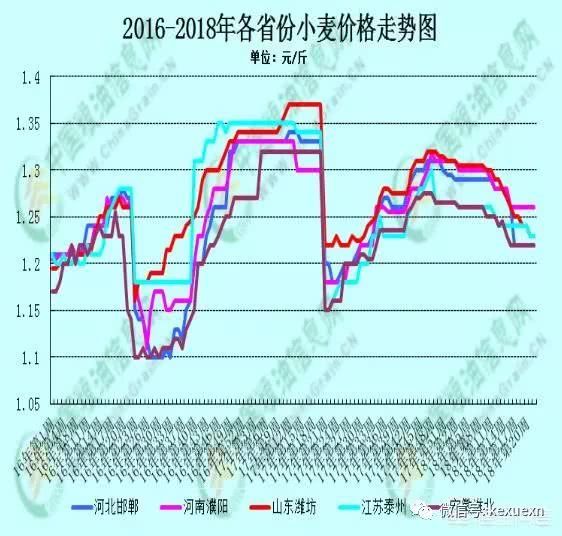
Can the wheat price reach 1.4 yuan per jin this year? Personally, I think it will be quite difficult. Since the new wheat came on the market this year, the price has been pretty good, and this week the wheat price has been rising all the way, delighting many grain-growing farmers. But such a rising trend will not continue forever. At present, the wheat price is 1.2 yuan per jin, still a fair distance from 1.4 yuan per jin.
First of all, this winter the wheat suffered freeze damage. In Henan, a main wheat-producing area, the number of wheat ears decreased and the yield per unit area declined somewhat. In addition, the total wheat area this year was 23.83 million hectares, also down from last year. According to estimates by the National Grain and Oils Information Center, the decline this year is 157,000 hectares. The yield decline this year is 357 kg per hectare.
And when the wheat was about to be harvested, the wheat-producing areas were again hit by consecutive overcast and rainy weather, which not only caused a reduction in wheat output but also led to a decline in the production of high-quality wheat.
In other words, both the total output and the yield per unit area of wheat have declined somewhat. However, with the new wheat coming on the market, wheat purchasers have gradually become active and are rushing to buy grain on the market, so it is naturally not surprising that the current wheat price is rising.
The recent rise in wheat prices has been obvious to all, but calm down and think it over carefully and you will understand. In past years, such a rise was almost never seen, and this year, before the wheat came on the market, the state had already lowered the minimum protective price for wheat twice in order to reduce inventory, and the market wheat price had fallen to within 1.2 yuan per jin. Yet after the new wheat came on the market, the price instead rebounded and quickly rose back above 1.2 yuan per jin. One has to say it is remarkable!
In terms of quality, this year's new wheat still falls somewhat short of last year's wheat. At present, the price of old wheat is 1.2 yuan per jin, offering relatively high value for money, and now there is almost no price difference between new and old wheat. It can be said that there is no positive factor that can support wheat prices rising over the long term, because even though wheat has suffered output reductions to varying degrees this year, after all, the inventory is still sitting there!
This is Science and Agriculture, welcome to follow and join us, and let us grow our knowledge together.