This wild fruit sold for 5 mao per jin 30 years ago. Farmers planted it in large quantities. Now it is worthless and almost all cut down.
Warm reminder
Hemu Report aims to share and popularize information about various plants and their uses, for reference only. If medicinal use is needed, it is recommended to consult a professional doctor to avoid problems!
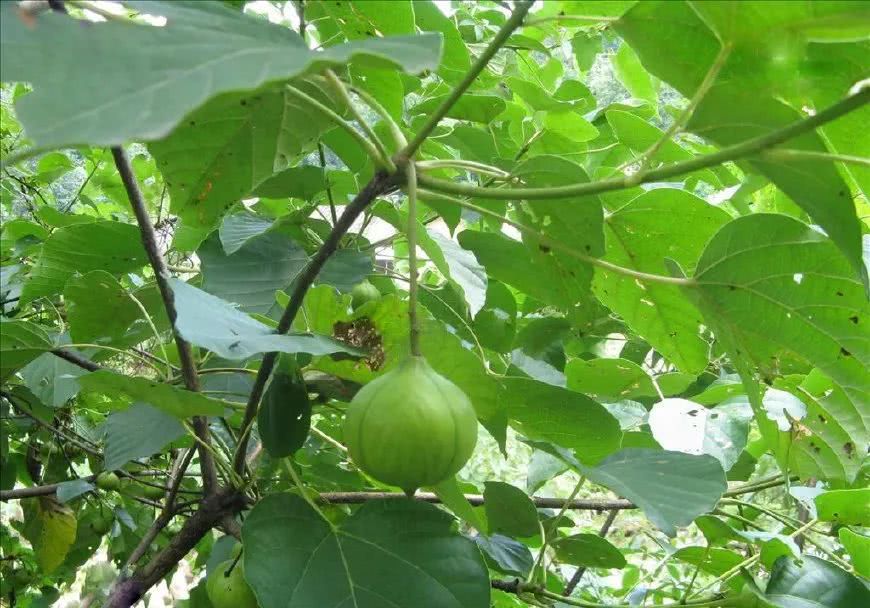
In rural areas 30 years ago, there was a wild fruit that was once the main source of income for farmers. The outer skin of this wild fruit looks like a walnut, but it has no flesh. After ripening, when the outer skin is peeled off, there are several seeds inside. In the past, it was called "tongzi" and was the raw material for pressing tung oil. At that time, the task after school every day was to go pick up tongzi. After bringing them back, they were covered with thatch grass, then a little water was sprinkled on top. After a few days, when the skin of the tongzi had rotted, the tongzi could be taken out easily.
Tongzi is the fruit of the tung tree. Nowadays, few people know its uses. Only young people who have experienced picking tongzi and older farmers know what it is good for. The tung oil pressed from tongzi was called "raw lacquer" in the past and could be used as paint. It was mainly used to coat wooden products. Its yellow color was not only glossy and shiny, but it also had waterproof, anti-corrosion and insect-proof effects. It could also be applied to cloth to make it waterproof, used for raincoat and umbrella surfaces. It smelled fragrant and did not carry harmful chemical odors. It is said that in the past, railway sleepers under train tracks would not rot or be damaged by insects after being soaked in tung oil.
In the past, when people built houses, after the wood was soaked in tongzi oil, there was no need to worry that wind and rain would corrode it. However, people who were willing to use tongzi oil to build houses were generally wealthy families. Ordinary farmers could not bear to use it to build houses. Around 30 years ago, peeled tongzi could sell for 5 mao per jin. Do not think that 5 mao is nothing now. Thirty years ago, a worker in the city earned only three to four hundred yuan a month, so 5 mao was quite valuable. Farmer friends did not have a fixed salary. As long as they had free time, they went into the mountains to pick tongzi and sold them when the price was good to supplement the household income.
In some mountainous rural areas in the south, tung trees were once planted in large numbers all over the mountains and fields. The fruiting season of the tung tree happens to be winter, avoiding the busy farming season, so in winter many farmers could be seen picking tung fruit and peeling tung fruit. The outer skin of the tung fruit, like that of walnuts, stains the hands black. When peeling tung fruit as a child, once the hands were stained black, it took a long time to wash it off.
Now tung trees are rarely seen, mainly because tongzi is no longer worth money. If you pay a little attention, you will find that wooden products such as wooden basins and wooden buckets are rarely seen in daily life. More and more plastic products have replaced wooden products, and a wide variety of paints have also pushed tung oil to the margins. Now it is hard to see.
Farmers who used to plant tung trees have also almost cut them all down and switched to planting other fruit trees. Readers, have you ever picked tongzi?
Text/Hemu Report, Images/Internet
If you like Hemu's articles, welcome to follow.