What factors should be considered for greenhouse strawberry cultivation in southern regions?
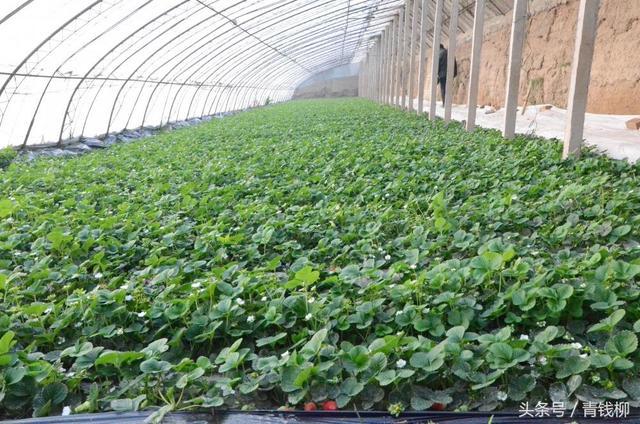
What factors should be considered for greenhouse strawberry cultivation in southern regions?
1 Variety selection
Strawberry variety selection can be considered from 3 aspects: First, select according to the production purpose. If the purpose is fresh fruit to be sold directly on the market, varieties with good taste, strong aroma, high sugar content, few deformed fruits and bright red fruit color should be selected. Second, select varieties according to the cultivation form. For solar greenhouses, medium-early maturing varieties with a short dormancy period should be selected; for large early-spring arch greenhouses, in principle, medium-late maturing varieties with a slightly longer dormancy period should be selected. Third, select varieties according to the transportation and marketing method. If long-distance transport is required, varieties with good fruit firmness should be selected; if the production and sales locations are relatively close, some varieties with not very strong fruit firmness but excellent other economic traits can be developed.
2 Select strong seedlings and plant them reasonably
In mid-to-late September, select strong seedlings with more than 5 leaves for planting, and make sure to "not bury the crown at the top and not expose the roots at the bottom". After planting, water lightly continuously until they survive. Prepare the soil 1 week before planting; per 667 sq m, apply 4000-5000 kg of decomposed farmyard manure, 30 kg of diammonium phosphate and 50 kg of compound fertilizer. After deep plowing 20-30 cm, level and harrow finely, and use small raised ridges for cultivation, with a ridge height of 20 cm, ridge surface width of 60-80 cm and ridge spacing of 100-120 cm. Plant 2 rows per ridge, with a plant spacing of 12-15 cm, and plant 8000-10000 plants per 667 sq m.
3 Management after planting
3.1 Temperature managementIn the early stage after planting, because the outside temperature is still high, to promote plant growth and development, maintain 25-30°C during the day and 12-14°C at night. When entering the flower bud emergence stage, the daytime temperature can be 25-28°C and the nighttime temperature 10-12°C. If the nighttime temperature exceeds 13°C, the axillary flower buds will degenerate, and the stamens and pistils will be adversely affected. When entering the flowering stage, the daytime temperature is 23-25°C and the nighttime temperature 8-10°C. During the fruit swelling stage, 23-25°C is required during the day and 6-8°C at night. At this time, if the daytime temperature is lower than 23°C, the strawberry harvest period will be delayed, but the fruits can further enlarge. By the fruit harvest stage, the daytime temperature can be 20-23°C and the nighttime temperature 5-7°C.
3.2 Humidity managementStrawberries have relatively strict requirements for air humidity, generally below 80% relative humidity, and during the flowering stage a relative humidity of 40%-60% is required. If the humidity is too high or too low during the flowering stage, it will affect the dehiscence of the flower parts and the germination of the pollen tubes, causing poor pollination and fertilization, increasing deformed fruits, and reducing the economic benefits of growers. At the same time, if the humidity is too high during the growth period, the plants are very susceptible to gray mold and powdery mildew.
3.3 Water and fertilizer managementStrawberry roots are relatively shallow in the soil and show a preference for warmth and fertilizer and intolerance to drought. In addition to applying sufficient base fertilizer before planting, it is also necessary to topdress 2-3 times in combination with watering during the rapid growth and flower bud differentiation stages and during the flowering and fruit swelling stages. Topdressing should mainly use quick-acting phosphorus and potassium fertilizers, with little or no nitrogen fertilizer. Topdressing should be done less each time but frequently, with about 10 kg applied per 667 sq m each time.
3.4 Plant training and flower and fruit thinningWhen strawberry plants grow vigorously, more lateral buds and some runners will appear, which should be removed in time to promote flowering and fruiting of the main bud. Old leaves and diseased or damaged leaves should also be removed as early as possible. Flower and fruit thinning can concentrate more nutrients and increase the average single fruit weight. Generally, keep 12-15 fruits on the first inflorescence and 6-8 fruits on the second inflorescence; the remaining small flowers, small fruits and deformed fruits should be removed early and taken out of the greenhouse for centralized destruction.
3.5 Supplementary pollinationStrawberry is a self-pollinating plant, but because the flowering stage in greenhouses is often under unfavorable conditions such as low temperature, short light duration and relatively high humidity, natural pollination is poor. Artificial pollination and bee pollination can increase fruit size, significantly reduce deformed fruits, and help improve yield and quality. At present, bee pollination is mainly used; 5000-6000 bees per 667 sq m can meet the requirements for pollination and fertilization. When spraying pesticides, pay attention to protecting the safety of bees and move the hives outside.
3.6 HarvestStrawberry berries begin to be harvested when 2/3 colored. During the peak harvest period, harvest once every 1-2 d. When harvesting, keep the fruit stalk and do not damage the sepals; break it at 1 cm from the sepals, and stack it by grade. Never squeeze it when stacking and transporting.
4 Prevention and control of strawberry diseases and pests
4.1 Slugs and thripsThe main pesticide for controlling slugs is metaldehyde, with products such as Meta, Mita and Wokeling, but the imported Meta has clearly better effects. For controlling thrips, pesticides such as fipronil, cartap and Yunda acetamiprid can be used.
4.2 Powdery mildewTo control powdery mildew, thiophanate-methyl or Nongkang 120 can be used in mixed formulation, with a synergist added; if phytotoxicity occurs, foliar fertilizers such as Yunda-120 and Yunda Quanshuguo can be mixed in during the early stage to alleviate it, and as far as possible not used in the later stage.
4.3 Viral diseaseFor conventional seedlings, promptly spray pesticides such as Bingdu Yizhijing, Bingdu Bike, Kangduji No. 1 and Kangrun No. 1 plus Yunda-120 to inhibit the virus. Virus-free seedlings can also be used for production, but it is necessary to prevent virus-free seedlings from growing too vigorously; excessive vegetative growth must be controlled so that yield can be obtained earlier.