Corn plastic film mulching cultivation technology: how to achieve high yield and early maturity?
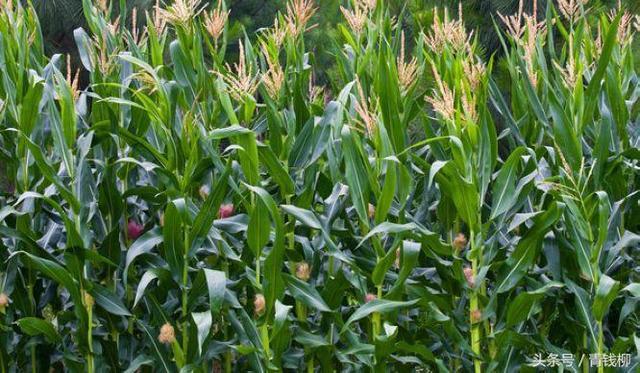
High-yield and early-maturing cultivation technology for corn with plastic film mulching
Plastic film mulching corn cultivation technology has developed rapidly in various places in recent years. It has become a key technical measure for corn yield per unit area to reach a new level. In many areas it is hailed as the "food and clothing project". Especially in poor high-cold mountainous areas, governments at all levels regard plastic film mulching corn cultivation technology as a key science and technology project for poverty alleviation and prosperity.
The application of plastic film mulching in corn production has two methods: field mulching and seedbed mulching. They are introduced separately as follows:
(1) Plastic film mulching cultivation technology for directly sown corn in the field
1. Select corn varieties suitable for plastic film mulching cultivation. Plastic film mulching raises the temperature inside the film, thereby promoting earlier development and maturity of corn. Therefore, in order to make full use of the growing season, corn with film mulching can use varieties with a growth period 7-15 days longer than locally open-field cultivated corn.
2. Sow appropriately early. Early sowing can increase the accumulation of nutrients in corn, help root development, promote early maturity and increase yield, and help sow the subsequent crop at the proper time. The varieties selected for plastic film mulching have a longer growth period and are generally high-yield varieties that cannot mature normally under open-field cultivation in the local area (high-cold regions). To ensure timely maturity, sowing is generally 7-10 days earlier than under open-field cultivation.
For the sowing methods of corn with plastic film mulching, there are those of sowing first and then mulching, and those of mulching first and then sowing, which can be adopted according to local conditions. For mulching first and then sowing, when sowing, the specified row and hole spacing should be used, and a small knife or bamboo piece should be used to cut open the film above the hole to drop in the seeds, and then cover with ash or fertilized soil. Because mulching improves the ecological environment of corn, especially some growth-limiting factors such as low temperature and drought have been improved, the planting density can generally be increased by 20%-30% compared with open-field cultivated corn, that is, an increase of 500-800 plants per mu. In order to improve the ventilation and light transmission conditions after increasing density, wide and narrow row planting is commonly used for corn with plastic film mulching in various places.
3. Cover with plastic film. When covering, the plastic film is required to be tightly attached to the bed surface (ridge surface), laid flat without wrinkles, and the angle at which the edge of the film enters the soil should be as vertical as possible. The edge of the film should be inserted into the soil about 10 cm, and the edge of the film should be compacted with soil.
4. Timely break the film to release seedlings. For the method of sowing first and then mulching, after the seedlings emerge, the film should be broken at the proper time to release the seedlings. The suitable period for releasing seedlings is the 2-3 leaf stage. Before releasing seedlings, if the temperature is relatively high, holes should be made in the film about every cut centimeter to harden the seedlings. Releasing seedlings too early makes them susceptible to cold damage, while too late makes them susceptible to high-temperature scalding. The method of releasing seedlings is to use a small knife or bamboo piece above the sowing hole, aim at the seedling, and cut a "+" or "one" shaped opening. The opening should not be too large, just enough to release the seedling. After cutting the opening, gently guide the seedling under the film out of the film, then compact the plastic film and seal the film hole tightly with wet soil. In the same field, generally all seedlings should be released within 2-3 days during the suitable period. Seedling release should be carried out from 9 a.m. to 12 noon and from 4 p.m. to evening each day. Seedling release is not suitable during the high-temperature period at noon and in windy weather. On cloudy days, seedling release can be carried out all day.
5. Field management. Under plastic film mulching conditions, the supply of temperature, fertilizer, and water for corn growth is relatively good, and the number of roots developed is large, but the root distribution is relatively shallow. Also, the aboveground part grows rapidly and is prone to excessive growth, making the stems weak. Therefore, attention should be paid to hilling and cultivating the soil, and reasonable fertilizer and water management should be carried out so that the stems grow thick and strong to prevent lodging. Generally, only one ear fertilizer application may be needed. When fertilizing, for those not having removed the film, it can be applied by breaking the film between rows. In order to facilitate field management, after corn grows to the 7-leaf stage, all the film can be removed. At this time the temperature rises, and mulching has no effect. However, in order to extend the service time of the plastic film and reduce costs, in some places the film is never removed, so that the subsequent crop can continue to use the original film for mulching.
(2) Seedling-raising and transplanting technology for corn with plastic film mulching
Seedling-raising and transplanting of corn with plastic film mulching means covering only the seedbed with film, and after transplanting to the field, open-field cultivation methods are still used. This can not only save plastic film and reduce costs, but also facilitate seedling-stage management, prevent damage to seedlings by rats, sparrows, insects, and others, and can effectively achieve early maturity and increased yield. This science and technology has been rapidly promoted in mountainous areas below 800 m altitude in Hunan Province in recent years and is deeply welcomed by the people. The technical key points of seedling raising with film mulching and transplanting are as follows:
1. Establish a seedbed. The seedbed should be selected at the edge of a field, beside the land, or in reserved open space that is sheltered from the wind, faces the sun, is convenient for management, and is relatively close to the field. The seedbed width should be 1.3-1.5 m, and the bed bottom should be flat, preferably slightly lower than the ground. In order to prevent waterlogging in the bed, small ditches should be dug around the bed, and drainage outlets should be opened at both ends.
2. Mix materials and make pots. Preparation method of nutrient soil for nutrient pots: use 400-500 kg of sifted fertile soil, 100-200 kg of high-quality farmyard manure, and 20 kg each of fermented cake fertilizer and phosphate fertilizer per mu, mix and stir evenly, and moisten with dilute manure water, with the appropriate degree being that it forms a ball when squeezed by hand and breaks apart when dropped to the ground. After a day, use the prepared nutrient soil to make pots by hand or with a pot-making device. The pot-making device is of iron and wood structure, and makes nutrient pots with a diameter of 5 cm, a height of 6.6 cm, and a weight of 250-300 g, which are arranged in the previously prepared seedbed, with fine soil filling the spaces between pots. When arranging the pots, the upper parts of the pots are required to be level so that the seedlings can be at the same height. In addition to using nutrient pots for seedling raising, nutrient soil blocks can also be used for seedling raising, that is, after the nutrient soil is prepared and adjusted in the seedbed, use a bamboo piece or knife to cut it into 5 cm x 5 cm nutrient soil blocks. Poke a small sowing hole 1.5 cm deep in the nutrient soil block. The seedbed area and the number of pots made should be determined according to the field area for transplanting and the number of plants per mu. Generally, the ratio of seedbed to field is about 1:35, and about 4,000 nutrient pots (blocks) are used per mu.
3. Timely germination promotion and sowing. For sowing dates of seedling raising with film mulching and transplanting, generally about 10 days earlier than the sowing date of open-field direct-seeded corn. Seeds should first be soaked to promote germination and then sown. Sow 1 seed per nutrient pot or nutrient block, with the seed root facing downward, cover with soil about 1 cm thick, water immediately, and then cover with plastic film.
4. Seedbed management. From after sowing to before the 3-leaf stage, seedbed management is mainly focused on heat preservation, maintaining the temperature in the bed at 20-25°C. Before emergence, the soil is required to remain moist to facilitate rapid and uniform emergence. When the temperature in the bed exceeds 30°C, the film at both ends of the seedbed should be uncovered for ventilation and cooling. After the 3-leaf stage, the film should begin to be uncovered for hardening the seedlings.
5. Transplanting. The suitable transplanting period is when the leaf age reaches 4-5 leaves. When the local temperature stabilizes at about 15°C and open-field direct-seeded corn emerges, the seedlings can be transplanted to the field on a cloudy day or in the morning and afternoon of a sunny day. When transplanting, plant the nutrient pot or nutrient block together into the hole (or furrow), press tightly with fine soil around it, and make sure the roots are straight and the seedlings upright. Water immediately after transplanting and keep the soil moist to facilitate survival. Field management after transplanting is the same as for directly seeded corn.