Appearance Quality Problems of Yantai Apples and Production Techniques for Premium High-Grade Fruit
Appearance Quality Problems of "Yantai Apple" Fruit and Production Techniques for Premium High-Grade Apples
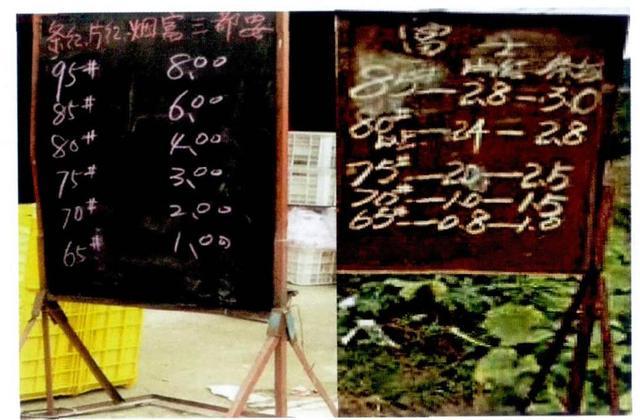
As people's living standards improve and total fruit production increases, the requirements for apple fruit quality are becoming ever higher: the fruit must not only have good internal quality, rich juice, and a pleasant sweet-tart flavor - tasting good; it must also look beautiful - looking good (bringing joy when purchased); and it must be pollution-free - safe (giving peace of mind when eaten). Buyers grade and price by quality, with premium fruit commanding premium prices; good fruit is in short supply, while poor fruit is hard to sell. The apple industry is no longer an era of pursuing yield alone. In 2017, in Penglai City, a prime production area for "Yantai Apple," Fuji apples fetched a purchase price of more than 12 yuan per kg because of their good quality, while apples in Qixia, Zhaoyuan and other counties and cities sold for only 6 yuan per kg, a difference in returns of half (Figure 1). If affected by bitter pit, red-black spot disease, chicken-claw cracking and fruit cracking, fruit russeting, etc., they could only sell for 0.5 yuan per kg. Implementing fine management and producing premium high-grade fruit is the only way forward for the development of "Yantai Apple."
Figure 1 Apple purchase prices in Daxindian, Penglai and Zangjiazhuang, Qixia
1 Fruit appearance quality problems
1.1 Poor coloring and poor surface finish
1.1.1 Aging varieties Old varieties generally have poor coloring and poor surface finish; old varieties such as Qiufu 1 and Changfu 2 all need to be renewed.
1.1.2 Improper cultivation measures Orchards nowadays commonly suffer from problems such as soil acidification, overly low soil organic matter content, unscientific fertilizer and water management, and improper pest and disease control, all of which affect the fruit's internal quality and appearance quality. Too much nitrogen fertilizer makes the fruit greenish and difficult to color; too much or too little potassium fertilizer, as well as excessive boron and magnesium fertilizer, can cause the fruit to turn yellow.
1.2 Nutrient deficiency disorders
Bitter pit, chicken-claw cracking, skin chapping, and fruit cracking (Figures 2-5) are all physiological diseases caused by calcium or boron deficiency in the fruit tree. Red-black spot disease (Figure 6) is also caused by calcium deficiency leading to rupture of the fruit's lenticels, followed by infection by pathogenic fungi.
Figure 5 Cracking Figure 6 Red-black spot disease
1.3 Fruit russeting
The russet spots appearing on the fruit surface are mainly of the following 6 types: russet fruit disease caused by the russet fruit virus; frost russeting caused by late-spring cold snaps and frost during the flowering period; pesticide russeting and fertilizer russeting caused by improper spraying of pesticides and foliar fertilizers on the tree; water russeting in bagged fruit caused by poor quality paper bags (which become wet when it rains and cling to the fruit surface for long periods) or improper operation (vent holes not opened, etc.); improper control of aphids and other pests during the young fruit stage; and insect russeting caused by pest excrement contaminating the fruit surface.
1.4 Small fruit size and misshapen fruit
Fruit size and fruit shape are basic indicators for grading the commercial grade of fruit. Improper flower and fruit thinning, leaving too many fruits, and unreasonable fertilizer and water management can all lead to fruit that is too small. Poor varieties and poor pollination can both lead to misshapen fruit; flat and lopsided deformed fruit all affect the selling price.
1.5 Rotten fruit
Improper control of fruit diseases such as anthracnose and ring rot directly leads to rotten fruit.
2 Internal quality problems of fruit
Due to excessive use of chemical fertilizers and premature harvesting, the fruit's sugar content is relatively low, the flesh's crispness and firmness are poor, and the flavor quality is not good. In some orchards, unscientific pesticide use and the use of inferior fertilizers that do not meet national regulations make the fruit less safe.
3 Solutions
3.1 Select new varieties and virus-free nursery stock
The new varieties currently being promoted, such as Yanfu 8, Yanfu 3, Shenfu No. 6, Luli, and Fuli, all have very good color and surface finish, and their fruit shape is tall and not lopsided. Yanfu 8 colors well even without laying reflective film; in bagged cultivation, it colors 2 days after bag removal and reaches full color in 4 days. Shenfu No. 6, Fuli, and Luli also have very good coloring and surface finish without bagging. Choose virus-free nursery stock to eliminate viral diseases.
3.2 Optimize ground management and build strong tree vigor
3.2.1 Improve the soil, adjust acidity, and supplement calcium Orchard soil is currently generally too acidic, root development is poor, and absorption capacity is greatly reduced. Before bud break and from late July to early August, broadcast two applications of soil conditioners such as "Bomeidu" on the ground to adjust acidity and supplement calcium. Grow grass between the rows to build soil fertility and improve the soil.
3.2.2 Reasonable fertilizer and water In autumn, base fertilizer application should feature organic, long-lasting, and multi-element characteristics, mainly using high-quality pollution-free organic fertilizer, plus bacterial fertilizer and medium- and trace-element fertilizers, to build soil fertility, strengthen tree vigor, and improve the tree's stress resistance.
During the growing season, apply supplemental fertilizer reasonably according to the fruit tree's fertilizer requirements, use nitrogen, phosphorus, and potassium inorganic fertilizers at the right time and in the right amounts, reduce the use of chemical fertilizers, and increase the application of calcium fertilizer, silicon fertilizer, and high-quality water-soluble fertilizers containing amino acids, humic acids, alginic acid, and various enzymes. Supply water evenly according to the fruit tree's water requirements and soil moisture conditions, do not use polluted water, and except for the freezing water, do not irrigate heavily; frequent light irrigation is recommended to prevent the loss of calcium and other fertilizers from the soil.
After petal fall (the tree's first peak calcium demand), drench the ground with the calcium fertilizer "Super Calcium Boron"; one month before bag removal (the second peak calcium demand), drench the ground with the calcium fertilizer "Chelated Calcium." When spraying pesticides from after flowering to before bagging, add foliar sprays of medium- and trace-element fertilizers such as calcium, boron, zinc, and magnesium. After bagging and after bag removal, spray 2 times and 1 time respectively with the high-quality calcium fertilizer "Oligosaccharide Calcium."
3.3 Rational pesticide use
Apply the dormant twig spray well to reduce the overwintering pest and disease base and prevent pathogen infection that forms red-black spots and rotten fruit. Add "Outianjia" to the dormant twig and pre-flowering sprays to prevent low-temperature freeze damage and frost russeting. Spray well from after petal fall to before bagging to prevent insect russeting. When spraying, require even, thorough application with low irritation; avoid excessive pressure, overly high concentration, excessive dosage, and the use of amino acid foliar fertilizers and azole-type, thiram-type, emulsifiable concentrate pesticides, and penetrants that irritate the fruit surface, so as to prevent pesticide russeting and fertilizer russeting. Orchards are prohibited from using highly toxic, high-residue pesticides; give priority to biological control, physical control, and agricultural control, supplemented by low-toxicity, low-residue chemical pesticide control.
3.4 Scientific flower and fruit management, pruning according to the tree
Carry out pollination during the flowering period well to ensure normal fruit development and avoid producing lopsided deformed fruit. According to the tree's vigor, leave an appropriate amount of fruit and maintain a reasonable crop load to avoid fruit that is too small due to leaving too many fruits. When winter pruning old and weak trees, properly cut back to rejuvenate them and ensure that young, vigorous branches bear large, high-quality fruit. When bagging, choose high-quality fruit bags and operate carefully to prevent water russeting. [Jishan Huayao]
3.5 Harvest at the appropriate time
In recent years, affected by market and other factors, harvesting has mostly been too early, greatly reducing the fruit's internal quality and appearance quality, with poor color, aroma, and taste. Harvest appropriately later according to market demand and use: fruit stored in controlled-atmosphere warehouses can be harvested as late as before October 20; fruit stored in cold-air warehouses can be delayed until the end of October; fruit going directly to market can be delayed until before leaf fall in mid-November. Tests have shown that after early October, for every 10 days that harvesting is delayed, the soluble solids content (mass fraction) can increase by 1%, and both sweetness and color improve greatly.