Detailed Explanation of Standardized Cultivation Techniques for Hutai No. 8 Grape
Standardized Cultivation Techniques for Hutai No. 8 Grape
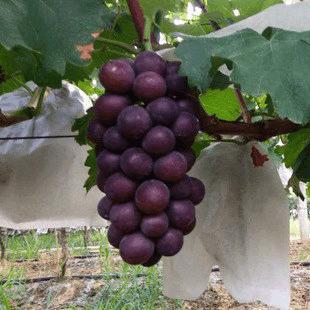
Hutai No. 8 is a dual-purpose table and processing variety originating from Europe and America. It is suitable for planting in areas with an annual effective accumulated temperature of 3,800 °C and a frost-free period of more than 180 days, and is resistant to downy mildew, gray mold, and anthracnose. It is tolerant to high temperatures, and new shoots can still grow when the daily maximum temperature reaches 38 °C continuously; the root system is well developed, the branches are thick and strong, and the leaves are large, nearly round, with five deep lobes, and the underside of the leaves bears sparse fine hairs; the flowers are bisexual, buds break in early April, the first round of flowers opens in early May, the first round of fruit ripens in mid-July, the second round of flowering occurs in early June, and the fruit ripens in mid-September. The fruit cluster is conical, 30 cm long and 18 cm wide, with a cluster weight of 600-1,000 g and a yield of 2,000 kg per mu; the average single berry weight is 10.4 g, with the largest single berry weighing 18 g, and the sugar content is above 21% (mass fraction); the fruit is 29 mm long and 28 mm wide, the skin is thick, purple-black at the tip and purplish-red at the base, the flesh is crisp, sweet and delicious, without a fleshy sac, and the skin and flesh separate easily, with 1-2 seeds per berry (Figure 1).
Figure 1 Fruit cluster of Hutai No. 8 (berries densely packed, fruit color purplish-red or purple-black)
Hutai No. 8 grape has wide adaptability. It can be planted in areas with sufficient light, an annual average temperature above 12 °C, an annual average rainfall not exceeding 1,000 mm, a daily average temperature above 20 °C during the growing period (April-October), and a large diurnal temperature difference during the ripening period; it has no strict requirements for soil and is suitable for various soil types with a pH value of 6.5-7.5, but thin and clay-heavy soils should be improved by applying organic fertilizer. It is advisable to choose a site with convenient irrigation and drainage, flat terrain, and far from air, soil, and groundwater pollution for establishing the vineyard.
1 Planting
The planting time is in October or early to mid-March. Before planting, level the field, carry out comprehensive deep plowing of the soil, and dig pits or trenches to apply organic fertilizer (when renewing an old vineyard, the soil must be disinfected to eradicate diseases and pests from the previous crop). Select 1-2 year old strong seedlings that are free of diseases and pests, have well-developed root systems, a root crown greater than 1.0 cm, and 2-3 plump buds, properly trim the root system and soak the roots for disinfection. Dig planting holes 60-80 cm square, placing topsoil and subsoil separately; when backfilling, apply 0.25 kg of multi-element compound fertilizer into each hole, mix it thoroughly with the topsoil and apply it, then fill in the subsoil. The planting depth should be such that the root crown is level with the ground surface after watering, the root system should be spread out, and it should not come into direct contact with the fertilizer. After planting, water thoroughly in time, and once the water has infiltrated, seal the hole promptly with fine soil.
2 Tree Shape Management
2.1 Determining the Tree Shape
High-trunk V shape or T shape.
(1) High-trunk V shape: trunk height 1.2-1.6 m, train two horizontal main canes in opposite directions, and alternately train fruiting canes on both sides along the main canes, with a spacing of 20-30 cm between fruiting canes on the same side.
(2) T shape: trunk height 1.7 m, train two fruiting main canes respectively to the left and right along the row, with the fruiting main canes at a height of 1.9 m, and alternately train fruiting canes on both sides of the fruiting main canes, with a spacing of 15-20 cm between fruiting canes on the same side (Figure 2).
Figure 2 T-shaped tree form
2.2 Training the Tree Shape
After the seedlings grow new shoots, insert bamboo poles in time, and select and retain one strong main branch to guide and tie along the pole; when it grows to 50 cm below the trellis, pinch it, and repeatedly pinch the secondary shoots growing from it, leaving 3-4 leaves. During winter pruning, the length of retained branches should be determined according to the growth status; if the trunk diameter at 50 cm above the ground is less than 1 cm, it should be cut back to the ground and continue to be trained the following year.
3 Pruning
3.1 Pruning
(1) Pruning time: mid-December to early February of the following year.
(2) Pruning method: T-shaped fruiting canes are pruned leaving a single bud or double bud, and high-trunk V shape is pruned leaving 3-4 buds. In order to prevent the cut from being dried by wind, affecting bud germination and causing the fruiting position to move outward, the cut should not be too close to the reserved bud, and the upper bud should be pruned by breaking the bud. As the tree ages, fruiting branches often become missing; if the upper position is missing, light pruning of the lower branch can be used to compensate.
3.2 Scoring Treatment
For branch training of T-shaped trees, the fruiting main canes all adopt super-long cane pruning; if scoring treatment is not used, it will lead to poor germination at the base and excessive vigor of the terminal branches. Scoring is carried out in late February to early March, making a cut 2-3 mm in front of the bud attachment site down to the cambium.
3.3 Trellis Construction Method
The grape trellis should be sturdy, smooth, and durable. Mastering the correct installation procedure is very important. Leveling and laying out lines: determine the direction of trellis construction according to the planting direction. Digging holes: the depth of end post holes is generally 50 cm, adjusted appropriately according to the terrain; first plant the 4 corner posts, then use a tape measure or survey rope to determine the positions of the surrounding end posts, and note that the upper ends of the end posts should be kept level and consistent when planting. Fixing anchor stones: the anchor stone holes should be perpendicular to the end posts, 80-100 cm away from the end posts, neither too far nor too close. The anchor line must be absolutely perpendicular to the end posts. Fixing side posts: the anchors are connected to the end posts, and they should be uniformly fixed with an outward tilt of 50°-60°. Pulling longitudinal lines: the longitudinal lines play the role of the main beam and must be pulled first, with consistent tightness; when the distance is long, support them with intermediate posts. Pulling transverse lines: mainly to fix the main canes and fruiting branches; first pull the middle transverse line that fixes the main canes, with both ends fixed to the end posts, and the other two transverse lines are tied after the surrounding multi-strand thick edge lines are pulled, with both ends fixed to the edge lines. Bracing middle posts: the position of the middle post is at each intersection of the longitudinal and transverse lines; the middle post does not need to be buried; a red brick can be placed at the bottom of the middle post, and the upper part is tied firmly to the longitudinal and transverse lines with iron wire. Pulling perimeter lines: use iron wire to fix with each pole of the corner posts and end posts. For the wire materials used in trellis construction, iron wire is used for tying and anchoring, and steel strand is used for the rest.
4 Branch and Vine Management
4.1 Buds
After the grape buds break, retain one healthy, well-positioned plump bud and remove the other buds. This is usually done in stages 10-15 days after bud break. The first pass mainly removes obviously useless buds, such as basal buds on the main stem and secondary buds on both sides of the bud. The second pass is carried out 10 days after the first is completed, mainly to remove remaining useless buds; for improperly positioned buds, weak buds with useful value should be retained as much as possible.
4.2 Shoot Selection
This is generally carried out when flower clusters appear on the new shoots and the size of the flower clusters can be distinguished. Shoot selection should be based on the distribution of the trellis surface; T-shaped trellises generally adopt short cane pruning with 1-2 buds, high-trunk V-shaped trellises adopt pruning with 3-4 buds, only one shoot is retained per fruiting cane, and the spacing between two fruiting branches is 15-20 cm; if there is a missing position in an adjacent fruiting branch, 2 shoots may be retained.
4.3 Tying and Guiding
For perennial fruiting main canes, this is done after arranging the trellis shape in early spring; every 30-40 cm, use relatively strong tying rope to fix the main cane together with the middle transverse line, and when new shoots grow to 40-50 cm, they should be guided and tied in time to prevent tender shoots from being broken by strong wind. There are many forms of tying and guiding; for young trees, vertical guiding is used to promote vigorous growth; for new shoots of fruiting trees, horizontal guiding is used to allow the new shoots to grow robustly. When tying and guiding, first cut the tying material into short ropes of a certain length, fix the tying rope to the iron wire with a "pig's trotter knot" so it cannot slide, then cross it into a "8" shape and tie the branch with appropriate tightness, preventing the branch from being abraded by the iron wire.
4.4 Pinching
At the beginning of flowering, by pinching the main shoot, the extension growth of the new shoot is terminated, so that all nutrients are supplied to the flower cluster and the fruit-setting rate is improved. The pinching position is generally where the new shoot leaf is 1/3 the size of a normal leaf, retaining 4-6 functional leaves above the fruiting position. After fruit set, the extension shoot of the fruiting branch is no longer pinched, and the extension shoot can be guided and tied to grow vertically downward. This can improve ventilation and light conditions on the trellis surface and reduce management workload. If the first crop sets fruit too poorly, the main shoot can be heavily pinched in late May to promote secondary fruit from the winter buds of the main shoot. After pinching the main shoot of young trees, the secondary shoots can be repeatedly pinched leaving 2-3 leaves to increase the nutrient area. For fruiting branches of trees already bearing fruit, all secondary shoots below the fruit cluster are removed, and those above the fruit cluster are repeatedly pinched leaving 2-3 leaves. After the coloring stage begins, if the trellis surface is too dense, some secondary shoots can be cut away at intervals to improve ventilation and light conditions on the trellis surface and promote fruit ripening.
5 Soil Management
5.1 Partial Deep Plowing
This is carried out when applying basal fertilizer in autumn, with deep plowing in trenches every other row, to a depth of 40 cm; the area deep plowed each year accounts for 15% of the total orchard area, and thereafter deep plowing is rotated year by year until the whole area has been turned once, and then repeated.
5.2 Ground Covering
By covering with plastic film or straw, root growth is promoted, soil moisture evaporation is prevented, soil compaction is reduced, and the range of soil temperature variation is regulated; it is also beneficial to microbial activity and promotes the decomposition of organic matter and the absorption of nutrients.
5.3 Growing Grass
Growing grass can improve the microclimate in the orchard, increase soil fertility, improve soil aggregate structure, and save labor. Natural grass growing: during management, only weeds exceeding 20 cm in height are pulled out, and the remaining weeds are allowed to grow naturally. Artificial grass growing: after clearing weeds in April in spring or October in autumn, plant special grasses such as clover, either in drills or by broadcasting. Remove weeds in time until the sown grass species occupies a dominant position and can inhibit weed growth.
5.4 No-Till Method
Used for vineyards with deep, fertile soil. Herbicides such as glyphosate are used for weed control. When chemical herbicides are used in the orchard, they must not be used more than twice a year, and the effect is best when used on a windless sunny day or after the dew has dried.
6 Fertilization Management
6.1 Autumn Basal Fertilizer Application
From October to December, organic fertilizer mixed with an appropriate amount of multi-element compound fertilizer is mainly used, with an application rate of 3,000-4,000 kg per mu; young orchards are fertilized by trenching, and mature orchards can be fertilized by turning it in around the tree disk. Basal fertilizer helps the recovery of the plants and high yield the following year.
6.2 Topdressing
This can be carried out multiple times as the situation requires. Before flowering, the demand for nutrients mainly comes from nutrients stored in the tree body from the previous year, so do not apply too much nitrogen fertilizer at this time. Nitrogen fertilizer can cause excessive vegetative growth of the plant and affect fruit set. The correct topdressing time should be after grape flowering, when nutrients are most needed in the entire life cycle, applying 30-40 kg per mu of superphosphate or ternary compound fertilizer. In comprehensive livestock and poultry biogas ecological parks, 2,000-3,000 kg per mu of biogas fertilizer can be applied during the fruit expansion period to promote fruit expansion and increase nutrient storage in the tree body. During the grape coloring period, in order to improve fruit quality, potassium dihydrogen phosphate can be applied once, 15-20 kg per mu.
6.3 Foliar Fertilizer
Foliar fertilizers include 0.2%-0.3% (mass fraction, same below) urea, 1%-3% superphosphate, 0.3%-0.5% potassium dihydrogen phosphate, and 0.1%-0.2% borax, zinc sulfate, manganese sulfate, and magnesium sulfate. Foliar calcium supplementation is carried out before bagging. Do not arbitrarily increase the dosage of foliar spraying or mix it with multiple pesticides, so as to avoid reduced effectiveness or pesticide damage.
7 Irrigation Management
Appropriate irrigation before flowering: during this period, the north generally has a dry climate and little rain; according to meteorological conditions, water 1-2 times, with a small and even amount of water, otherwise it is unfavorable for fruit set. Moisture control during flowering: control moisture for 10-15 days from the beginning to the end of flowering; irrigation during flowering will cause branches and leaves to grow too quickly, vigorous vegetative growth, consume large amounts of nutrients, and be unfavorable for fruit set. Fruit expansion period: water in time; from physiological fruit drop to before fruit coloring is the fastest growth period of the fruit, when the external temperature is high and leaf transpiration is large, generally irrigate once every 10-15 days. Water control during fruit ripening: control irrigation during the fruit ripening period, but if there is drought, irrigate appropriately; if the soil and air humidity are too high, diseases are likely to occur, and controlling watering is conducive to sugar accumulation and reducing the occurrence of diseases. After fruit harvest, water while applying basal fertilizer, and before overwintering, water once with winter irrigation water (water thoroughly). Orchards with conditions can use micro-irrigation and drip irrigation techniques [Jishan Huayao].
8 Pest and Disease Control
Before overwintering, prune diseased and pest-infested branches, scrape off old cracked diseased bark on the branches and vines, clear weeds and fallen leaves in the orchard, and bury them deeply or burn them in a centralized manner. Combined with pruning, appropriately raise the position of the first fruit cluster. At the bud swelling stage, spray 3-5 Baume degrees lime sulfur mixture carefully and evenly, using a drenching spray. From bud break to leaf expansion, spray 10% (mass fraction, hereafter) Sike water-dispersible granules 2,500-3,000 times solution or 25% Yeliang 8,000-10,000 times solution or 40% Guixing 6,000 times solution + Lvliang aqueous emulsion 2,000 times solution. To control black spot, anthracnose, white rot, green plant bug, and scarab.
Spray 100 times copper sulfate solution between rows and in furrows to reduce surface-borne downy mildew and white rot pathogens. At the flowering stage, spray Xinxi 800-1,000 times solution or Shuangyin 600 times solution + 10% Baokang wettable powder 1,500 times solution or 30% Baotuosheng 1,500 times solution + Lvliang aqueous emulsion 2,000 times solution, to control rachis blight, black spot, downy mildew (Figure 3), green plant bug, and scarab. At the fruit set stage, spray 25% prochloraz 1,200 times solution + 10% Sike water-dispersible granules 2,500 times solution or 25% Yeliang 8,000-10,000 times solution + Xinxi 800 times solution or Shuangyin 600 times solution + Lvliang aqueous emulsion 2,000 times solution. To control rachis blight, black spot, downy mildew, green plant bug, and scarab. At the young fruit expansion stage, spray 40% Guixing 6,000 times solution or 10% Sike water-dispersible granules 2,500 times solution + Xinxi 800-1,000 times solution or Shuangyin 600 times solution, Bordeaux mixture 800 times solution, Ailing 3,000 times solution + Qiqiao 2,000 times solution, to control anthracnose, white rot, downy mildew, green plant bug, scarab, leafhopper, Comstock mealybug, and mites. At the fruit cluster closure stage, spray 10% Sike water-dispersible granules 2,500 times solution + 25% prochloraz 1,200 times solution + Qiqiao 2,000 times solution + Lvliang aqueous emulsion 2,000 times solution, to control anthracnose, white rot, green plant bug, scarab, leafhopper, Comstock mealybug, and mites. At the fruit coloring stage, spray 40% Guixing 6,000 times solution or 10% Sike water-dispersible granules 2,500 times solution + 25% prochloraz 1,200 times solution + Xinxi 800-1,000 times solution or Shuangyin 600 times solution or Bordeaux mixture 800 times solution + Ailing 3,000 times solution + Qiqiao 2,000 times solution. To control white rot, downy mildew, anthracnose, green plant bug, scarab, leafhopper, Comstock mealybug, and mites. Fruit clusters with white rot should be cut off in time to prevent re-infection and disease occurrence caused by rainfall; at this time, spraying 40% Guixing 6,000 times solution has a relatively good effect. At the fruit ripening and harvest stage, spray 10% Sike water-dispersible granules 2,500 times solution or 40% Guixing 6,000 times solution + Xinxi 800 times solution or Shuangyin 600 times solution, Lvliang aqueous emulsion 2,000 times solution, to control white rot, downy mildew, anthracnose, green plant bug, scarab, leafhopper, Comstock mealybug, and mites. If high temperatures occur during the fruit ripening period, spraying 40% Guixing 6,000 times solution and 10% Sike water-dispersible granules 2,500 times solution can effectively reduce the probability of occurrence of anthracnose and white rot. From harvest to leaf fall, spray Bordeaux mixture 800 times solution + Xinxi 800 times solution or Shuangyin 600 times solution, to control white rot, downy mildew, and anthracnose.