What should you do when a potted plant loses all its leaves? Learn one trick and it can burst into a full pot and become an old stump
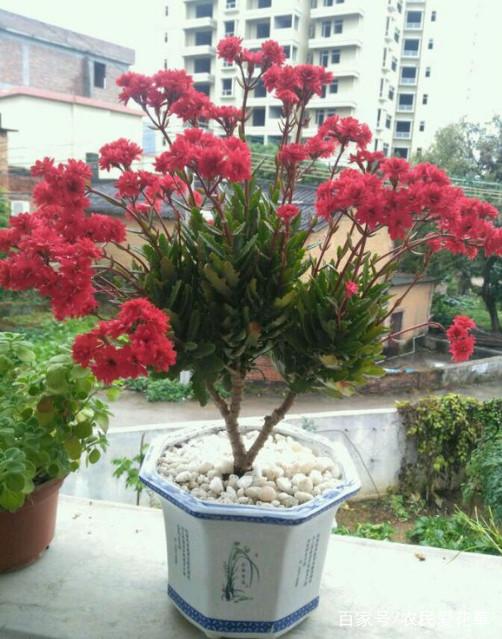
Potted plant lost all its leaves? Don't worry, this way it becomes an "old stump," beautiful to a whole new level!
The weather is getting hotter and hotter, and many flower lovers have left messages saying that their plants' leaves are turning yellow and almost all gone, and they look so pitiful. Is there any way to make them beautiful again? Let me quietly tell you, don't worry, this way you can grow an "old stump." Haha, old stump has been a popular term in the plant-growing world these past few years, and when grown well it really is beautiful. Let's look at a few pictures and quickly see whether your potted plant is an old stump.
Isn't it beautiful and stunning? Anyway, I really like it. Flower lovers, do you like old stumps like these? It isn't hard to grow an old stump. As long as you are a bit lazy and water a little less, you have completed the first step. Isn't it simple and a bit crude? But if you want a potted plant to become an old stump, this is what you have to do.
Because the principle behind turning a potted plant into an old stump is this: you need to let the lower leaves of the potted plant fall off due to loss of water, thereby promoting lignification of the branches and trunk. This way your potted plant becomes an old stump.
Below, let me share how 4 common potted plants are grown step by step into old stumps
1. Kalanchoe
If you want kalanchoe to become an old stump, actually after growing it for a long time it will naturally become one, but if you are impatient and want it to become an old stump quickly, you can do this: manually remove all the leaves at the bottom of the branches, lower the watering frequency, give it more sun, and let the branches and trunk lignify naturally.
And during this process we can let it bloom less and apply more nitrogen fertilizer and potassium fertilizer, because nitrogen and potassium fertilizers mainly make the potted plant's branches grow faster and stronger, but apply less phosphorus fertilizer, so that the lignification process goes faster.
2. Moss rose
It is a bit difficult to grow moss rose into an old stump, but it is not impossible. In this process, flower lovers can choose a strong moss rose, preferably a perennial moss rose. At the same time, give it more sun and apply more compound fertilizer, leave one main branch, and prop up the other branches. You must use a frame for support; you can bend some wire yourself, or use a protective frame or protective net, and just fix the moss rose branches in place.
You also need to find a way to get it through winter
Before autumn and winter, all the leaves of the moss rose fall off. At this time you need to move it indoors, and pay attention to keeping it warm. The next spring, without any care, it will sprout!
Isn't it beautiful when it grows like this? Flower lovers, if you like it, you can get started.
3. Succulents
Succulent old stumps should be what flower lovers are most familiar with. Some varieties, such as Graptopetalum paraguayense, Echeveria secunda, and Pachyphytum oviferum, are especially easy to grow into old stumps.
If you want to cultivate an old stump from a succulent, then the growing environment is very important. Use the plant's growth characteristics to make it quickly grow into an old stump: remove its lower leaves so it becomes leggy, and over time the plant will slowly form an old stump. Although an old stump grown this way is fast, it loses the real pleasure of it.
If you want to grow a true old stump, you still have to do it this way, which is more interesting.
For a succulent to become an old stump also requires water control measures, and you also need to choose the right variety. The ones we mentioned above are quite suitable for growing into old stumps. Let the succulent consume its own leaves to meet the water needs for growth. So in the process of growing an old stump, you must not water frequently.
Cultivating an old stump requires patience, waiting for the leaves to naturally renew and replace old ones. The old leaves below continuously consume themselves to provide nutrients and water to the growing point. After they dry up and fall off, the main trunk is exposed. The longer the time, the more the main trunk will gradually become one of the visual highlights.
4. Aloe
Aloe leaves are thick and fleshy and contain a large amount of sap, so it can survive even in a dry environment. If you want aloe to become an old stump, you need to consume the water in the lower leaves to promote lignification of the branches and trunk.
If a flower lover wants aloe to become an old stump, you definitely must not water too much. You can water once every half a month, and do not let the potting soil remain too wet for a long time. The old leaves below continuously consume their own nutrients to supply the growing point's growth. After they dry up and fall off, the stem is exposed. The longer the time, the bigger the old stump will become.
That's all for today's sharing
Flower lovers, quickly check whether your potted plants have all inadvertently been grown into old stumps.
Thank you for reading
Hope you like it