How to grow potted orchids under strong light? Sharing my methods
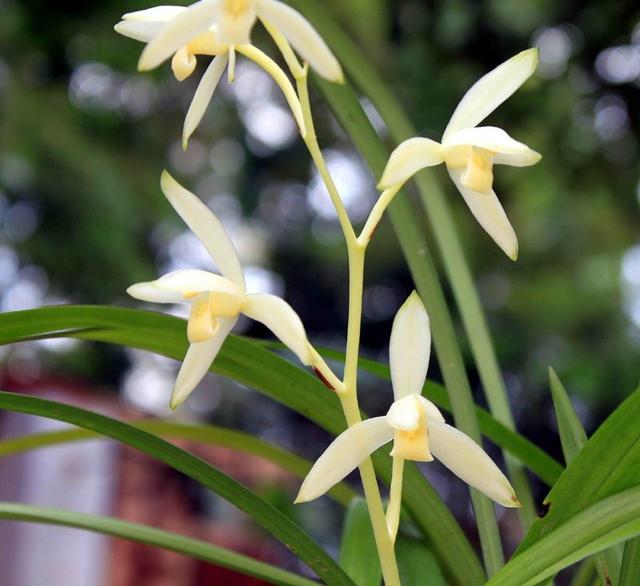
As we all know, orchids are shade-loving flowers with fairly strict requirements for their growing environment, especially in summer, when you must build an orchid shed or hang shade netting to avoid strong light. But I have seen many potted orchids grown by farmers in our rural area, planted in the open in spacious places, and although the leaves are not the prettiest, they really do grow very well and thrive.
So, can potted orchids be grown well under strong light?
Later, through practice, I proved that orchids, especially Cymbidium ensifolium, can still be grown well as potted orchids without shading under strong sunlight, using just a few simple methods. These are the methods I used:
Method 1: Be particular about variety selection
Growing potted orchids well under strong light has its limitations. I used Cymbidium ensifolium dug up by farmers for planting. Do not take greenhouse seedlings bought from a greenhouse and try to copy this experiment with them.
Method 2: The site orientation must be ideal
The most ideal orientation for an orchid site is facing east or southeast (it is best to have a building or trees blocking the northwest), so that it gets sun in the morning and also a while at noon, and when the sun shifts west, the building or trees block it and provide some shading. The place I used for the experiment was in the countryside, facing southeast, so my potted orchids got at most 6 hours of sun a day. From 9 a.m. to 3 p.m., the leaves of these Cymbidium ensifolium I grew showed no large-scale scorching or burning.
Method 3: Be careful with potting medium and water
Growing orchids under high temperature and strong light requires the potting medium to drain and breathe even more. I mainly used "xian tu" (a granular orchid potting soil) with good drainage and containing multiple elements as the medium. At the very bottom of the orchid pot, to enhance drainage, I deliberately went to farmers' homes in the countryside to find charcoal and coal cinder 2.5-3.0 cm in diameter for the bottom layer (about 1/3 of the pot height), and used them to grow the Cymbidium ensifolium I bought. I mainly watered the orchids with natural rural water (rainwater). For this, I placed a large water vat beside the orchid bench to store rainwater for long-term use. If the rainwater runs out, use tap water with some edible acetic acid or ferrous sulfate instead.
Method 4: Create a good microclimate
Adapting to local conditions and using local materials, in an open rural courtyard I built a small orchid bench more than 1 m high out of bricks. I used an old children's bathtub and a ceramic basin filled with water as water basins, then laid a few wooden boards across the surface of the water basins, and placed the orchid pots on the boards, with the bottom holes of the pots directly facing the water in the basins. In this way, as the water in the basins slowly evaporates, it humidifies the environment and raises humidity. The hotter the weather and the higher the temperature, the faster the evaporation and the more obvious the humidifying and cooling effect, creating a moist, cool environment. This let the orchids still grow well under harsh external conditions (high temperature, strong sunlight) (sometimes the temperature reached around 30°C).
Method 5: Spray and fertilize regularly
Orchids grown long-term under scorching sun and high temperatures are very prone to infection by pathogens, so regular sterilization and pest control are essential. I focus on prevention, with treatment as a supplement, spraying 4 times a month, once every 7-8 days. The chemicals include thiophanate-methyl, chlorothalonil, mancozeb, carbendazim, omethoate, and so on. Regular fertilization is even more indispensable: fertilize 3 times a month, applying organic fertilizer (rapeseed bran fertilizer liquid) and inorganic fertilizer (monopotassium phosphate). In addition, spray a full-spectrum nutrient product, Lanjunwang, once a week. Every day, frequently spray and wash the orchid leaves with clean water plus a few drops of edible acetic acid, which both keeps the leaves clean and serves to sterilize and prevent disease.
Through this series of measures, these Cymbidium ensifolium I grew in the countryside did quite well and grew vigorously. Only some leaves may have scorched tips or sunburn spots, but rooting and sprouting were both quite good, and they bloom many flowers every year. I have not yet tried Cymbidium goeringii or Cymbidium faberi. Friends with similar conditions can consider gradually increasing the light for Cymbidium ensifolium and give it a try.