When is the best time to repot a jade plant? I'll teach you the correct repotting method
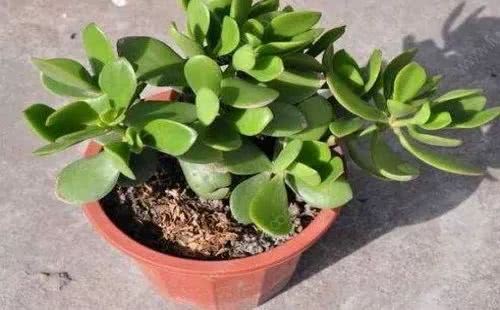
The jade plant (Crassula ovata) has fairly tenacious vitality; it is not only drought-tolerant and tolerant of poor soil, but also has a certain ability to tolerate shade. Moreover, its leaves are thick and emerald green, and its plant shape is beautiful and elegant. When grown as a potted plant, it has extremely high ornamental value and is very suitable for appreciation as a foliage potted plant.
However, after a jade plant has been grown in a pot for a long time, because the space inside the pot is somewhat limited, the nutrient content in the potting soil is bound to be restricted, and as the plant keeps consuming nutrients, they will become fewer and fewer. On the other hand, because water and fertilizer are applied frequently, the potting soil is also prone to becoming compacted after long use, so we need to repot and change the soil regularly to ensure the plant can maintain normal growth.
For any plant grown as a potted plant, repotting is generally needed after long-term pot cultivation, especially for foliage-type potted flowering plants like the jade plant, for which regular repotting is extremely important for maintaining normal growth and ornamental effect. So, when is the best time to repot a jade plant? Below, the editor will share some knowledge on these aspects with everyone.
Actually, as for when is the best time to repot a jade plant, there is no strictly defined time. As long as the current temperature environment is suitable and can meet the conditions needed for its growth, it can usually be repotted. After all, the jade plant has fairly tenacious vitality, and as long as it is not adversely affected or restricted by the environment, repotting generally will not cause much of a problem.
But for ordinary household potted plant growers, after all, they cannot compare with professional growers. Original: wWw.pJCn.ORg Whether in experience or in operating standards, they are often relatively lacking. Therefore, in general, it is better to choose early spring for repotting a jade plant. But for large potted jade plants, it is generally better to repot in March-April each year. So, how do you repot a jade plant?
1. First prepare a flower pot one size larger than the old pot. If the soil in the original pot is still fairly fertile and loose, you can keep the original soil and just change the pot. But if the soil in the original pot is fairly compacted and also has relatively few nutrients, then it is recommended to also change to new potting soil when repotting.
2. After making a drainage layer in the new pot, take the jade plant out of the original pot, being careful not to damage the plant. At the same time, remove part of the outer soil, then place it into the new pot. Then fill it in with new potting soil until all the gaps in the pot are filled. Finally, gently press the soil around the plant firm.
3. If the soil compaction in the original pot is fairly serious, then after taking the jade plant out of the pot, you should remove most of the potting soil. You only need to keep a small portion of soil clinging tightly to the root system, and then trim the roots appropriately as needed. The main purpose is to cut off old, weak, diseased and disabled roots with low absorption capacity, so as to encourage the plant to sprout new roots and improve its ability to absorb nutrients and water. Then repot and fill with soil again according to the above method.
4. After completing the repotting, if the potting soil is fairly dry, you can water it thoroughly once; if you repot with wet soil, you may also not water it. But if the temperature is fairly low when repotting, watering is generally not recommended, because the jade plant has relatively poor cold tolerance, and once watered, the plant is instead more likely to suffer frost injury.
5. Finally, place the potted plant in a cool, ventilated place for care. It can receive scattered light, but direct sunlight should be avoided to reduce water evaporation and prevent excessive water loss. After about one week of recovery, when the plant's root system resumes growth, you can water it and increase light for it, and at the same time you can gradually provide normal care and management for it.