The Unique Trick for 100% Survival When Planting Roses in Summer
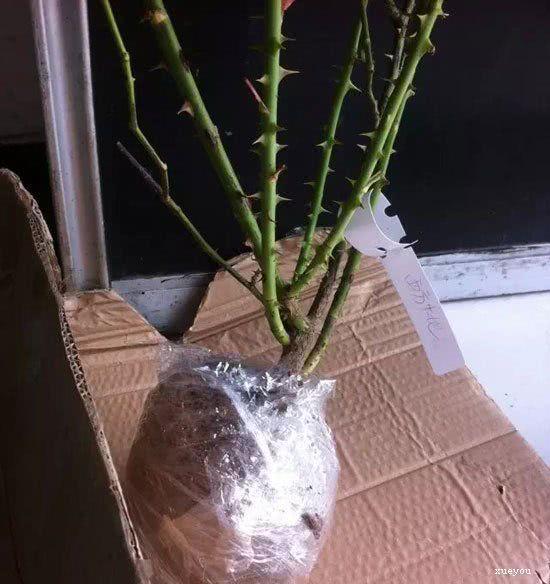
Recently a gardener asked, what should be done when a bare-root rose seedling does not sprout or grow leaves? Today let's discuss the causes of the problem!
How should bare-root rose seedlings be planted for the best results? It seems gardeners are unsure of the key points, so let me talk about the planting techniques for bare-root seedlings. Bare-root seedlings have no leaves and their roots are exposed (some are wrapped in a bit of mud, which is just bare roots dipped in some mud). This kind of seedling's root system needs a fairly long recovery period. Without leaves, transpiration is very low, so it has quite high demands on both the soil environment and the air environment.
For bare-root plants to recover quickly, a loose and breathable substrate is needed, because rapid root growth requires massive aerobic respiration, so a loose, breathable, and moisture-retaining environment is good for root recovery. I personally recommend a substrate ratio of coarse and fine coconut coir at 1:1 (the budget formula). If you want to go luxury, then add plenty of akadama, peat soil, and the like. Then, because the seedling's transpiration is low, it does not need complete shade; it just must not be exposed to blazing sun. In fact, in a fully shaded environment, without sunlight stimulation it actually grows poorly, so this kind of seedling is generally placed in a spot with diffused light. Morning and evening sunlight is fine, just do not let it be scorched at noon.
There is also an extremely effective bare-root seedling planting technique, and it is my own secret trick! Even for a rose stump 20 cm in diameter, it can be planted and kept alive in the open. That is, first plant the seedling with a loose and breathable substrate, then spray the trunk exposed to the air with liquid wax diluted 400 times. This way the liquid wax prevents the trunk from drying out too much and plays a role in locking in moisture. Everyone can give it a try. You can even plant the seedling and not deliberately avoid light, no problem. Otherwise, how could it be my own unique skill!