These 5 flowers are the best for summer cuttings, filling with big white roots in just a few days, don't miss out
Cuttings may be the most popular way to propagate flowers right now. Many gardening friends are asking, in the dry and muggy weather of summer, can plants be propagated from cuttings, will they survive? If handled improperly, will they just wither and die? The flowers I'm telling you about today are simply the best for taking cuttings in summer.
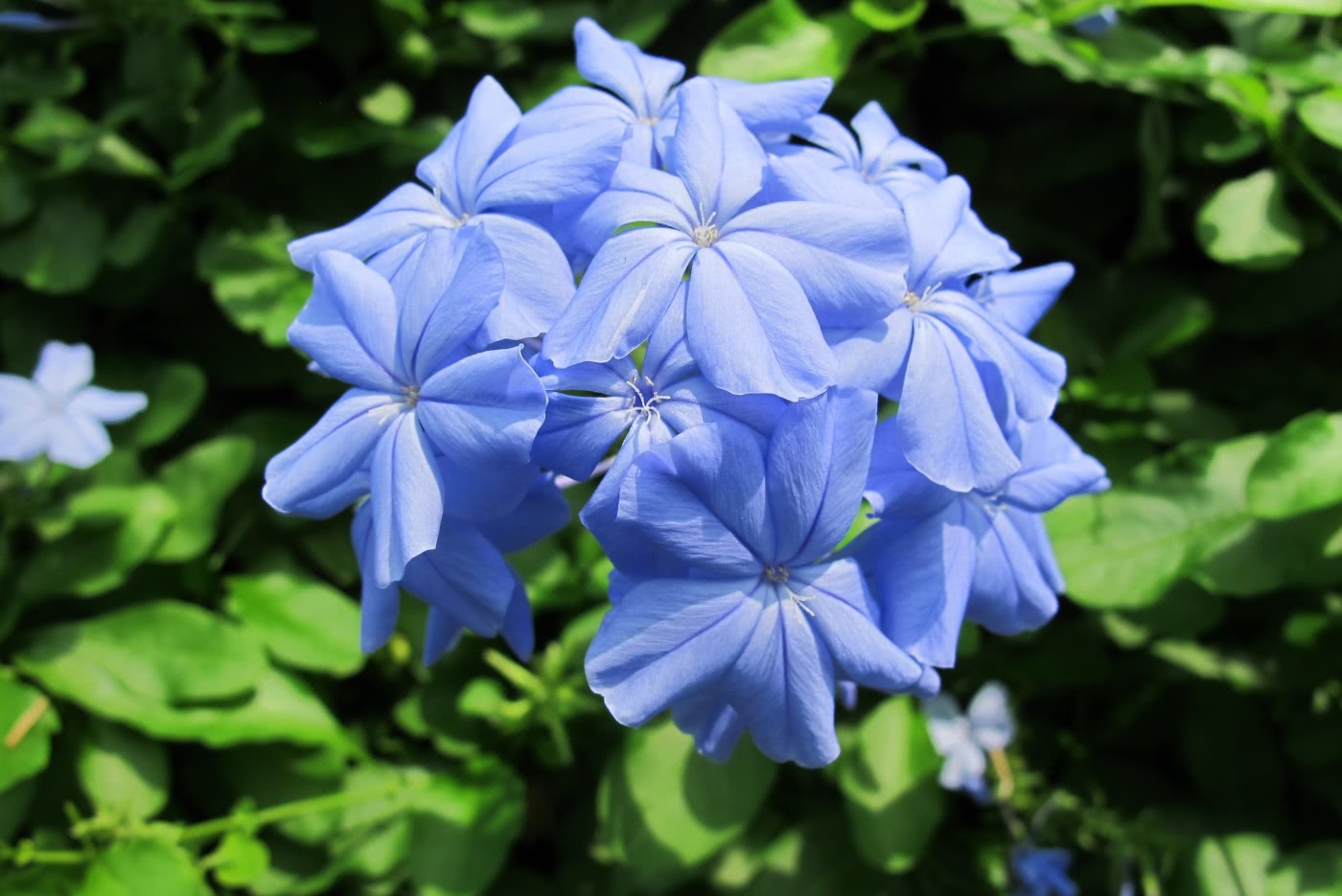
1.Blue Plumbago
Aside from the eye-catching hydrangea, perhaps only the blue plumbago can bring such a fresh sense of beauty. In the scorching summer, keeping a pot of it in the bedroom makes you feel cool all over!
Steps:
1. First, prepare blue plumbago branches. The branches you normally cut off during pruning can be used for cuttings. Next, trim the branches, cutting off the lower part appropriately to expose the smooth stem, and remove the leaves as much as possible.
2. Poke a few holes in the bottom of a disposable paper cup, then fill it two-thirds with vermiculite, insert the branch while remembering to place a tray underneath, and patiently wait for roots to form. A balcony is the most suitable spot.
3. It's summer now, and the temperature is a bit high, which is ideal for rapid root growth. Wait patiently for about half a month, and the plant will grow roots and gradually start growing normally.
4. After roots appear, the next step is potting up, then place it in gentle sunlight to observe whether it's growing well. Once the plant can grow normally, you can transplant it outdoors for sunlight, while ensuring adequate water, and it will fill the pot quickly!
2.Hydrangea
Many gardening friends feel great when caring for hydrangeas, because hydrangea blooms are truly stunning. I believe every friend wants a few pots of hydrangea to grow. Take advantage of this most suitable season for cuttings, and let me teach you how to take hydrangea cuttings. Tomorrow, one pot can become several pots!
Steps:
1. You may not be very clear about this, but summer is officially the best time to take hydrangea cuttings. A problem many gardening friends are reporting is why the hydrangeas are gradually fading. At this time, branches and leaves need to be pruned, so the branches you cut off are also good material, absolutely don't throw them away, they can be used for cuttings.
2. First collect the freshly pruned branches, cut the lower end at as much of a slant as possible to increase the contact area, and keep leaves on the upper part but few, to avoid wasting the plant's own nutrients. To help them root quickly, apply an appropriate amount of rooting powder and place them in a cool, dry, ventilated spot.
3. Next, prepare a disposable paper cup by poking holes in the bottom, mix equal amounts of perlite and vermiculite and put them in, then insert it into the disposable paper cup. Remember the last step: place it in a tray and add an appropriate amount of water.
4. At this point, the planted cuttings need to be placed on a well-ventilated balcony or outdoors, maintaining good light conditions and soil moisture, watering once a day on schedule. At the same time, to ensure the humidity of the surrounding air, you can mist the plant. Place the cuttings in a spot with good indirect light, and mist regularly to maintain humidity. Roots will form in about half a month.
5. Finally, transplant the rooted hydrangea branches into flower pots and care for them normally.
3.Bougainvillea
A mass of bougainvillea is truly a magnificent sight. At the same time, caring for bougainvillea is also very easy. Some gardening friends wonder whether bougainvillea grown from cuttings will also bloom into a flower wall. One trick will teach you how to grow bougainvillea from cuttings that will make your neighbors green with envy.
Steps:
1. If a gardening friend likes bougainvillea too much but doesn't want to buy one, remember when you're out walking or traveling and see a bougainvillea, you can just snap off a branch and take it home to plant directly. If a gardening friend encounters bougainvillea on the roadside, you can cut a thick, sturdy branch and bring it back, give it a little trim, and then plant it as a cutting.
2. At the same time, to improve the survival rate of cuttings, you can soak them in an appropriate amount of carbendazim solution for about 5 hours, no more and no less, as too long or too short is not suitable.
3. Prepare the soil conditions: mix equal proportions of rooting powder and yellow clay into a lump, then insert the bougainvillea branch, about 3 cm is most suitable. Finally, to retain moisture, wrap it completely with a plastic bag. Roots will form in about 40 days.
4. You can mix rooting powder and monopotassium phosphate in a 1:1 ratio to make a solution, then spray it onto the bougainvillea leaves. It only takes about 40 days for the bougainvillea cutting to root!
6. Wait patiently for it to root, and then the next step is repotting. The potting soil for transplanting must be loose and breathable, in order for it to grow normally. First place it in a cool, ventilated spot for about 10 days before exposing it to light, and the bougainvillea will grow more and more vigorously!
4.Mock Orange (Murraya paniculata)
Mock orange is a delicate little flower that is very endearing. Don't be fooled by its small size, when it accidentally blooms into a large mass it's also very beautiful! Place a pot in the bedroom or beside a desk, and its faint fragrance is very pleasant and uplifting!
Steps:
1. First, select a mock orange that has been growing for about a year, and take its robust branches, preferably semi-lignified ones. Next, trim appropriately, with 6 cm being most suitable.
2. Then, to increase its growth speed, soak it in an appropriate amount of rooting powder for 20 minutes. After taking it out, remember to rinse with clean water and dry it in a cool place.
3. Before preparing the nutrient soil, first prepare a container, a disposable paper cup will do. For the soil, mix peat soil and vermiculite in equal proportions, and finally insert the previously prepared branch into the nutrient soil.
4. It's worth noting that the rooting speed of mock orange is relatively slow. So waiting patiently for 2 months is entirely normal, and you must not give up halfway. Even more noteworthy is that you absolutely must not pull out the branch from time to time to check whether it has rooted.
5. The last step is potting up. The mock orange that has just grown roots is still relatively fragile. So to avoid direct sunlight, it's best to keep it indoors for care. In about two weeks it can be exposed to sunlight!
5.Camellia
Even though summer is hot, camellias can still be propagated from cuttings! And cuttings taken at this time easily survive!
Steps:
1. First, choose the branches. You can cut branches from the plant, with robust branches that have grown for about 1 year being best. Semi-lignified branches are most suitable for successful cuttings. From the camellia plant, choose robust semi-lignified branches.
2. Next, trim the branches. While trimming, remember to keep 2 leaves, no more and no less, to prevent nutrient loss and also to ensure good survival. A step that cannot be ignored is a brief soak in rooting solution, and finally remember to dry the wound.
3. Prepare the soil conditions, mixing yellow clay and river sand in a 2:1 ratio. Camellias like water, so each watering should soak through, and water again when the potting soil turns slightly pale.
4. The rooting speed of camellias is relatively fast, and roots will form after waiting patiently for about half a month. After rooting, transplant into pots and care for them normally!
Actually, besides the ones introduced here,
such as azaleas, hibiscus...
they can all be propagated from cuttings in summer!
So gardening friends, why not hurry and give it a try this summer?