How to care for Haworthia cooperi var. pilifera? Please keep this Haworthia care manual
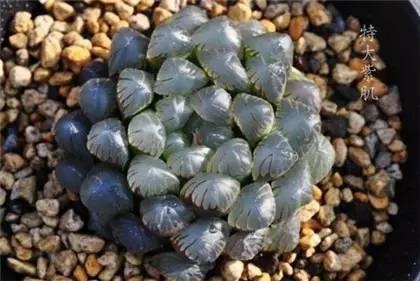
Haworthia obtusa var. pilifera is a "soft-leaf" variety among the plants of the genus Haworthia in the Liliaceae family. This series has many varieties, and the more common ones include Haworthia cooperi, Haworthia 'Yuzhang', Haworthia cooperi var. truncata, large Haworthia cooperi, spiny Haworthia cooperi, and so on. The Haworthia plant is small and exquisite, rich in varieties, and its leaf color is crystal clear and full of variation, like a living handicraft, very lovely. It is one of the more popular small succulent plant varieties in recent years. So how exactly should Haworthia be cared for?
LightIt is relatively sensitive to light. If the light is too strong, the leaves will grow poorly and turn light reddish-brown, and sometimes strong direct light will scorch the leaves, leaving ugly marks. If the cultivation site is too shady, it will cause the plant shape to become loose and not compact, the leaves to become thin and elongated, and the transparency of the "window" to be poor. Such a plant is very difficult to restore to its original appearance, and one can only wait for this batch of etiolated leaves to slowly fall off and then grow robust new leaves. Plants grown in semi-shade have thick, plump leaves and high transparency. Therefore, from May to September, a layer of shade net can be added, and from October to April of the following year, the shade net should be removed and full light should be given.
Soil
Haworthia is suitable for growing in loose, fertile sandy soil with good drainage and air permeability, containing calcareous matter, and with relatively coarse granularity. It is commonly planted with a mixed soil of 2 parts leaf mold and 3 parts coarse sand or vermiculite, mixed with a small amount of bone meal, etc. For high-grade varieties such as 'Haworthia cooperi var. pilifera f. variegata' and 'Haworthia cooperi var. pilifera', artificial synthetic materials such as akadama soil, orchid stone, and kiryu stone can also be used for planting, but an appropriate amount of peat soil should be added to increase the soil's organic matter content.
WateringDuring the growing season, watering should follow the principle of not watering until dry, and watering thoroughly when watering. Avoid water accumulation, and even more, avoid rain exposure, especially long-term rain exposure, to avoid root rot. However, it should not be dry for a long time either, otherwise although the plant will not die, the leaves will shrivel and the leaf color will be dull. When the air is dry, water can often be sprayed on the plant and the surrounding environment. During the growing season, a transparent colorless beverage bottle with the upper half cut off can be used to cover the plant for care, allowing it to grow in a small environment with moist air, which can make the leaves plump and the "window" more transparent. But in the high-temperature summer season, the beverage bottle must be removed to avoid plant death due to muggy and humid conditions.
Fertilizing
During the growing season, for vigorously growing plants, a once-a-month application of fully decomposed dilute liquid fertilizer or a compound fertilizer low in nitrogen and high in phosphorus and potassium can be given. Newly potted plants or weaker-growing plants do not need fertilizing. Fertilizing is also unnecessary during the dormancy period in high summer temperatures or when winter temperatures are relatively low. Fertilizing should preferably be done on a clear morning or evening.
RepottingBecause the root system of Haworthia secretes acidic substances, causing soil acidification and making the roots age and become hollow, it can be repotted once every spring or autumn. During the growing season, if the plant is found to have stunted growth and shriveled leaves, it is very likely that the root system is damaged, and the plant should be repotted in time to tidy up the root system. When repotting, cut off the aged and hollow root system, shorten excessively long roots, retain thick white new roots, and then plant with fresh culture soil. Newly planted plants can be sprayed frequently, but should be watered sparingly, so that the plant can recover growth as soon as possible.
Post-bloom careSince the flowers of Haworthia are not highly ornamental, if seeds are not to be kept, the flower scape can be pulled off from the base to avoid consuming too many nutrients. Note that the flower scape should not be cut with scissors; it should be pulled off by hand while swaying it side to side, so as to avoid residual flower stalks remaining between the leaves and adversely affecting the growth of future new leaves.
Pest and disease controlThe main disease is root rot, which is caused by poor permeability of the cultivation material and long-term water accumulation in the soil. Therefore, the cultivation environment should be improved, and soil with good looseness and air permeability should be selected for planting, and water should not accumulate for a long time. In addition, if water accumulates in the center of the plant for a long time, it will cause heart rot. If the soil is not changed for a long time, root aging and hollowing will cause physiological diseases in the plant, causing the plant to stop growing and the leaves to become shriveled and not plump. When this happens, the soil should be changed in time. Pests include root mealybugs. The soil can be treated at high temperature before planting, and insecticides can be added to the soil.
Division propagationHaworthia division can be carried out together with repotting, or during the growing season the young plants beside the mother plant can be dug out. They can survive with or without roots. Those with roots can be planted directly. Rootless seedlings should be dried for 1-2 days, and planted after the wounds are dry. Newly planted plants should not be watered too much, to avoid causing rot. After new roots grow, carry out normal management.
Cutting propagation
Haworthia will grow young buds in the leaf axils at the lower part of the plant. For species that do not easily produce young buds, the growth point in the center of the plant can be damaged to encourage it to sprout young buds. After the small buds grow to 2-3 cm, remove them, dry them for 2-3 days, and after the wounds are dry, insert them into culture soil for cuttings. After insertion, keep the soil semi-dry, and new roots can grow after 2-3 weeks.
Leaf cutting propagationHealthy and plump fleshy leaves can be selected and inserted during the growing season into a well-draining substrate such as vermiculite or coarse sand. After insertion, keep the potting soil slightly moist. The base of the fleshy leaf easily takes root and grows small buds. After the small buds are somewhat larger, plant them separately.
Seed propagation
Only through artificial pollination can Haworthia set seeds. Generally, this is done on a clear morning when the plants are blooming. The method is to select two Haworthia plants blooming at the same time; varieties of the same genus Haworthia such as Haworthia retusa and Haworthia maughanii can also be used for pollination. The parent plants are required to have a compact plant shape, thick and plump leaves, and high "window" transparency. During pollination, remove the petals, take the pollen and smear it onto the stigma of the flower of another plant. The pollen can also be removed the previous afternoon, carefully stored, and then used for pollination the next morning, with a relatively high success rate. After the plant's seeds mature, sow them. The seeds can be sown as soon as they are collected. The sowing soil can be prepared by mixing 3 parts vermiculite and 2 parts leaf mold or peat soil. Before sowing, it is best to sterilize the soil at high temperature to eliminate pathogens and insect eggs in the soil. After sowing, cover with a piece of glass, and seedlings will emerge in about 20 days. After the seedlings emerge, remove the glass, pay attention to ventilation, do not let the soil become excessively dry, and when the seedlings are too crowded, pay attention to pricking out and transplanting.
·END·
The first self-media in the floral and plant world
"Succulent Plant Garden"
Japan and Korea succulent news | Succulent care | Disease prevention | Creative DIY | Propagation and leaf cuttings
We believe! People who love plants understand life better.
Cooperation WeChat ID 82865