Lucky bamboo can absorb toxic gases - keep this care guide handy
Care guide for lucky bamboo that "absorbs toxic gases"
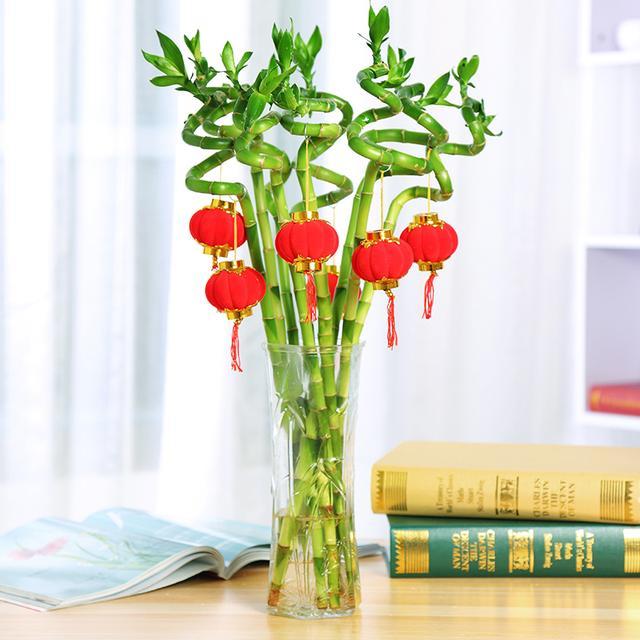
Lucky bamboo is also known as wan shou zhu, kai yun zhu, and fortune tower. Common varieties include green-leaf, silver-edge, gold-edge and silver-heart. The lucky bamboo plant grows about Im tall, with a dainty form and tall, thick, sturdy stems; the leaves are deep green and lance-shaped. The photo shows a potted lucky bamboo.
1. Environmental benefits
Lucky bamboo can absorb large amounts of harmful gases from the air and release plenty of oxygen, which is quite beneficial for purifying indoor air and eliminating odours. As a water-grown plant, lucky bamboo allows water to evaporate freely and plays a clear role in regulating air humidity.
2. Care guide
(1) Soil choice Lucky bamboo likes shade and moisture; for pot culture, it is best to choose a paddy field with convenient drainage and irrigation and loose, fertile soil. For pots, you can use a mix of leaf mould, garden soil and river sand, or use coir, leaf mould and coal cinder ash with a small amount of chicken manure, peanut meal and compound fertiliser as the growing medium [Jishan Huayao].
(2) Light Lucky bamboo naturally prefers shade, moisture and high temperatures, and likes a semi-shaded environment.
(3) Temperature Lucky bamboo is most suitable at room temperature of 20-28°C, and the overwintering temperature should not be lower than 2°C.
(4) Watering During the growing season, keep the potting soil moist. In summer, spray water on the leaves often to maintain the air humidity around the plant. In winter, water must be controlled appropriately, but the leaves should still be sprayed often.
(5) Fertilising Lucky bamboo likes fertiliser, but it cannot tolerate raw or concentrated fertiliser. For water-grown lucky bamboo, add a few drops of brandy or other nutrient solution into the bottle about every 3 weeks. In addition, in spring, summer and autumn, apply once every half month with fully decomposed and fermented sesame paste residue water; in winter, generally do not fertilise.
(6) Propagation Lucky bamboo is mainly propagated by cuttings, usually in spring. First cut off the stem, cut it into 5-10 cm leafless stem nodes as cuttings, insert them into clean coarse river sand, water thoroughly, cover with a plastic bag, and roots will form in about one month.
(7) Pruning When pruning lucky bamboo, note that its roots must not be cut off, otherwise it will not live long. In addition, for plants grown for many years, when there are too many or too long branches, thin them out in time to keep the plant shape neat and to show the upright, elegant and vigorous charm of bamboo.
(8) Placement Lucky bamboo has upright stems and slender emerald leaves, and stays green in winter and summer. It can be potted, or the stems can be cut for bottle display or made into a lucky bamboo tower, with well-arranged tiers and a noble, elegant shape. It can be placed long-term in the living room, bedroom, entrance hall and other places, and can also be placed in offices.