How do you grow lotus in soil? I'll teach you the correct soil culture method.
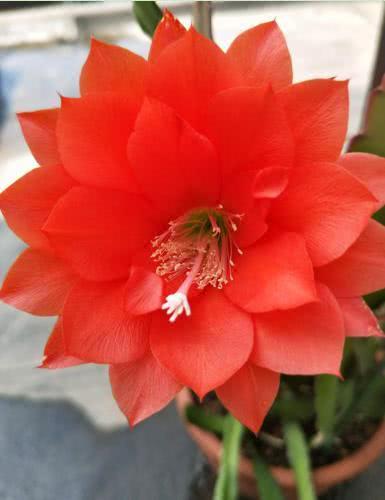
The epiphyllum (Epiphyllum spp.) actually belongs to the Cactaceae family, genus Epiphyllum. Its leaves are very similar to those of a cactus, while its flowers closely resemble those of the night-blooming cereus. The colors are mostly in the purple or red range. When it blooms, it looks like lotus flowers blooming one after another on a cactus. The flowers open during the day and close at night.
The epiphyllum has a fairly high demand for nutrients, and the plant also tends to grow quite large. If grown in a pot, it is best to change the soil once every other year, preferably in spring or autumn. Some people ask, why change the soil? What a hassle! This is because the nutrients in the soil have been almost fully absorbed by the root system, so of course you need to give it some fresh blood!
The principle behind the soil mix is nutrition plus aeration. For a simple option, you can use leaf mold, garden soil and sand mixed at a ratio of 4:4:2, and additionally place a layer of bone meal at the bottom as a base fertilizer. During the growing season, apply a dilute cake fertilizer solution once every half month. Once flower buds appear, you can apply phosphorus fertilizer to promote bud growth, resulting in larger flowers with richer color.
Caring for the epiphyllum requires good aeration. Besides mixing the soil well, you can loosen the soil from time to time to increase its air permeability. Water according to the principle of "dry then wet" - never let water accumulate, as root rot occurs very easily. During the bud stage, be careful not to water too much, otherwise the buds will drop before they even open.
In summer, when it fears waterlogging yet water evaporates rapidly, you can spray water on the branches and leaves to achieve the dual effect of replenishing moisture and lowering the temperature. The epiphyllum is not very cold-tolerant. Especially in northern regions, when winter temperatures are too low, the potted plant can be moved indoors to a sunny spot. Also, in winter be sure to control watering and keep the room ventilated (everyone likes to keep the windows closed when it's cold in winter, after all).
As you can see, its leaves (actually, it would be more accurate to call them modified stems) are long, soft and strip-like, and tend to droop downward easily, which makes them very prone to being broken by their own weight. At this point, you should insert some wooden stakes to support them, or better yet, build a trellis for them to climb along, which makes them look even more beautiful!