Detailed Explanation of the Correct Watering Method After Potting a Jade Plant
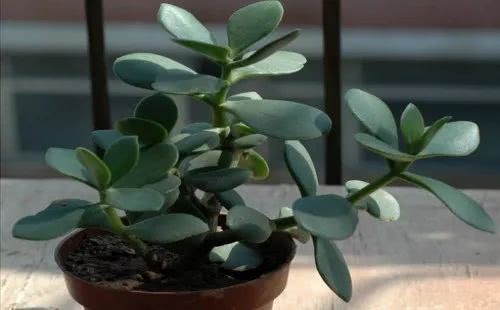
The jade plant has thick, emerald-green leaves, an exquisite and beautiful leaf shape, and even the overall plant form is very attractive. In addition, it is relatively easy to care for and manage, so many plant enthusiasts like to grow it as a household foliage potted plant. However, after being grown in a pot for 2-3 years, the jade plant often needs to be repotted in time to ensure it can continue to maintain good growth.
However, whether it is transplanting jade plant seedlings or repotting during later care and management, the potting step is involved. How to help a newly potted jade plant quickly adapt to its pot and resume normal growth is often a key issue we need to solve. Among these, how to water after potting is the most critical. So, how do you water a jade plant after potting?
Since potting includes both transplanting and establishing seedlings and regular repotting later on, the watering issue must be handled separately. This is because whether it is seedling transplanting or repotting, the plant goes through a process of adapting to a new environment. If water management is improper, it may very likely cause the potting to fail, and in severe cases may even lead to the plant's death.
I. Seedling Transplanting
First, we should transplant seedlings according to a scientific and standardized process, generally moving them with soil, as this is more helpful for the plant to smoothly recover. And after the plant adapts to the pot, it can more quickly recover and maintain a good growth state. For potting seedlings, you can use moist soil for potting, or you can water after potting. However, by comparison, the former is often more reliable.
If potting in wet soil, the seedlings not only adapt to the pot more easily, but also recover and develop roots more easily. At the same time, it can also avoid unnecessary trouble caused by watering shortly after potting. If potting in dry soil, then after potting, watering is often unavoidable because there is not enough moisture in the pot. And once the young plant's root system has been damaged during transplanting, this will increase the chance of infection by pathogens.
Even if the newly potted young plant does not become infected with disease, because the plant grows very fragilely during the recovery period and its root system has not yet adapted to the new environment, the root system's absorption capacity will also be greatly reduced, so naturally it cannot normally absorb and take up water. Even if watered, it cannot be smoothly absorbed. Meanwhile, the plant will still consume water and nutrients from its leaves, and if the soil in the pot is too wet, this is very unfavorable for the seedling's recovery and growth, and may even cause root rot. Therefore, it is not suitable to water heavily; just water a little to avoid the potting soil becoming too wet or waterlogged.
II. Repotting Mature Plants
Unlike transplanting and potting seedlings, the repotting process for mature plants grown in pots for more than 2-3 years appears much more relaxed, but we still cannot be careless about watering. There are some similarities between repotting large plants and transplanting seedlings, but there are also differences, and all of them should be taken seriously.
For potting a mature jade plant during repotting, if the old soil in the original pot is still relatively fertile and loose, original: wWw.pJCn.ORg then you do not need to replace all the old soil. You only need to remove part of the soil and then pot it into a flower pot one size larger, then cover it with fresh potting soil. After potting is completed, you can promptly water thoroughly once to ensure the potting soil has a certain degree of moisture and to promote the plant's recovery and adaptation to the pot.
But if the jade plant has not reached the time for regular repotting, and instead it is necessary to repot because the plant shows poor growth due to root damage, especially when repotting is done because the plant is infected with black rot, then we need to take the plant out of the original pot, remove all the soil, then after trimming the roots, apply a sterilizing and disinfecting agent before potting it again.
When potting in this situation, not only must the roots be trimmed, but the pot and soil must also be changed, and watering naturally presents a problem. In this case, it is not suitable to water after potting; otherwise, the damaged root system will continue to become infected or rot when it encounters a large amount of water. Therefore, moist soil is generally used for potting, and after potting you must not rush to water. Only when the plant's root system resumes growth can water be gradually given.
From the above situations, if potting in wet soil, it is not suitable to water immediately after potting. Instead, you need to wait until the plant adapts to the pot before gradually giving water, and this process takes about 1 week. If during this period the potting soil is too dry, you can appropriately spray water to maintain moisture. If potting in dry soil, then if there are no special circumstances, you can promptly water thoroughly once. But no matter which situation applies to potting, the flower pot should be promptly moved to a cool and ventilated place for recovery, and it generally takes 1 week to adapt to the pot, after which normal care and management can gradually be resumed.