Keep this in mind when growing a Christmas cactus at home
Editor: Yu
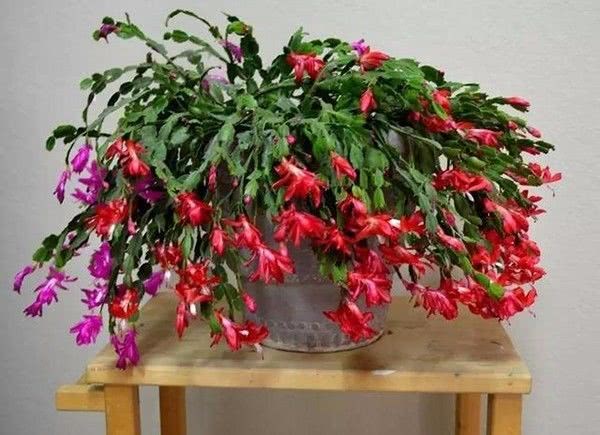
The Christmas cactus has lovely emerald-green segments, and its blooming period falls right around Christmas, New Year's Day and Spring Festival, when its bright, lively flowers are a real delight.
But quite a few gardening friends say their Christmas cactus died on them and that it is hard to grow. The editor wants to say: if you kill one once, learn from the experience and the second one will do very well.
In fact, the Christmas cactus is not hard to grow. Remember these care points and yours can also grow into a full, bursting pot!
Christmas cactus care before summer
The Christmas cactus likes a warm, humid, shaded environment, and grows fastest at 15-25°C.
In late spring and early summer, around May, the Christmas cactus enters its first growing period of the year. At this time, keep the potting soil moist, but the Christmas cactus itself fears waterlogging, so water only after the soil surface has been dry for two or three days. When the air is dry, mist the segments more often. When fertilizing at this stage, use a mix of nitrogen, phosphorus and potassium, with nitrogen as the main component.
Summer dormancy and care
In high summer, above 30°C, the Christmas cactus begins to go dormant. Do not assume that because evaporation is fast in summer you should water more, or it will surely rot and die.
During dormancy, watering once every half month at most is enough, and stop fertilizing at the same time. Too much light will causeyellow leaves, so in summer be sure to shade it from strong light and keep it ventilated.
The second growing period after autumn begins
After the start of autumn, temperatures drop and the Christmas cactus enters its second peak growing season of the year.
To lay the foundation for blooming in the next season, during the growing period ensure fertilizer and water, applying light fertilizer frequently. Watering is the same as before summer; compared with other flowers, the Christmas cactus still needs controlled watering. For a grafted Christmas cactus, water according to the water needs of the rootstock as well. After autumn it is often dry, so mist the Christmas cactus every day to keep it moist.
Bud formation and blooming
Starting in October, when temperatures drop to around 15°C and light conditions are sufficient, the Christmas cactus begins to form buds. During this period, with water, fertilizer and light all guaranteed, it blooms abundantly and beautifully.
Watering should still be done only after the soil is dry, but continued drought willaffect bud formation; for fertilizer, reduce nitrogen and increase the proportion of phosphorus and potassium, and spray the segments with Huaduoduo or monopotassium phosphate; light is very important for the Christmas cactus to bloom. From the growing period after autumn begins, the Christmas cactus should get plenty of light while avoiding strong light every day. The important thing is to keep the light period within 10 hours so that it can form buds. This is an important reason why many gardening friends' Christmas cacti grow vigorously but do not bloom.
Bud drop before flowering:Too much water, lack of water, lack of light, too long a light period and too low a temperature are all causes of bud drop. At this time control water, mist more, and spray with phosphorus and potassium fertilizer. Give plenty of light every day but control the light period. Ensure a temperature above 10°C and keep it out of the wind.
Bud thinning and after-flowering care:After buds appear, to ensure the quality of the flowers, promptly remove excess buds, leaving one bud per stem, and also remove the new young stems growing next to the buds. During flowering, care continues as usual.
Dormancy after flowering
After flowering, the Christmas cactus has consumed too many nutrients, and its segments become limp and wrinkled as it enters dormancy. Many gardening friends think the Christmas cactus is about to die, but it is not. At this time do not water it or fertilize heavily; instead, right after flowering, cut off the spent flowers and two or three segments below them to reduce its consumption and store energy.
This is around January. With proper care, controlled watering, misting to keep it moist, fertilizing, and providing sun with shade, and ensuring the right temperature environment, the Christmas cactus's dormancy will be shortened and it will form buds a second time. This second blooming occurs around Spring Festival, and after the flowers fade it goes dormant.
Shaping and pruning the Christmas cactus
After-flowering pruning of the Christmas cactus was mentioned above. There are two more points to note: first, if the plant grows too densely, thin out the branches regularly so as not to affect ventilation.
Second, once the Christmas cactus is mature, its stems and segments grow very long, so you need to use bamboo strips or wire and string to build it a multi-tiered round frame to support the stems and segments. This looks good, improves ventilation and benefits growth.
Common pests and diseases
If ventilation is poor and it is hot and damp, the Christmas cactus is prone toanthracnose, rot and leaf blight. Ventilate promptly and control water, remove the diseased segments, and spray and drench with carbendazim to prevent and control them.
Frequent ventilation and misting to keep it moist can prevent common pests of the Christmas cactus such asred spider mites and scale insects. If red spider mites appear, promptly remove the affected segments and spray to kill them with Huhuashen or Miteclean; for scale insects, scrape them off as soon as possible or cut away the diseased leaves, and spray and drench with a broad-spectrum insecticide such as imidacloprid.
Do you grow a Christmas cactus?
What experience do you have? Leave a comment and share it with everyone right away!